TL;DR
Hostinger launched AI Builder on August 18, 2026—a platform that doesn't add AI to websites, it *runs* websites as agents. The system provisions databases, creates user accounts, opens stores, and sends campaigns without you switching tools. One in five new Hostinger projects is now SaaS or internal tooling (a 5x jump in 12 months). For ecom operators, this marks the shift from "AI builds my homepage" to "AI runs my backend." Hostinger Connector lets Claude Code, Cursor, and VS Code work on the same account. The real debate: does owning the platform dependency reduce operational risk or lock you in?
What AI Builder Actually Does
AI Builder is not a website builder with AI features. It's a cloud platform where AI becomes the operator.
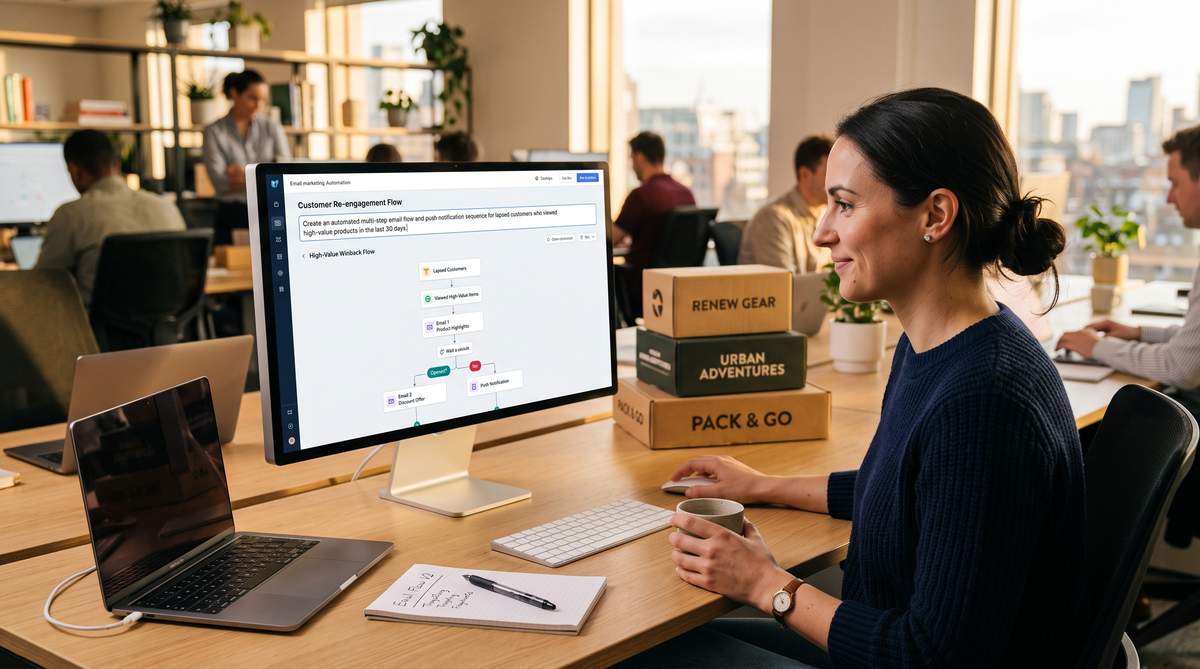
When you ask AI Builder to create user accounts, it doesn't generate a mockup. It provisions your database, sets up password sign-in, configures one-time passcodes, and wires OAuth to Google and Apple. The confirmation and password-reset emails? Hosted natively. When you ask it to open a store, it doesn't sketch the layout—it enables Shopify-style checkout, inventory tracking, and order management *inside Hostinger's infrastructure*. Ask it to email your customers, and it runs campaigns through Hostinger Reach, the platform's native email product.
This removes the handoff problem. Traditional AI builders stop at the first version: "Here's your homepage." You then spend weeks finding a database provider, setting up authentication, connecting Stripe, wiring Shopify, plugging in Mailchimp. AI Builder stops that handoff cold. According to Hostinger's August 18 announcement, the platform bundles backend, ecommerce, and email natively: so the AI never has to outsource work to a third party.
The shift is quantified. Hostinger reported that fewer than 4% of projects built on the platform departed from traditional websites a year ago. Today, 20% are SaaS products, internal tools, or learning platforms. That's a fivefold increase in 12 months. Those projects demand databases, user management, payment rails, and marketing: all of which AI Builder now handles in-house.
Ecom Operator Impact
If you run an online store, AI Builder reframes what "building a store" means.
Traditional no-code storefronts (Shopify, WooCommerce) let you design, populate inventory, and run campaigns. AI Builder lets you describe a business in plain English: a menu PDF, a competitor's site, a reference image: and the AI builds and *operates* the store. The AI can open the storefront, load products, set pricing, and launch an email campaign to your first customers. You don't configure Shopify integrations or Zapier rules. The AI does.
Pricing starts at $2.99/month on Hostinger's Premium plan (billed upfront, with 79% promotional discounts). The Unlimited plan ($3.99/mo) includes 500 AI agent credits and ecommerce; the Cloud Startup tier ($7.99/mo) adds 1000 credits. AI credits are consumed per action: simple edits cost less, complex projects cost more. This is radically cheaper than hiring a developer or running Zapier automation at scale.
For ecom operators, the appeal is speed and integration. You don't juggle Shopify + Klaviyo + Stripe + custom backends. Everything runs on one platform. If you want your AI assistant (Claude Code, Cursor, VS Code) to adjust product listings or inventory in real-time, Hostinger Connector grants API access to the same account your AI Builder project uses. One platform. One source of truth.
But there's a catch: you're trading platform diversity for platform depth. That's not inherently bad: it's a choice.
Platform Risk Analysis: The FOCUS Strategy
The FOCUS Strategy asks four questions when evaluating technology bets:
Foundation: Does the platform own the layers you depend on? Yes. Hostinger owns the backend, database, auth, ecommerce, and email. You don't rent PostgreSQL from AWS and Stripe from a third party. This cuts dependency chains and reduces bill shock. It also means upgrades, outages, and pricing changes ripple through your entire operation.
Optionality: Can you export or migrate? This is where Hostinger gets opaque. AI Builder generates websites and backends, but the company hasn't published a detailed data-export or code-generation policy. If you wanted to migrate a 10-customer SaaS to Heroku or AWS Lambda tomorrow, can you export the database, authentication schema, and business logic? The answer is unclear. Hostinger Connector suggests some openness: letting Claude Code edit the platform: but full exit paths aren't documented.
Customization: Can you extend the platform without rewriting? AI Builder supports agentic mode (AI drives the build) and manual mode (you fine-tune). You can use Hostinger Connector to let Claude Code patch code directly. But if you need to add a custom payment processor or integrate a third-party data warehouse, you're back to asking the AI or modifying code that AI generated. Custom logic eventually requires understanding the underlying stack. Hostinger hasn't clarified what that stack is: Vue? React? Node? A proprietary runtime?
Control: Do you own your data? Yes. Hostinger hosts everything on its own infrastructure, not AWS or GCP. You own the data; Hostinger doesn't claim it. But you do depend on Hostinger's infrastructure uptime. A global outage (rare, but possible) takes your store offline. This is true of any cloud platform, but it bears repeating.
Sustainability: Does the business model align with your growth? Hostinger charges per-plan and per-AI-credit. The Unlimited plan at $3.99/mo is cheap. But as you scale: more products, more AI interventions, more campaigns: you'll hit credit limits and upgrade tiers. Credit pricing isn't published in detail, so you can't forecast costs accurately. This is a common vendor lock-in pattern: low entry, unclear expansion pricing.
The verdict: Hostinger AI Builder strengthens foundation (owned stack) and optionality (some export paths, Connector access) but weakens customization clarity and sustainability transparency. For small ecom operations (1-10 products, <$50K/year revenue), the risk is low. For larger operations, you want published data-export docs and detailed pricing before committing.
Platform Dependency: Risk or Reduction?
The question in the angle: "does owning the platform dependency risk or reduce it?": has a two-sided answer.
It reduces dependency chains. Instead of depending on Shopify for stores, Stripe for payments, Klaviyo for email, and auth0 for sign-in, you depend on Hostinger for all four. That's one vendor, not four. One API, one support line, one outage surface. If Stripe has a bugs you're unaffected. If Hostinger does, everything stops. Net: same risk, concentrated risk.
It increases platform risk. Hostinger is a hosting company, not a fintech firm or marketing-automation specialist. If the company deprioritizes ecommerce or AI features: common in consolidations: your store and campaigns degrade. Shopify and Stripe are deep specialists. Hostinger is betting all-in on AI-driven integration. If that bet doesn't pan out, features atrophy.
It accelerates ecom operations. No handoff to third parties means AI can reason about your business in closed loop. The system can A/B test email subject lines, adjust inventory based on demand, and suggest pricing without you wiring integrations. This is genuinely powerful and unique to Hostinger's approach.
Comparison: Shopify + Zapier + native apps move slower. Shopify's ecosystem is deep but fragmented. You pick the best email tool, the best analytics tool, the best ad manager. Hostinger's stack is new and narrow. It's fast now, but untested under real scale.
I built demg.ai on Astro instead of Webflow or Wix, and that choice let us control every layer of the platform. I traded convenience for transparency. Hostinger AI Builder is the inverse: you trade transparency for convenience. The trade makes sense for ecom startups (0-3 years in, sub-$1M ARR). For established stores, the risk shifts toward vendor lock-in.
Risk and Caveats
Hostinger AI Builder is *new*. Launched August 18, 2026, it's untested in production at scale. Early adopters often uncover stability gaps, rate-limit surprises, and feature gaps that marketing doesn't mention.
Stability: No public SLA (Service Level Agreement). Hostinger publishes uptime for hosting, not for AI Builder specifically. Ask support before committing a revenue-generating store.
Credit limits: AI credit pricing is vague. "Simple edits use less than one credit; complex projects use more." What's complex? Adding a product? Launching a new feature? You'll hit this ambiguity at 2 AM on a Saturday.
Export: No published data-export feature. If you want to leave, you're asking Hostinger for a data dump. That process may take weeks.
Pricing transparency: The platform charges per plan and per credit, but doesn't show credit costs upfront. Calculate your own usage before signing a 48-month prepaid plan (the default billing cycle).
Competitor pressure: Shopify, Wix, and Squarespace are all adding AI features. Shopify Sidekick (AI assistant) and Wix AI already exist. They're not as integrated as Hostinger AI Builder, but they're backed by larger companies with deeper fintech expertise.
FAQ
Q: Do I need technical skills to use AI Builder?
No. The agentic mode requires only English prompts. You can describe your store: "a boutique selling handmade ceramics, shipping worldwide": and the AI provisions everything. Manual mode is for fine-tuning; most users won't touch it.
Q: Can I use my existing domain?
Yes. All plans include a free custom domain for one year. After that, you renew through Hostinger or use an external registrar.
Q: What if I outgrow AI Builder?
Understand your exit path first. Hostinger Connector lets you access the platform via Claude Code, so you can export or adapt parts. But bulk data exports and code generation aren't documented. Contact support for a clear exit plan before signing up.
Q: Is AI Builder cheaper than hiring a developer?
For the first 6-12 months, yes: by a factor of 10-50x. A full-stack developer costs $50-150K/year. AI Builder costs $4-96/year (monthly tier × 12). After 2-3 years, when your store requires custom features, cost advantage erodes. You're paying for speed, not long-term economics.
Q: Can I run multiple stores on one plan?
Yes. Unlimited and Cloud Startup plans allow unlimited websites. Premium allows 3. You share AI credits across all projects, so a large second store might deplete credits faster.
Doctrine Connection: Capitalism Creates Value
Hostinger AI Builder exists because capitalism rewards tools that reduce transaction costs. Before AI, building a store required hiring a developer ($50-150K/year), a designer ($30-60K/year), and a marketer ($40-80K/year). Total: $120-290K to ship. AI Builder reduces that to $4-96/year (plus labor). The value destroyed: high-touch services jobs: is real. The value created: cheap, fast store creation for 100M underserved entrepreneurs: is also real.
This is capitalism's core trade-off. Lower barriers enable more entrants, more competition, more efficiency. It also concentrates power. A few platforms (Hostinger, Shopify, WooCommerce) capture the ecosystem. They set pricing, feature priorities, and terms of service. A restaurant owner no longer needs to hire a developer; she needs to trust a platform. That's a shift in dependency, not a elimination of it.
Hostinger AI Builder is a bet that platform consolidation creates value faster than diversity costs. Whether that bet pays off depends on execution. If Hostinger maintains the product, keeps prices transparent, and enables exit, it's value-creating. If the company milks AI credits for lock-in revenue or abandons the product post-acquisition, it's extraction.
For ecom operators, the lesson: evaluate platforms on exit costs, not entry costs. Entry is cheap now. Exit costs define long-term value.
Next Steps
If you're considering AI Builder:
- Audit your current stack. What are you paying for hosting, email, ecommerce, and design? If your total is <$200/month, AI Builder is likely cheaper.
- Draft an exit plan. Email Hostinger support: "If I want to migrate my store to another platform in 2 years, what data can you export?" Get a written answer.
- Run a 90-day pilot. Build a non-critical store or side project. Measure stability, credit usage, and support response time. Then decide on your main store.
- Monitor competitors. Shopify, Wix, and Squarespace will release competitive AI features within 12 months. Re-evaluate your choice annually.
- Use Hostinger Connector strategically. If you use Claude Code or Cursor, test the Connector on non-production projects first. It's powerful but new.
AI Builder is genuinely innovative: integrated backend, ecommerce, and AI under one roof is rare. But innovation isn't destiny. Execution, transparency, and market dynamics will determine whether it's a ten-year platform or a three-year novelty.
*Jeff Barnes has no personal position in any company, fund, or platform named in this article. demg.ai has no current commercial relationship with any party mentioned. demg.ai provides marketing education and operator strategy, not investment advice. Past performance does not guarantee future results.*