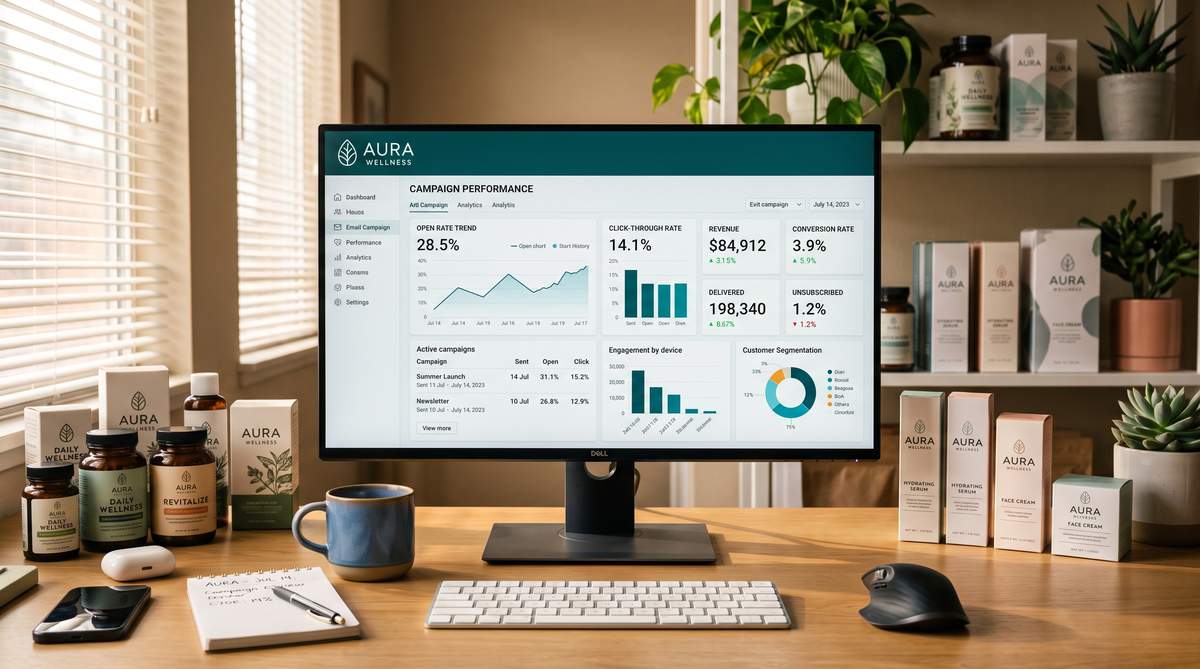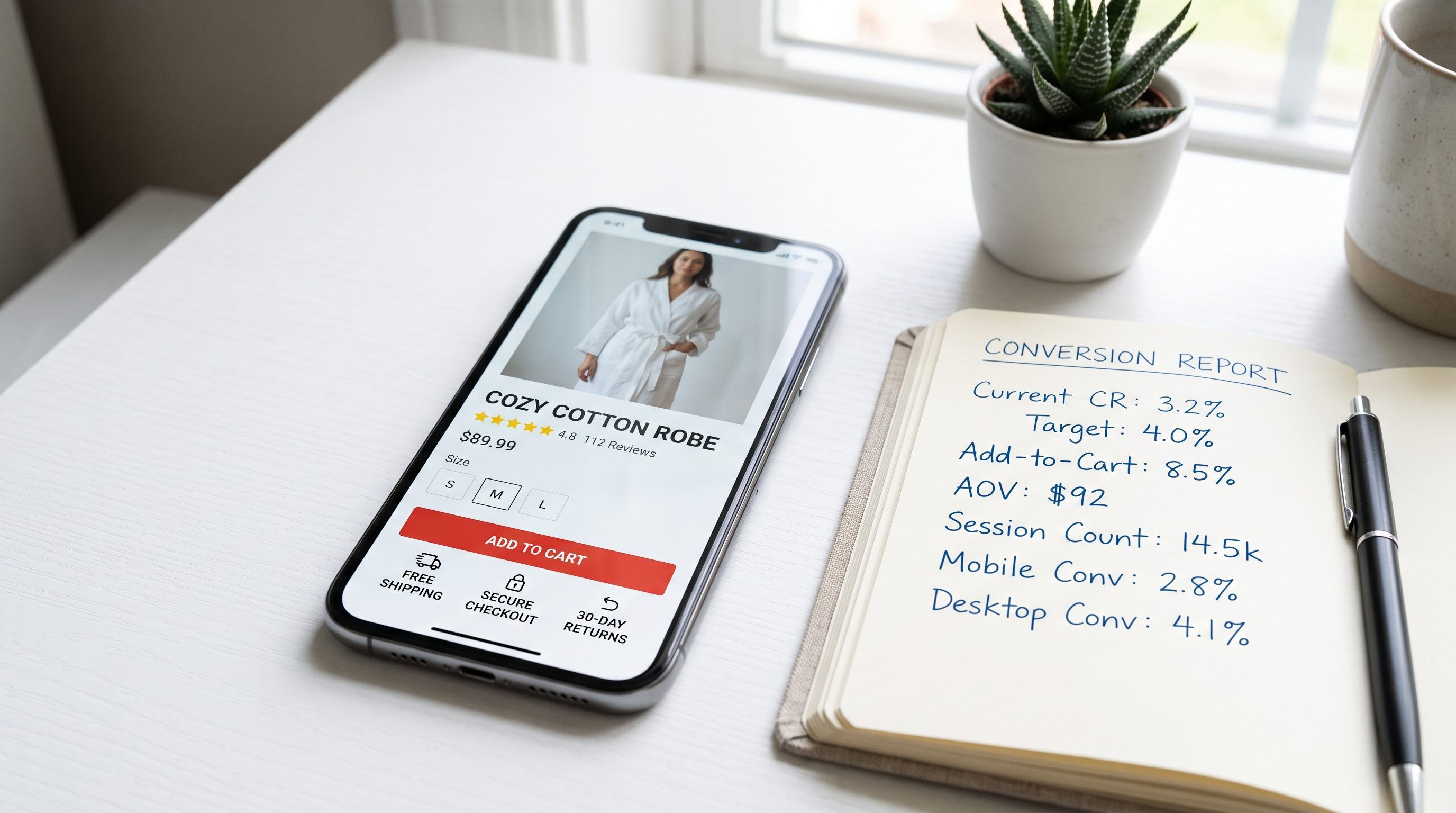
Post-purchase email sequences outperform standard campaigns by 217% in open rates, 500% in clicks, and 90% in revenue per recipient, per Klaviyo's 2026 AI performance benchmarks. AI-powered post-purchase flows exploit the highest-trust moment in a customer relationship: right after a purchase confirmation. They cross-sell complementary products, increase average order value, and compound revenue from customers you already own, without offering a single discount code.
Key Takeaways
- Post-purchase flows generate 90% higher revenue per recipient compared to standard email campaigns, per verified Klaviyo platform data.
- AI recommendation engines build individual subscriber profiles and match each customer to their most likely next purchase based on behavior, not segment averages.
- The Data's DNA framework organizes post-purchase sequences into three precision phases: capture customer signals, match to next-best product, and deliver at optimal timing.
- Discounting conditions buyers to wait for deals and compresses margin. Personalized recommendations increase average order value with no price concession required.
Why Discounting Is a Damage Control Tactic, Not a Revenue System
Every operator knows the casualty drill: the alarm fires, you pull the nearest lever. In e-commerce, the nearest lever is almost always a discount code. It clears inventory. It moves units. And it trains your customers to wait for the next sale before they buy at full price.
The math on discounting over a full year is brutal. A 15% discount offered four times per year does not generate 4x revenue. It generates recurring margin compression and a customer base conditioned to expect deals. Operators who run this playbook long enough find they cannot raise prices without losing volume.
Capitalism creates value through relevant exchange. A buyer gives money. A seller delivers a product worth more than the price paid. That equation only holds when you protect your margin. Discounting inverts it. You subsidize the transaction with your own profit, and the balance sheet absorbs the loss quietly, line by line, campaign by campaign.
The alternative is precision relevance. When a post-purchase sequence delivers a product recommendation matched exactly to what the customer just bought, the buyer does not need a lower price to convert. The recommendation solves the next problem they already knew they had. That is value creation, not margin destruction.
AI makes precision relevance scalable. One email template serves thousands of customers, each seeing a dynamic product block built from their own behavioral data. No manual segmentation required. No discount needed. The right product reaches the right buyer at the right time.
The Data's DNA Framework for Post-Purchase Sequences
Data's DNA is a three-phase model for designing AI-powered post-purchase sequences. Each phase generates inputs that power the next. Execute all three in sequence and the automation runs with minimal ongoing intervention.
Phase 1: Capture. Your email platform reads every behavioral signal at the moment an order fires. Purchase history. Product category. Order value. Browsing data. Customer lifetime value estimate. New or repeat buyer status. Klaviyo's AI product recommendation agent builds a real-time subscriber profile from these inputs across email, SMS, and web simultaneously. The profile updates with each interaction, not just at purchase.
Phase 2: Match. The AI recommendation engine scores your product catalog against each subscriber's behavioral profile. It identifies the next-best product for each individual customer. Not the best-selling item. Not the highest-margin SKU. The product most likely to solve that specific customer's next problem, inferred from what their data reveals about their preferences and usage patterns. Both Klaviyo and Omnisend now build these individual predictive profiles, including churn risk scores, predicted next order dates, and customer lifetime value estimates that inform every recommendation decision.
Phase 3: Deliver. Dynamic product blocks populate at send time, not at template creation time. The content each recipient sees reflects their profile at the moment the email arrives in their inbox. Klaviyo's Personalized Send Time AI delivers each message at the subscriber's predicted peak engagement moment, producing a documented 35% lift in click-through rates on top-performing campaigns. The system watchstands the timing calendar so you do not have to.
Three phases. Each executable within a standard email platform. The architecture does not require custom development. It requires deliberate setup and the discipline to let the system run without interference.
Building the Post-Purchase Sequence Architecture
Start at the trigger. Use the "Fulfilled Order" event rather than "Placed Order" as your sequence entry point for cross-sell flows. Fulfillment confirmation means the customer has received the product. The post-purchase window is active and receptive to your next message.
Branch at entry based on customer status. New customer or repeat buyer. These two groups require different communication postures. A first-time buyer needs social proof and usage context alongside any product recommendation. A repeat buyer already trusts the brand. Lead with the recommendation and the reason it fits their situation.
Set timing delays for every message in the sequence. Day 0: order confirmation and thank you. Days 3 to 5: product usage tips or how-to content. Days 7 to 14 post-fulfillment: review request. Day 14 or later: first cross-sell email with AI product recommendation block. Klaviyo's official post-purchase flow documentation recommends waiting until the customer has received and used the product before any cross-sell message. This is a conversion principle, not a courtesy. Buyers in a positive use experience respond at higher rates and with less friction.
Add an order value split to the cross-sell branch. Customers above your high-value threshold receive VIP-designated offers or early access to new products. Customers below that threshold receive standard complementary recommendations. Klaviyo's upsell and cross-sell flow guide covers how to apply product feed constraints by category and collection, giving you precise control over which products appear for which customer segments without manual list management.
Protect deliverability by activating Smart Sending limits. Cap the number of marketing messages any subscriber receives in a defined window, typically 16 to 24 hours. The platform holds queued messages until the window resets. Post-purchase flows maintain strong open rates because the context is transactional and trusted. That trust is a compounding asset on your sender reputation. Do not burn it through inbox saturation.
The AI Recommendation Engine: Your Revenue Engine Room
The dynamic product block is where AI produces its most measurable results in a post-purchase sequence. Klaviyo's AI engine reads each subscriber's profile at send time and selects the recommendation from your catalog that best fits their behavioral fingerprint. The template is static. The product selection is individualized. One build produces thousands of personalized experiences.
This is the data flywheel in operation. Each transaction produces behavioral data. Each data point sharpens the AI's next recommendation. Sharper recommendations generate higher click-through rates. Higher click-through rates generate more purchases. More purchases generate more data. Klaviyo's dynamic cross-sell flow tool includes a "Best Cross-Sell Date" property that automatically calculates the optimal replenishment and cross-sell timing window for each product based on its historical repeat purchase interval. The system does the timing math so you can focus on product and operations.
Run this system for six months and the AI's recommendations are materially better than they were on day one. Your segmentation, your timing, and your product matching all improve without additional manual input. That is an operator-independent revenue asset, not just a marketing tactic. Owner-operators who understand this build businesses with stronger valuations and better exit multiples because recurring revenue per customer is a balance sheet item that acquirers underwrite.
The AIN Playbook: Email Sequences That Compound Member Value
I founded Angel Investors Network in 1997. Over the following two decades, AIN helped clients raise more than $1 billion in capital. None of that capital came from one-time communications or discount offers to new members. All of it compounded through deliberate sequence architecture matched to each member's stage and investment behavior.
The engine room of AIN's member communication was a segmented email system built on behavioral triggers. New members received an onboarding sequence focused on establishing credibility and orienting them to deal flow. Active members received deal alerts matched to their stated investment preferences and historical participation. Long-term members received exclusive access to opportunities gated by their membership tier and track record within the network.
We never discounted AIN membership. We never sent mass broadcast emails to the full list hoping something would land. We built sequences that delivered relevant content to the right member at the right time. Members who consistently received value-matched communications stayed longer and invested more capital through the network. The compounding effect was measurable and ran for years without requiring constant manual attention.
E-commerce post-purchase sequences operate on identical logic. Your customer who just bought hiking boots does not need a 10% off code for their next order. They need to know that the performance trail socks and collapsible trekking poles in your catalog are exactly what makes those boots perform the way they were designed to perform. The receipts are in the behavioral data. The AI reads them. The recommendation follows.
Klaviyo's platform benchmarks verify this: 90% higher revenue per recipient in post-purchase flows compared to standard campaigns. That is not a marginal improvement. That is the earned advantage of relevance over volume. And it compounds over time as the AI engine accumulates more behavioral data per customer to refine each subsequent recommendation. Klaviyo's lifecycle email marketing guide provides pre-built templates for the full post-purchase, cross-sell, and replenishment sequence structure. Start there, add your AI recommendation blocks, set your timing rules, and let the system run.
For deeper reading on building the full email automation stack, see our guides on e-commerce email flows that compound AOV, Klaviyo segmentation for owner-operators, and AI email personalization setup for ecom stores.
Frequently Asked Questions
How long after purchase should the first cross-sell email go out?
Wait a minimum of 14 days post-fulfillment confirmation for physical products. The customer needs to receive, open, and actually use the product before your cross-sell recommendation arrives. Sending before that window signals that you care more about the next transaction than the current one. Klaviyo's Best Cross-Sell Date property removes the guesswork by calculating the statistically optimal cross-sell window for each product based on historical repeat purchase timing. Activate it and let the platform run the math rather than relying on assumptions.
What if my catalog does not have obvious complementary products?
The AI recommendation engine identifies non-obvious pairings from actual purchase pattern data, not intuition. Two products that do not appear complementary on paper frequently appear together in real order history because buyers who solve problem A often discover that problem B exists shortly after. Before concluding your catalog lacks cross-sell potential, run your transaction data through Klaviyo's product analysis report. The cross-sell affinity data shows which products customers actually buy in sequence. Build your dynamic product feeds from those verified pairings, not from assumptions about what should go together.
Can this sequence architecture work on a smaller e-commerce operation?
The framework scales to any catalog size and transaction volume. A store with 300 monthly orders gets functional AI recommendations because the platform has enough behavioral data to work with. A store with 3,000 monthly orders gets sharper recommendations because the data pool is larger and more differentiated. Start with a two-branch flow dividing new and repeat buyers, add a single complementary product recommendation per branch, and activate Smart Sending limits. The architecture is simple at entry and grows more precise as transaction volume accumulates.
How do I measure ROI on a post-purchase sequence?
Track revenue per recipient and conversion rate per email in the sequence. Compare against your baseline broadcast campaign metrics. Post-purchase flows should show substantially higher open rates, click rates, and revenue per send than standard campaigns because the context is transactional and trusted. Measure average order value for customers who engage with cross-sell recommendations against those who do not. That delta is the quantified ROI of the sequence and it goes directly on your operating metrics. Run the comparison at 90 days and again at six months. The compounding effect of the data flywheel becomes visible in the numbers over time.
Doctrine Connection: Capitalism creates value. Discounting is not value creation. It is margin destruction dressed as a growth tactic. Capitalism creates value when an exchange makes both parties better off: your customer solves a real problem, you earn revenue that reflects the value delivered. AI post-purchase sequences operationalize this principle by delivering the right product to the right buyer at the right moment. The buyer gets more value from their relationship with your brand. You get higher average order value without cutting price. That is the system working as designed. The discount code is what you reach for when that system is not in place.