AI Email Campaigns That Learn From Your Store, Not Industry Averages
Most email AI still works the same way it did five years ago: it pulls patterns from a generic training dataset (millions of anonymized campaigns), runs a statistical model, and tells you what "industry best practice" says is best. You're the customer paying for AI, but the AI isn't learning from you. It's learning from everyone else.
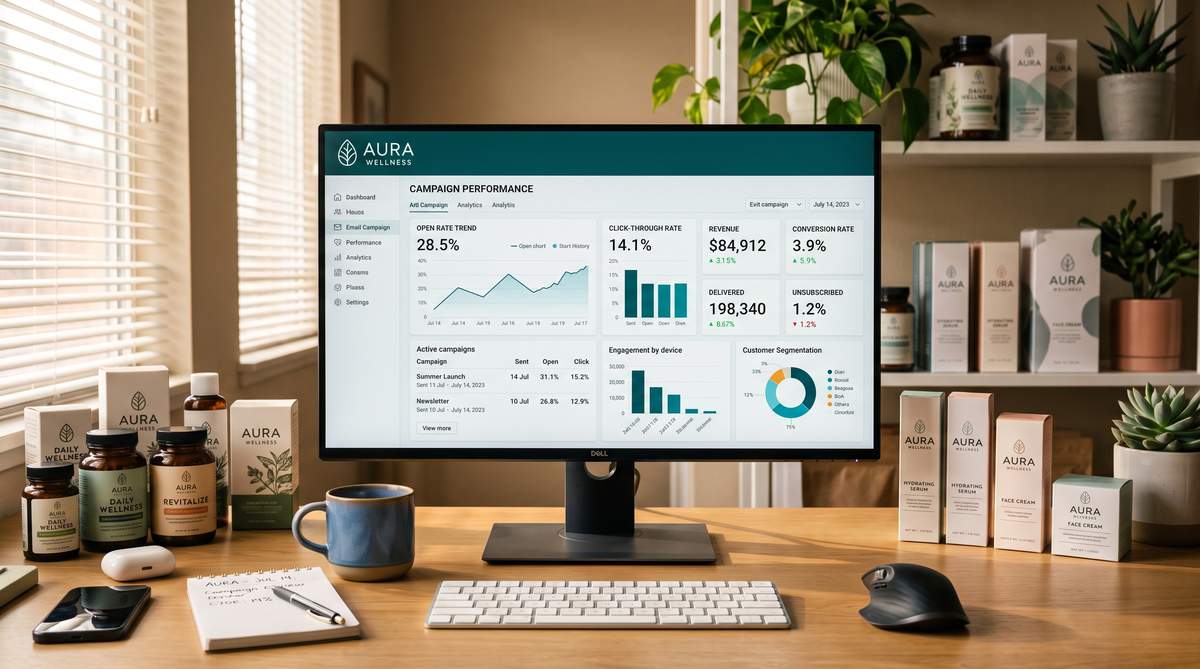
The new generation is different. ActiveCampaign Wavelength, Klaviyo AI, Omnisend AI. These tools run on YOUR account: your customer segments, your purchase timing, your abandoned carts, your product affinities. And the results are measurable. ActiveCampaign's Wavelength reports 75% higher engagement versus non-AI users. Top performers on Klaviyo using dynamic recommendations hit click rates of 8.79% versus the category average of 3.75%. (Source: )
For a sub-$5M ecommerce store, the practical question is sharp: How do you evaluate a data-tuned email engine versus a generic one? What data do you need to feed it? How long before it outperforms your manual work? Here's the 30-day setup plan.
Key Takeaways
- Generic AI beats industry averages. Tuned AI beats your manual work. ActiveCampaign's Wavelength runs on 500+ signals per account and delivers 75% higher engagement than non-AI baselines. Klaviyo flows using AI recommendations reach 3x higher click rates than campaigns (5.58% vs 1.69%). That gap grows wider every week the system learns.
- Most ecommerce owners sit on a goldmine and don't mine it. 84% of marketers still send the same blast to everyone, using industry best practices. Your purchase history, browse data, cart timing, and RFM segments are signals. Data's DNA demands you use them.
- The setup is 30 days, not 90. Start with segmentation. Week 1: Build three core segments (win-back, VIP, suppression) using AI. Weeks 2-4: Layer in predictive flows and dynamic product blocks. Month 2: Enable timing optimization. By day 30, your system is learning from your store, not from industry averages.
- The math compels the decision. Email flows drive 41% of revenue from 5.3% of sends. Revenue per recipient in flows is 18x higher than campaigns. Your data is the open. Every week of delay is revenue on the table.
Generic AI Versus Data-Tuned AI: The Real Difference
When you hear "AI email marketing," most platforms mean: a model trained on millions of historical campaigns, generic rules about open rates and click rates, and statistical correlations that apply to no business in particular. It tells you what "the industry" does.
Data-tuned AI means: a model that learns what YOUR customers do. It reads your account history, your customer profiles, your sending patterns, your purchase sequences, and your engagement signals. It spots trends specific to your store and acts on them before you ask.
The difference is operational. Generic AI is advisory ("your open rate is 22%, the industry average is 24%"). Data-tuned AI is executable ("Send this email to this segment at 3pm Thursday because that's when Maria opens her email and buys").
ActiveCampaign Wavelength exemplifies this. Built on 500+ signals from each business account, it learns from your account's history, performance patterns, and customer data. Early tests show a 17% lift in click-through rates and a 75% higher engagement rate overall. Klaviyo's approach is similar: it runs 135,000+ brands' data through its algorithms, but personalizes the models to each account's behavior. Top 10% performers on Klaviyo flows hit revenue per recipient as high as $7.79 and click rates above 10%.
The engine doesn't just observe. It acts. Klaviyo's Personalized Send Time doesn't tell you when to send. It sends automatically at the right moment per subscriber. Wavelength doesn't suggest a segment. It builds it and queues the send. That execution gap is where the revenue multiplier lives.
What Data Your Store Actually Has (And Why You're Not Using It)
Here's the tension: you've been collecting customer data for years. Purchase history. Browse patterns. Add-to-cart behavior. Abandon timing. Product affinities. Customer lifetime value. Churn risk. But most ecommerce owners treat that data as reporting material ("our AOV is $87") rather than operational fuel.
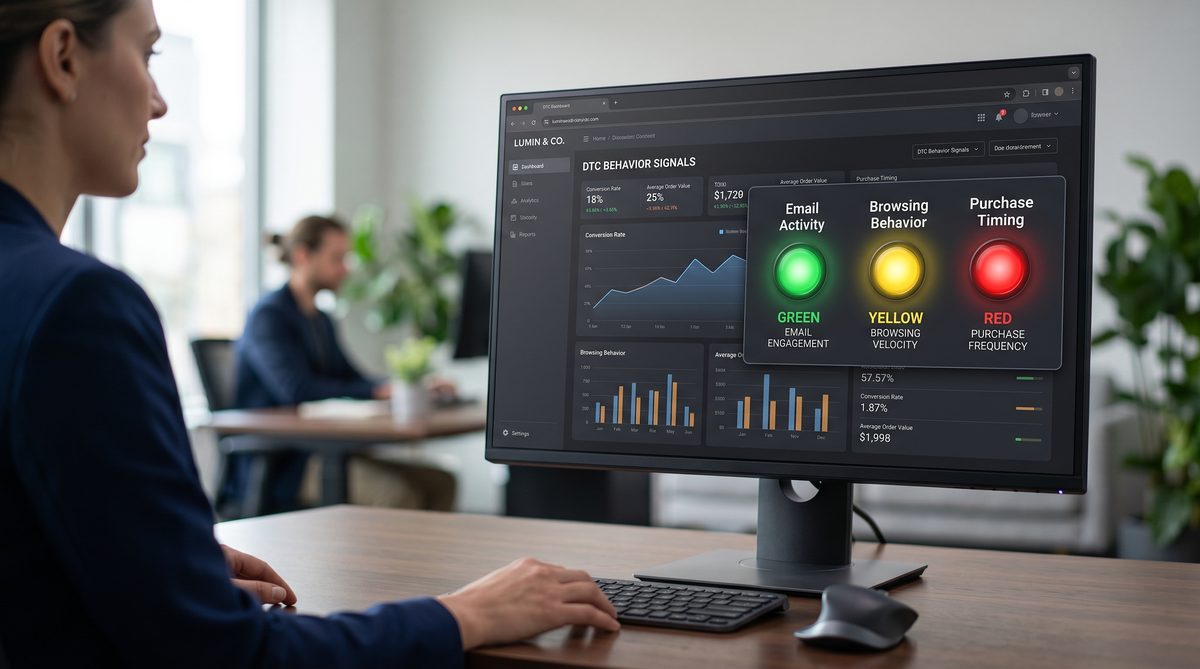
Data's DNA—the framework that ties customer signals to business decisions—demands a different mindset. Every click your customer leaves behind is a signal. Every abandoned cart is a timing signal. Every product viewed but not purchased is an affinity signal. When you sit on that data and send the same email to everyone on Tuesday at 9am, you're ignoring what the data actually says about when, how, and what your customers want to receive.
The new AI tools force you to ask: what data matters? The answer is specific to your store.
For a clothing ecommerce brand, the critical signals are browse history (what they're looking at), purchase recency (when they last bought), and category affinity (what they actually complete purchases in). For a consumable or subscription brand, it's next order date prediction and replenishment timing. For a general commerce store, it's a combination: purchase history plus abandonment recovery.
Before you set up a data-tuned AI system, you need an inventory:
Segment Data: Can you split your list into VIP, at-risk, inactive, and engaged? Can your platform surface customer lifetime value, churn risk, and purchase frequency? Most ecommerce platforms (Shopify, WooCommerce) connect to Klaviyo or Omnisend and sync that data automatically. Verify it's clean and up-to-date.
Behavioral Data: Does your email platform capture product views, add-to-carts, browse time, and category behavior? It should. If not, you'll need to configure tracking. Most gaps here are in Shopify stores that sync to email platforms but don't map product taxonomy correctly.
Timing Data: How long between purchase and next order? Between browse and abandon? Between email open and purchase? This is where AI shines. The patterns are in your data already. Most owners never look at them.
Preference Data: Do you know which channel your customers engage on (email vs SMS vs push)? Which product categories they actually click? Whether they open from mobile or desktop? This is the foundation for personalization.
If your data is incomplete, the AI system will work on whatever you have and improve. But start with an audit. You probably have more than you think.
The 30-Day Setup Plan: Week by Week
This is a proven sequence. Each step builds on the last. Don't skip ahead.
Week 1: Segmentation (Segments AI) Start with Segments AI (available in Klaviyo, Wavelength, and Omnisend variants). Plain-English segmentation replaces condition logic. You say "Show me customers who bought in the last 30 days but haven't opened in 60 days," and the system builds it in seconds.
For ecommerce, build three core segments:
- Win-back candidates: High churn risk, 90+ days since last purchase. These are your former customers worth recovering.
- VIP tier: Top 15-20% by predicted CLV. Segment these for premium flows with exclusive offers.
- Suppression list: Recent purchasers (7 days) or those with open support tickets. Don't email these groups into annoyance.
Segmentation activates fast. No minimum list size. Every subsequent AI feature you layer on top performs better when it runs on clean, well-defined segments.
Weeks 2-3: Predictive Flows (Churn Win-Back or Replenishment) Now use predictive analytics to trigger automations. For most ecommerce, start with churn win-back: email the VIP at-risk segment with a discount and a value message. For subscription or consumable brands, start with predictive replenishment: trigger an email when the model predicts next order date is near.
Klaviyo's replenishment flows drive double-digit revenue attribution. The lift comes from timing. The system knows your customer's purchase cycle, not the industry's.
Week 4: Dynamic Product Blocks (Recommendations) Add personalized product recommendation blocks to your post-purchase flow and one campaign template. Instead of showing the same featured products to everyone, show each customer products based on their browse history and purchase pattern.
Omnisend's product recommender and Klaviyo's dynamic recommendations operate the same way: they pull in products each customer is statistically most likely to buy next. Click rates lift by 1-2 percentage points (from 1.69% baseline for generic campaigns to 3.75% with AI, and 8.79% for top performers).
Month 2: Timing Optimization (Personalized Send Time) Enable Personalized Send Time. This feature uses reinforcement learning to send each email at the moment each subscriber is most likely to open, click, and buy. Two subscribers on the same campaign receive it hours apart. Klaviyo reports up to a 35% lift in click rate.
This requires volume (200+ active subscribers minimum to train the model), but most ecommerce stores have that.
Months 2-3: Channel Routing (Channel Affinity) Add conditional splits based on predicted channel affinity. The system identifies whether each customer engages better on email, SMS, or push. Route high-SMS-affinity customers away from email-heavy flows. This reduces SMS unsubscribes and improves engagement on the right channel per person.
This is subtle work. Most owners miss it.
Checklist: Day 30
- [ ] Three core segments built and validated
- [ ] At least one predictive flow live (win-back or replenishment)
- [ ] Product recommendation blocks added to post-purchase flow
- [ ] Email performance baseline captured (open rate, click rate, revenue per send)
- [ ] Personalized Send Time enabled (if list size > 200)
- [ ] Plan to measure week 4 to week 8 performance deltas
How to Evaluate Data-Tuned Platforms Against Generic Ones
Due diligence is non-negotiable. When you're comparing email platforms or deciding whether to activate AI features you already have, ask these questions.
1. What data does the system use to generate recommendations? Generic AI uses industry data. Data-tuned AI uses your account's own history plus network effects (learning from other similar stores). Ask the vendor: Does the model run on my data alone, or on cross-network patterns from your customer base? If it's your data alone, how much history does it need before it performs? (Most need 30-60 days of behavior.)
2. Can the system act, or only suggest? If the platform surfaces insights but requires you to take action ("Your win-back segment is 400 people"), it's advisory. If it automatically sends at the optimal time, builds segments on request, and triggers flows based on predictions, it's executable. Execution is where the multiplier lives. Wavelength operates across 300+ capabilities. Klaviyo AI embeds in every campaign builder. That's not a coincidence.
3. What's the data foundation? Does the platform unify data from your store, your email list, and your browsing behavior in a single customer profile? Or does it work from siloed data (email data alone, or purchase data alone)? Unification is critical. Klaviyo's 350+ integrations and unified profiles are why its AI performs. Siloed data means weaker models.
4. Is there a minimum audience size or minimum campaign volume? Some AI features need a critical mass of data. Personalized Send Time needs 200+ active subscribers. Churn prediction needs 6 months of purchase history. Ask upfront. If your store is smaller, start with Segments AI (no minimum) and layered flows instead of timing optimization.
5. How long before ROI? Expect 30-45 days before you see measurable performance deltas (click rate lift, revenue per recipient lift). The system is learning. If a vendor promises results in a week, ask how they're training the model on zero historical data.
Sources
- ActiveCampaign Launches Active Intelligence: Wavelength, Marketing AI Tuned to Your Business, Not the Industry Average
- 2026 Email Marketing Benchmarks by Industry
- 5 Klaviyo AI Features for Ecommerce: How to Activate K:AI in the Right Order
- Product Recommender for Ecommerce
- Email Flows vs Campaigns: Revenue Impact
- Personalized Send Time: 35% Click Rate Lift
- Unified Data Architecture for Email AI
- Data-Driven Segmentation in Email Marketing
FAQ
Q: If I switch from a generic AI tool to a data-tuned one, how much faster will my campaigns perform? A: It depends on how mature your data is and which AI features you activate. Segments AI activates immediately (you see faster segmentation, not necessarily better engagement yet). Predictive flows (replenishment, churn) show 10-25% revenue lift within 4 weeks if your historical data is clean. Timing optimization shows 20-35% click rate lift within 60 days. Dynamic recommendations show 1-2 percentage point click rate increases within 30 days. The compounding effect of layering all of these is where top performers hit 75% higher engagement than baselines.
Q: How much historical data do I need before a data-tuned AI system works? A: For segmentation and dynamic recommendations, you need 30 days minimum. For predictive models (churn, CLV, next order date), 6 months is optimal but 90 days is the floor. For timing optimization, 200+ active subscribers and 60 days of send behavior. If you're brand new or have minimal history, start with Segments AI and manual segmentation rules while the system learns. Don't wait for perfect data.
Q: Can I evaluate this myself, or do I need an agency? A: You can set up Segments AI, predictive flows, and dynamic recommendations yourself using Klaviyo's interface or Wavelength's natural language prompts. Timing optimization and channel affinity require more configuration and audience size. The gap between a self-serve setup and an optimized setup is usually 10-15% performance (engagement and revenue). If your store does $1M+ annual revenue, an agency or implementation partner pays for itself. If you're under $500K, start DIY and upgrade after 60 days of live data.
Q: What if my ecommerce platform (Shopify, WooCommerce, etc.) isn't syncing data correctly? A: This is common. Klaviyo and Omnisend integrate with Shopify directly and capture product metadata automatically. WooCommerce is looser. Verify that product taxonomy (categories, tags, SKU) is syncing to your email platform. If not, you'll need to clean the data in your email platform or work with an integration specialist. Bad data in means bad recommendations out. This is non-negotiable due diligence.
Q: Should I activate all AI features at once, or layer them in? A: Layer them in the sequence above. Most brands that activate everything at once can't tell which feature is driving which result. You can't optimize what you can't measure. Segments first, then flows, then timing, then channel routing. Each layer compounds.
Doctrine Connection: Your Data Is Inventory
One more framework: your customer data isn't reportware. It's operational inventory. Every purchase signal, every browse action, every abandon event is a piece of inventory you can put to work.
Most ecommerce owners I've worked with understand this intellectually but don't act on it. They know their store has purchase history. They know their customers have patterns. But they send the same email to everyone on Tuesday because that's the cadence they picked six months ago. Or they use the industry benchmark ("open rates for apparel are 18%") as their target instead of asking: what do MY customers actually do?
That gap.between having the data and using the data.is where the new generation of AI email tools operate. They don't ask you for permission to read your data. They assume it's there and act on it. Wavelength's context engine "continuously reads your account." Klaviyo's predictive models run on network effects from 135,000+ brands in addition to your own. The system is always working.
Due diligence is non-negotiable. Verify that your data is clean, that your email platform syncs it correctly, and that the AI system you choose is actually learning from your store, not industry averages. Then give it 30 days to work. The math is on your side. Email flows drive 41% of revenue from 5.3% of sends. Data-tuned AI is the force multiplier on top of that foundation.
Jeff Barnes has no personal position in any company, fund, or platform named in this article. DEMG has no current commercial relationship with any party mentioned. DEMG provides marketing systems and education for owner-operators, not investment advice. Past performance does not guarantee future results.