TL;DR
The 72 hours after a first purchase are the highest-use window in ecommerce. Most brands waste it with a shipping confirmation and a discount code. The brands that double second-order rates run 7-9 touches across email and SMS over 45 days, education first, then commercial. No discounts on the initial sequence. Real data: customers with a second purchase within 90 days see 3x higher 12-month LTV. Chronos benchmarks show the best-in-class sequences hit 70%+ open rates on the first email and maintain 66-72% engagement through the fourth touch. Here is the sequence that works.
Key Takeaways
- The 72 hours after delivery are the cheapest window in the entire customer lifecycle to drive a second purchase. Intent is high. Trust is fresh. The product is in hand.
- Educational sequences beat discount-first sequences. Brands using earned loyalty rewards (not discount codes) saw 14% higher second-purchase margin and 9% higher LTV at 12 months (Klaviyo Q2 2026).
- Timing beats copy. A replenishment email at day 25 outperforms day 10 by 15-20% in consumables. Move a cross-sell from day 1 to day 12 and your conversion rises, not falls.
- SMS accelerates moments where timing changes outcomes. SMS open rates average 41% post-delivery for consumables. Use SMS as a precision tool at days 12, 22, and 35, not as a broadcast channel.
The 72-Hour Confirmation and Education Window
You shipped an order. The customer opened the box. This is where most brands go quiet. They wait. They assume the customer is happy. They fire a discount offer two weeks later, wondering why the conversion is flat.
I learned about this from a different angle. I was at Angel Investors Network, helping members understand a new asset class. The relationship didn't start with a pitch. It started with education: here is what this asset class actually looks like, here are the real risks, here is how due diligence works. The members who got educated first invested more and stayed longer. They felt like insiders.
Same principle applies to a $40 skincare brand.
The confirmation email should land within an hour of order placement. Its job is not to upsell. Its job is to reinforce the decision. A brief founder note works. A video of the founder explaining why the product matters works. Big Brain Strategy found that embedding founder narrative directly in the confirmation email (not a link) lifts confidence and reduces buyer's remorse.
By hour 4, send the first value email. A how-to guide. A usage ritual. Something that makes the customer feel like they joined a community, not just bought a product. This is education, not selling. D2C Times research showed that customers who received focused product education within 24 hours converted to a second purchase at 2x the rate of those who didn't.
By day 3, the package arrives. Send a care guide. Make them feel like an insider. This is the moment they are most engaged with what they bought.
The Social Proof and Behavioral Branching Phase (Days 7-22)
Day 7 is social proof day. Not a generic testimonial. A real before-and-after from a verified buyer. User-generated content. A screenshot from your community Slack if you have one. This validates their decision.
Here is where timing matters more than copy. Verification beats optimism. Before you cross-sell anything, let them use the product. Brands that send the first cross-sell at day 12 instead of day 1 see higher conversion, not lower. Why? Because they are sending to someone who has formed an opinion, not someone in the impulse window.
Day 12 is SMS day for the cross-sell. Email and SMS run different angles at different moments. Email is narrative. SMS is urgency without pressure. US Tech Automations benchmarks show SMS second-purchase CTR runs 8-12% versus 2-3% for email. SMS is not for volume. SMS is for precision at the moment where timing changes the outcome.
Day 16 is the review request. Wait for delivery confirmation before you ask. Customers who haven't received their orders yet do not leave reviews; they leave complaints. Ecommerce Times data shows review-request sequences that wait for delivery confirmation deliver 15-25% conversion rates. Those that fire on day 3 deliver angry support tickets.
Day 22 is the loyalty program introduction. Not a discount program. An experience program. Early tiers should open early access, founder notes, behind-the-scenes content. Discounts belong at the highest tiers where margin can absorb them. A customer enrolled in loyalty within 48 hours of their first purchase has 2.3x the 12-month LTV of a customer who enrolls later.
The Earned Loyalty and Replenishment Push (Days 35-45)
By day 35, you have enough signal to know whether they will repurchase. Segment accordingly. High engagers get a second-purchase incentive via SMS. This is earned, not discounted. Something like: "You have unlocked early access to the new formula before it launches publicly. Reorder now and get it on Tuesday." This is reward, not discount.
The difference matters. Brands using earned loyalty rewards saw 14% higher second-purchase margin and 9% higher LTV at 12 months compared to those offering discounts. Margin is the word that matters. A discount erodes margin. An earned reward deepens relationship.
Day 42 is the final cross-sell email in the initial 45-day window. This one is product-matched to what they bought. If they bought serum, introduce the essence that pairs with it. Make it feel like discovery, not catalog push.
After day 45, you hand off to the long-term retention system: win-back sequences, replenishment triggers based on actual product consumption cycles, and community engagement. But the initial 45 days have either created a second-purchase customer or set the stage for a win-back.
The Technical Setup: Email, SMS, and Orchestration
Klaviyo handles the email and SMS layer well. The decision is when to send what and to whom. Most brands build a single sequence for all customers. That misses signal. A first-time buyer who spent $200 needs a different sequence than a first-time buyer who spent $40. A customer who opened every email needs a different sequence than one who opened none.
Use Klaviyo conditional splits to branch the sequence based on engagement, order value, and whether they are a repeat buyer or first-time. The orchestration layer should suppress a planned touch if a support ticket is open or if they have already purchased. D2C Times research shows orchestrated sequences that coordinate email, SMS, and support state lift second-purchase rate by 20-35% over baseline.
The SMS replenishment trigger at day 35 should reference the specific SKU they bought. Generic "you might also like" sequences underperform brand-specific recommendations by 2-3x.
The Metrics That Matter
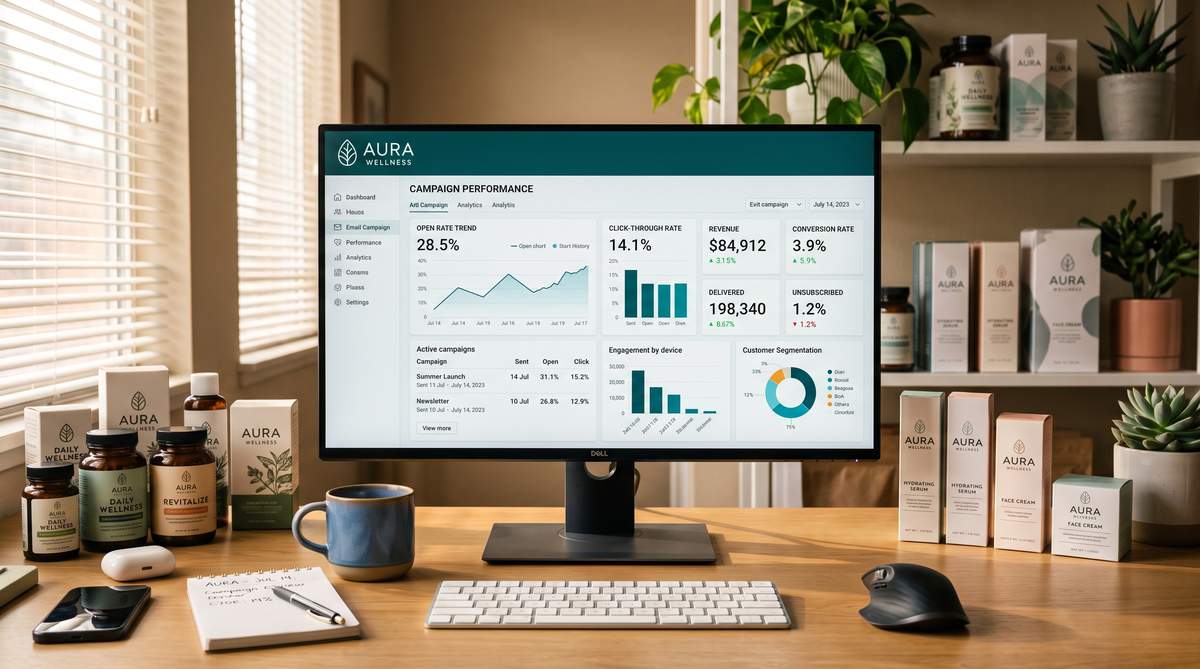
Track the 30-day second-purchase rate. For consumables, below 20% signals broken onboarding. For healthy DTC brands, 28-35% is table stakes. Mature post-purchase systems hit 40-50%.
Track revenue per recipient from the post-purchase flow. If you are under $4 per recipient, the sequence needs rebuilding. Most brands under-optimize the 45-day window because they are not measuring post-purchase revenue attribution separately from overall email revenue.
Track the 90-day active rate. Customers still engaging at 90 days via email, SMS, or purchase have dramatically higher probability of reaching 12-month LTV milestones. This is a leading indicator of long-term value.
Most importantly, track the LTV of customers who purchased a second time within 90 days of the first. That cohort sees 3x higher 12-month LTV than customers who took longer to repurchase. The sequence you run in days 0-45 either compresses time-to-second-purchase or it doesn't. That is the signal that matters.
Frequently Asked Questions
Should I run the same sequence for repeat buyers and first-time buyers?
No. A first-time buyer needs confidence and product education. A repeat buyer needs recognition and catalog expansion. Running one flow for both audiences means the messaging misses for everyone. In Klaviyo, split on Placed Order = 1 over all time for first-time flows and Placed Order ≥ 2 for repeat buyer flows. Different jobs. Different sequences.
When should I add SMS to my post-purchase flow?
When you have opted-in subscriber volume to test and when you are ready to use SMS as a precision tool, not a broadcast channel. Start with two SMS touchpoints: a delivery check-in and one post-purchase message with a second-purchase angle at day 12. Measure placed order rate, not click rate. Expand from there based on performance.
Should my first cross-sell include a discount?
No. Your first cross-sell should reference the product they bought and introduce the next logical thing. Save the discount for the second-purchase incentive at day 35, when you have earned the opportunity to offer it. A discount on day 3 trains the customer to ignore your brand until there is a deal. A reward at day 35 for engagement trains them to stay.
What if my product has a long usage cycle? Should I wait longer to ask for repurchase?
No. The repurchase trigger should map to the actual consumption cycle of your product, not a calendar day. If your product has a 60-day usage cycle, trigger the replenishment email around day 45-50, not day 30. Use Klaviyo Predictive Analytics to identify the median days-to-reorder from your customer data and trigger at 80% of that cycle. Timing wrong is worse than sending early.
Jeff Barnes, MBA has no personal position in any company, fund, or platform named in this article. DEMG has no current commercial relationship with any party mentioned. DEMG provides marketing systems and education for owner-operators, not investment advice. Past performance does not guarantee future results.