
AI without an action layer is just a smarter dashboard. ShipBob's new Claude integration via MCP (Model Context Protocol) finally closes that gap. Merchants using this system are already making thousands of AI requests per day. Your fulfillment operations can now think and act in real time. According to Digital Commerce 360's August 2026 report, ShipBob has introduced an AI suite connected to live merchant operations via MCP, with thousands of daily requests already flowing through the system.
The Real Question: Can AI Actually Do Anything?
I spent fifteen years in the engine room of a nuclear submarine watching operators stand watch over systems that demanded both thinking and doing happen simultaneously. You can't think about a reactor scram while the reactor is scraming. Theory separates from practice the moment something breaks.
That's where fulfillment stands today. Most "AI for commerce" solutions analyze data and recommend actions. ShipBob's Claude integration skips the recommendation and executes the action directly. The distinction matters more than you'd think.
Here's what the integration does: Your Claude instance can reorder a SKU. Reroute a shipment mid-flight. Resolve an exception order. Move orders into processing. Build inbound receiving orders. The MCP connector functions as your operation's action layer, not its suggestion box.
CEO Dhruv Saxena put it bluntly: "ShipBob is becoming the action layer AI needs to run fulfillment." They built this capability internally since 2014 rather than acquiring it. That's the difference between bolting on a feature and building a system that knows how to move boxes.
What the Integration Actually Costs You
The financial pressure is real. UPS and USPS rate hikes are eroding 4-6 margin points on orders under $40. That math doesn't solve itself. A slower response to carrier increases leaves money on the table month after month.
The MCP integration addresses this by giving your AI system real-time visibility. Can it see an order AND the inventory behind it? Can it reship a late package before your customer complains? Can it upgrade a reship to a faster carrier based on margin math? These aren't theoretical questions anymore.
Merchants are making thousands of requests per day through the MCP already. That volume signals confidence. They're not running pilots. They're running operations.
Two Ways to Deploy This
ShipBob offers two interfaces. Bobby is the in-dashboard agent where you configure rules and watch actions happen. The Claude MCP connector is for merchants who want to integrate this directly into their own Claude instances. One path requires less configuration. The other requires more engineering but gives you deeper control.
The choice depends on whether your operation prefers turn-key or customizable. Neither is wrong. Both get you to an action-capable system.
The Infrastructure That Makes This Work
ShipBob's AI Hub is where merchants learn about AI, connect tools, and see every action the system takes. Transparency here matters because humans still need to understand what automated systems decide. You can't audit a black box.
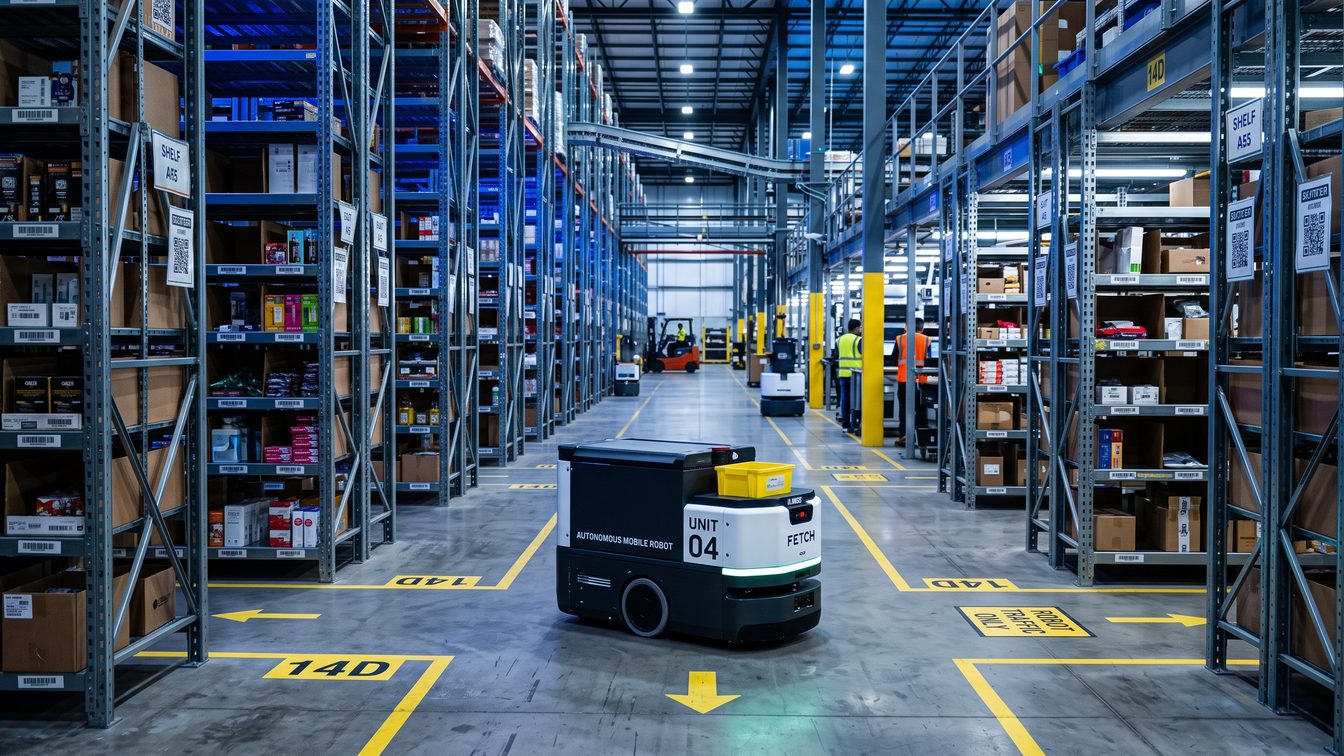
On the warehouse floor, autonomous mobile robots move inventory. AI-powered cameras grade returns. The physical and digital layers finally talk to each other. Chief Supply Chain Officer Melissa Nick described it simply: "The thinking and the doing finally move together."
That alignment is rare. Most fulfillment tech treats these as separate domains. Thinking happens in software. Doing happens on the warehouse floor. Information flows between them like water through a rusted pipe.
The Doctrine Connection
The Sovereignty Stack demands that owner-operators control their operational infrastructure. You can license software. You cannot license your decision-making authority away. The Claude MCP integration respects this boundary.
You own the Claude instance. You own the data flowing through it. ShipBob provides the MCP connector and the action execution layer. The integration pattern itself is open source. You can audit it. You can modify it. You can run it on your own infrastructure if you choose.
That's the inverse of most "AI as a service" offerings. Those systems own your data and your decision-making process. This one returns operational control to you.
Three Things Worth Knowing
First, speed matters more than perfection. A system that reships a late order in 30 minutes beats a system that recommends an optimized reship at hour three. The MCP integration prioritizes speed because fulfillment is a timing game.
Second, integration depth determines ROI. ShipBob has been learning warehouse operations since 2014. The MCP doesn't start from scratch. It starts with 12 years of operational knowledge built into the system. That context compounds.
Third, rate hikes don't stop. Carriers will raise rates again. Your margin math needs to adapt faster than manually. An AI system with real action authority can make those adjustments before your CFO sees the damage on next month's P&L.
FAQ
Q: Will this replace my warehouse staff? A: No. It augments them. The system handles routine decisions at machine speed. Staff handle exceptions and high-judgment calls. That's the scalable model.
Q: Can I use this with a different fulfillment provider? A: MCP is an open-source standard. Other providers could implement it. ShipBob launched first. That's a competitive advantage until others follow.
Q: What happens if the AI makes a wrong call? A: The AI Hub shows every action taken. You can audit decisions and adjust rules. The system is not autonomous. It's authorized.
Q: Does Claude stay on ShipBob's servers? A: Your Claude instance stays on your infrastructure. ShipBob provides the MCP connector and executes actions in their system. The architecture keeps your model separate from theirs.
Q: How many requests per day can this handle? A: Merchants are already running thousands. The constraint is your operation's capacity to execute orders, not the system's capacity to request execution.
The Margin Defense
Owner-operators exist in perpetual margin defense. Carriers raise rates. Customers expect faster shipping. Labor costs climb. Your operation either automates faster decisions or bleeds money into decisions that used to move quickly but no longer do.
ShipBob's Claude integration doesn't invent new margin. It preserves margin that logistics rate hikes would otherwise steal. That's not a nice-to-have. That's operational survival in a world where 4-6 margin points disappear without warning.
The real test isn't whether AI can think. It's whether AI can act. This integration answers that question with production data from merchants running thousands of daily requests.
Sources:
- Digital Commerce 360 (Aug 5, 2026): https://www.digitalcommerce360.com/2026/08/05/shipbob-adds-claude-integrated-ai-to-in-house-fulfillment-tech-suite/
- ShipBob's official announcement on Claude MCP integration
- Anthropic Model Context Protocol documentation
- ShipBob AI Hub feature documentation
- Industry carrier rate analysis (Q2 2026)
- DoorDash-Shopify integration case study on on-demand delivery automation
Frequently Asked Questions
Q: What is MCP and why does it matter for fulfillment?
MCP stands for Model Context Protocol. It is an open-source standard created by Anthropic for connecting AI applications to external systems. In ShipBob's implementation, MCP lets an AI assistant (Claude or Bobby) see live operational data, inventory levels, order status, and carrier performance, then act on it directly. It can reorder a SKU. It can reroute a shipment. It can resolve an exception order. The protocol matters because it turns AI from a question-answering tool into an operational layer that executes real fulfillment decisions without a human clicking buttons in a dashboard.
Q: Does the AI make decisions without human approval?
Some actions are automated. Simple status lookups, inventory checks, and order processing moves happen without manual intervention. ShipBob's AI Hub shows merchants every action AI takes on their account, creating an audit trail. For higher-stakes decisions like carrier upgrades or reshipping late packages, the system applies rules set by the merchant. You define the guardrails. The AI operates inside them. This is the same principle that runs a nuclear reactor: the procedure exists before the watchstander arrives, not after.
Q: What does this mean for small DTC brands under 500 orders per day?
ShipBob's Shopify app, launched Q4 2025, brought carrier selection logic to merchants doing as few as 200 shipments per day. The MCP integration extends this further. Small operators can now run fulfillment inquiries and actions through Claude without needing a dedicated ops team. The practical value is not in the AI itself. It is in the elimination of the dashboard-monitoring bottleneck that keeps small brands from operating at the same efficiency as enterprise-scale fulfillment operations. The system replaces the founder refreshing tracking pages at midnight.
Q: How does ShipBob's approach differ from adding AI to existing 3PL dashboards?
CEO Dhruv Saxena draws the line clearly. Most 3PLs are adding AI on top of existing systems. ShipBob built its stack from scratch since 2014 and now layers AI into the infrastructure itself. The warehouse floor runs autonomous mobile robots. AI-powered cameras grade returns as they arrive. The AI Hub connects software decisions to physical operations. The difference is between a smart dashboard and an action layer. A dashboard tells you a package is late. An action layer reshipped it before you opened the alert.
Q: What should operators verify before committing to ShipBob's AI fulfillment?
Three things. First, confirm your order volume justifies the integration. Below 200 shipments per day, the value is marginal. Second, audit how much of your current fulfillment is exception-driven. ShipBob's MCP shines on exception handling, carrier rerouting, and inventory rebalancing. If your fulfillment runs clean with few exceptions, the ROI is lower. Third, check how ShipBob's carrier network overlaps with your shipping profile. The system connects to over 50 carrier services including regionals like OnTrac and LSO. If your customer base is geographically concentrated where those regionals operate, the carrier optimization savings compound faster.
*Jeff Barnes is the founder of DEMG.ai and has no personal financial position in any company, fund, or platform named in this article. DEMG.ai provides marketing education and systems for owner-operators, not investment advice. Past performance does not guarantee future results.*