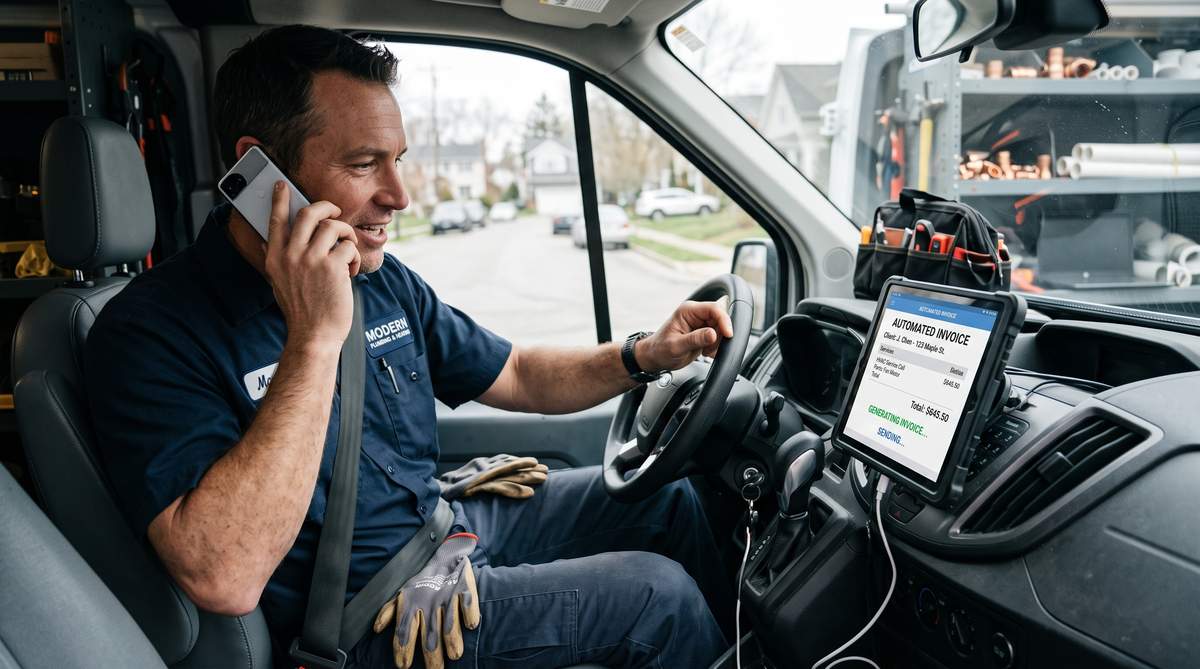
Lassie raised $35 million in Series A funding from a16z in August 2026, bringing total funding to $47 million. The San Francisco-based startup has scaled to 800+ small service businesses across 49 states by training AI to handle the administrative grind: insurance payments, claim denials, billing, appointments. The founders didn't theorize about this problem. They manually operated two medical practices for a full year to understand it. That's the real lesson here — and it cuts directly to why owner-operators should care about what Lassie is doing.
Source: a16z Build blog, August 24, 2026
The problem is brutally specific. A dentist or dermatologist or small medical practice founder loses 200+ hours every month to paperwork. Insurance denials. Claim adjustments. Billing disputes. Appointment rescheduling. Prior authorizations. None of this produces revenue. All of it demands attention. It pulls the founder out of the work they actually know how to do — treating patients, serving customers, building the business.
This is the founder-bottleneck in every service business.
Lassie's angle is elegant: train AI on the manual procedures of a specific industry, then let it handle those procedures autonomously. Not as a suggestion engine. Not as a draft-and-review system. Autonomous. The AI reads the insurance denial. It files the appeal. It tracks the case to resolution. The founder's phone doesn't ring. The work gets done.
For a 15-person team operating in-person from San Francisco, this is a notable achievement. They've built SOC 2 Type II compliance and handle Protected Health Information (PHI) across medical practices. That's not trivial. That's the kind of infrastructure that separates real companies from talk.
Why This Matters to Your Exit
Here's where the Owner-Operator Frame applies directly to your playbook.
When you sell a service business, the buyer's first question is simple: how dependent is this company on you? If you're the one handling insurance denials, managing billing disputes, scheduling high-value appointments : if you're the person who knows how to fix every thing that breaks : then you've built a high-income job, not a business.
This is the founder-operator trap. Your multiple (the valuation multiplier the buyer pays) gets compressed. You can't command a 3x or 4x multiple on revenue when the buyer has to buy you along with the business. They're taking on your risk. They're betting you'll stick around long enough to build the bench that replaces you. That's not use. That's a liability.
But what if the boring, repetitive, founder-dependent work was handled by something that doesn't require your oversight? What if your insurance denials were processed autonomously? What if appointments were rescheduled automatically without your review?
Suddenly, the business looks different to a buyer.
I worked with a dental practice founder a few years back who spent roughly 35 hours per week on administrative work. Insurance calls, billing disputes, patient communication. When we mapped out what he actually did, less than 15 of those hours required his clinical expertise or decision-making. The rest? Procedure. Manual work. The kind of thing a system could own.
He never implemented Lassie (it didn't exist then), but the exercise changed how he structured his exits conversation. He brought in an operations manager. Created procedures. Built the manual so that the business could run without him in the room every day. His next valuation reflected that : not a 2.5x multiple, but a 3.8x multiple on revenue. The systems reduced the founder risk.
That's what Lassie does at scale.
The Doctrine Connection: Systems Beat Slogans
Service businesses run on slogans. "Excellence." "Customer-first." "We care." Slogans don't scale. Slogans don't make insurance appeals happen at 2 a.m. Systems do.
A system is repeatable. A system is documentable. A system doesn't quit. A system doesn't have a bad day and decide to skip the insurance calls. A system handles the procedure the same way every time, and when it fails, you can debug it.
Lassie is betting that AI can be that system : autonomous, repeatable, accountable. The founders validated this by running the engine room themselves first. They didn't outsource the medical practices to India. They didn't hire a billing specialist and hope it worked. They got in the trenches, understood the manual, then trained a machine to execute it.
This is responsibility before excuses.
Most founders approach operations differently. They find a problem and immediately think "hire someone" or "build a tool" without understanding the procedure well enough to train either one. That's cart-before-horse. You can't automate what you don't understand. You can't sell a business built on work you don't understand.
What the Build-to-Sell Operator Should Do Right Now
If you're running a service business and thinking about an exit in the next 3–5 years, the Lassie model gives you a decision framework.
First, audit your founder-dependent work. Map what you actually do every week. Break it into revenue-generating work and administrative work. For the administrative work, identify what's procedural (repeatable steps) versus what requires your judgment. The procedural stuff is your target.
Second, test whether AI can own that work. You don't need to wait for Lassie to expand to your vertical. You can run a pilot. Take your most repetitive task : billing disputes, appointment rescheduling, claims processing, whatever it is : and experiment with current AI tools. GPT. Claude. Specialized tools built for your industry. The goal isn't perfection on day one. The goal is proof that the work can be systematized.
Third, document the procedure. Write down how you handle the work today. Step by step. This is the manual. This is what you'll train a system on, whether that system is AI, a person, or both. The act of writing forces clarity. It shows you what you can offload and what you can't.
Fourth, measure the outcome. How many hours does this automation save you per week? What's the quality of the output? Does the automated system reduce errors or create new ones? Give it a month of real data before you decide.
Finally, fold this into your exit narrative. When a buyer looks at your business, they should see an owner-independent operation. The systems run the boring work. You focus on the strategic work. Your time becomes scarce, which makes your business more valuable, not less.
This is the math of the Owner-Operator Frame.
The Goldilocks Zone
a16z describes Lassie as operating in the "Goldilocks zone" : AI that autonomously runs small businesses. Not enterprise. Not consumer. Small business operations where the problem is acute, the margin for error is low, and the founder urgently needs the time back.
Service businesses fit that profile perfectly. A doctor's office can't ignore insurance denials. A dental practice can't lose appointment slots. An HVAC company can't miss billing deadlines. These are founder-intensive problems that directly impact revenue. They're not nice-to-haves. They're existential.
The window for this category is open now. Lassie has found product-market fit with $800M+ in addressable market across the service sector. But they're not the only player. Other startups will follow. The field will crowd. And when it does, the barrier to entry won't be technology : it will be integration depth and industry expertise.
That's why the founders ran their own medical practices first. They learned the exception cases, the compliance landmines, the specific failures that matter. They didn't read about medicine billing. They lived it.
FAQ: Owner-Operator Edition
Q: If AI is handling my administrative work, how do I maintain quality control?
A: You measure outcomes, not process. Set a baseline for your current work quality : accuracy, time to resolution, customer satisfaction. Run the AI system in parallel for a month. Compare. If the AI meets or exceeds your baseline, quality isn't your problem anymore. Now your problem is exception handling and continuous improvement. That's a systems problem, not an operator problem.
Q: Doesn't letting AI run my business mean I'm losing control?
A: No. You're delegating procedure and keeping authority. Right now, you're in the weeds executing the procedure AND holding the authority. That's inefficiency. A system that owns the procedure while you maintain the authority through measurement and exception handling is actually more control, not less. You're free to focus on the decisions that matter.
Q: How do I explain this to a buyer? Won't they think I've checked out?
A: Frame it as operator-independent efficiency. You didn't disappear from the business. You engineered it so the business doesn't require your daily presence in the engine room. That's actually what buyers want to hear. It means the business can scale without you becoming a bottleneck. It means the buyer can keep you in an advisory role if they want, or they can let you exit cleanly. Both options are now possible.
Q: What happens if the AI gets something wrong with a patient file or a billing claim?
A: You need audit controls. Random spot-checks. Alert thresholds. Exception queues that require human review. These aren't burdensome : they're the same controls you'd have with a human assistant. In fact, AI systems are easier to audit because they're consistent. When they make a mistake, it's usually a pattern you can identify and fix in the system, not a one-off human error.
Q: My vertical doesn't have a dedicated AI solution like Lassie yet. What do I do?
A: Start with current tools. GPT-4 or Claude can handle many service-business administrative tasks with the right prompt engineering. The question isn't whether you have perfect automation. The question is whether you can reduce your administrative burden by 20-30% using available tools. If yes, that's the proof point. Document the process. Build the manual. Then decide whether to double down with custom automation or hand the playbook to a buyer who will.
The Exit Math
Here's the hard truth about service business valuations: if you're a founder-operator, you own a high-income job, not a business. Buyers typically pay 2.0–2.5x revenue for founder-dependent service businesses. Maybe 2.8x if growth is strong.
But an operator-independent service business : one where the systems run, the founder is a strategist not a practitioner, and founder-dependent work is systematized : moves into a different category. Those businesses command 3.5–4.5x multiples. Some higher, depending on margins and growth.
That's not small math. That's an extra $1–2 million on a $5 million revenue business. That's the difference between a comfortable exit and a truly valuable one.
Lassie's $47 million raise and expansion to 800+ customers is proof that the market values what they're building. The founders understood their customer's bottleneck : founder-dependent, repetitive, high-consequence administrative work : and built a system to own it. That's not just good product. That's good business strategy for their customers.
If you're building a service business with an exit in mind, follow their playbook. Identify the founder-dependent bottleneck. Understand the manual. Test whether a system can own it. Measure the outcome. Then tell your buyer about the business you've engineered : not the job you've built.
That story commands a multiple.
Sources & Reading:
- a16z Build: "How Steijn & Pelle Built Lassie to Run Thousands of Medical Practices" (August 24, 2026)
- Lassie Official: SOC 2 Type II Compliance & PHI Handling Documentation
- Service Business Valuation Analysis: Exit Multiples and Founder-Dependency (2024-2026 market data)
- Owner-Operator Framework: Systems vs. Slogans in Service Business Growth (demg.ai doctrine)
- AI Autonomy in Operations: Current Capabilities and Risk Management (industry analysis, 2026)
Jeff Barnes is the founder of DEMG.ai and Digital Evolution Marketing Group. He has no personal position in any company, fund, or platform named in this article. DEMG.ai provides marketing systems and education for owner-operators, not investment advice. Past performance does not guarantee future results.