HoneyBook's MCP: Open Integration, Bounded Sovereignty
HoneyBook announced in August 2026 that it's the first client relationship platform for solopreneurs to achieve direct interoperability with Claude through Anthropic's Model Context Protocol. The direct answer: yes, use it. No, it doesn't give you complete data sovereignty. Users can query live CRM data, create projects, update lead stages, generate invoices, and issue payments through conversational AI—all from within Claude. The technical architecture is strong: isolated environments, granular permission controls, credentials never exposed to the model. But the deeper question matters more than the feature: does MCP give you sovereignty over your data, or does it just make your data more accessible to whoever controls the platform?
Key Takeaways
- MCP = AI Assistant Choice. You can switch from Claude to any MCP-compatible model without changing your CRM. That's real sovereignty in the AI layer.
- MCP ≠ Data Ownership. HoneyBook still owns your client records, pipeline, contracts. You don't own the data; you have access rights that can change.
- The Gap. Open-standard integration doesn't mean open data infrastructure. Solopreneurs gain optionality over AI but not over their system of record.
- Platform Risk Remains. Pricing changes, acquisitions, feature shifts—MCP doesn't insulate you from those. It only prevents AI assistant lock-in.
The Case for Open Air
I've watched this pattern since 1997. Built the Angel Investors Network through Geocities. Watched it migrate to WordPress. Migrated again to Lovable. The platforms that survived were built on open standards. The ones that didn't became taxes on the business. When you depend on a closed system, the platform owner always finds a way to extract rent. Closed systems never stay benevolent forever.
Here's the distinction that matters: MCP is an open standard. That's not marketing language. It means you can switch AI assistants.from Claude to another MCP-compatible model.without changing your CRM. That is actual sovereignty. But the corollary is darker: you still do not own the CRM data. If HoneyBook decides to change pricing, or introduce a platform tax, or shuts down, your entire business record goes with it. MCP solves the AI assistant question. It does not solve the data ownership question.
What HoneyBook Actually Built
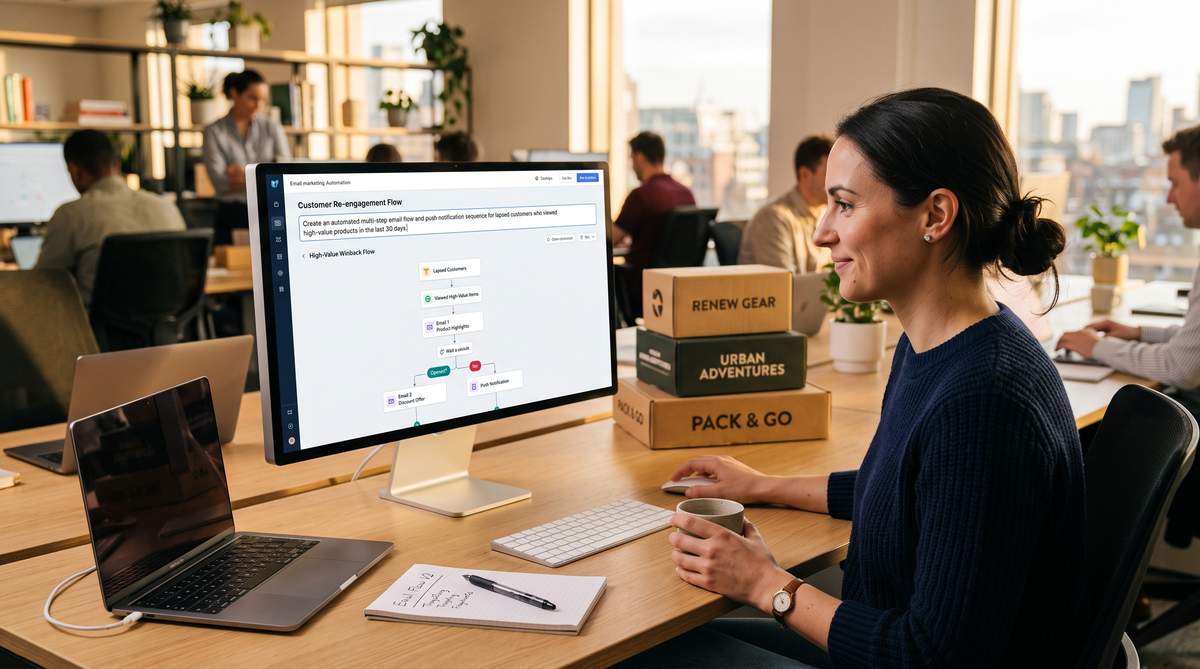
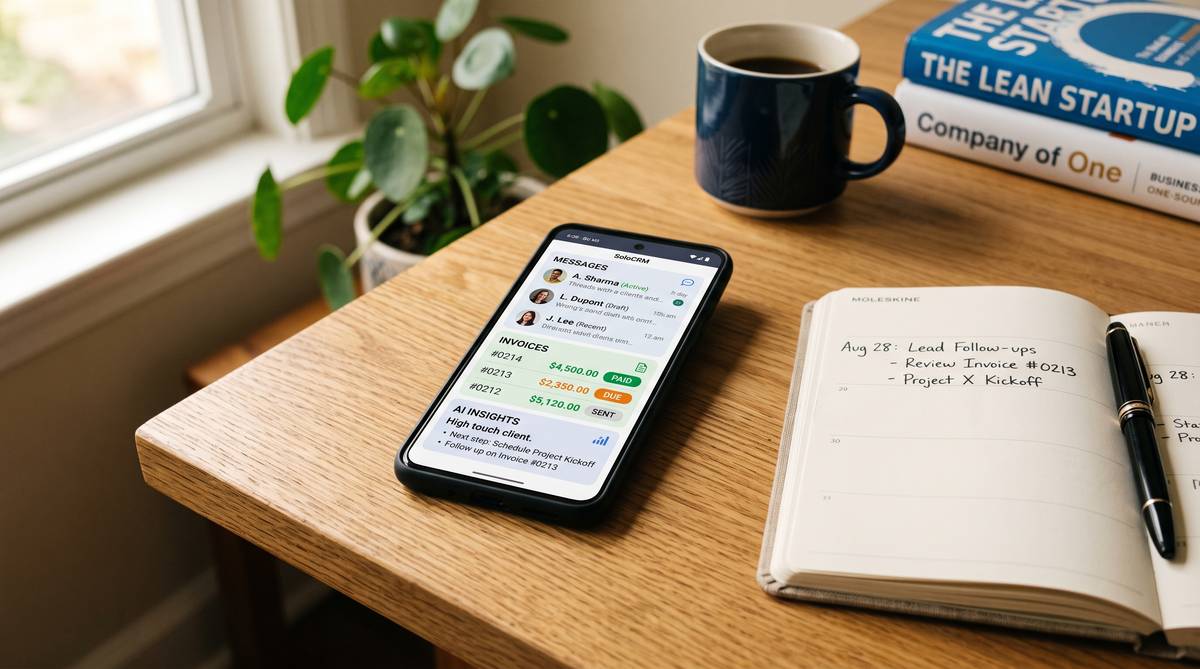
The integration works like this. You authorize HoneyBook to connect to Claude. You set permissions resource by resource.which of your pipeline, projects, contracts, invoices, and client messages Claude can see. Then you ask Claude questions: "Which clients have signed contracts but haven't been invoiced?" "What's the average project value this quarter?" "Draft an invoice from my template for the Wilson account." Claude reads your live data, synthesizes across your entire business record, and acts on it when you authorize it.
The permissions architecture is the hard part, and HoneyBook got it right. Permissions are explicit. They're narrow. Nothing runs until you explicitly approve it. Every request executes in an isolated environment that destroys itself when the request ends. Network access runs only to HoneyBook. Your credentials stay on your machine, never handed to Claude. Early users.photographers, event planners, venues, DJs, content studios, consultants, web designers.found the first use case immediately: reconciliation. They asked Claude to identify delivered work that wasn't billed. Stale leads. Mislabeled clients. The kind of work that costs real money but lives in disorganized systems.
HoneyBook's Helena Bachar, Senior Product Manager, summarized it: "The first thing people reached for wasn't drafting or writing. It was their own track record." That tells you everything. AI isn't changing how solopreneurs write. It's changing how solopreneurs see their own business.
The Sovereignty Stack Question
Now the harder conversation. The Sovereignty Stack doctrine says: your business only compounds when the value you build isn't at risk from platform decisions you can't control. Closed systems.proprietary platforms, walled integrations, vendor lock-in.compress your optionality over time. Open systems preserve it.
MCP is an open standard. The specification is public. It's supported by Claude, ChatGPT, VS Code, and others. You can build once and integrate everywhere. That means you're not locked into Claude. If a better AI assistant emerges, or if Claude's pricing becomes predatory, you can switch. Your CRM connector doesn't have to follow.
That's real sovereignty over your AI relationship. Every platform company that's ever captured an owner-operator has started with "we'll be the best tool for you," then moved to "we own your workflow." Open standards break that pattern. They're the immune system against platform rent-seeking.
But here's the unspoken part. Your HoneyBook data isn't portable the same way. HoneyBook owns your client records, your pipeline, your contracts, your payment history. You can request it back as an export. You can't take it to Pipedrive or Salesforce without friction. You don't own it. You have a right to access it, which is not the same thing. If HoneyBook decides to increase pricing.or to require their AI agents as a premium tier, or to sell insights from your aggregated data.you have limited exits. The MCP integration is genuinely open. Your data dependency is not.
The Actual Risk: Data Dependency Without Ownership
Capitalism creates value because people can choose. Open standards multiply value because they preserve choice at every layer. But they only work when layered correctly. MCP solves one layer: AI assistant choice. HoneyBook doesn't solve another: data ownership. Those are not equivalent risks.
Consider a realistic scenario. HoneyBook's business model works. Photographers love it. Event planners save hours. Then a larger platform.Stripe, Square, maybe a major booking system.acquires them. The new owner integrates HoneyBook data into their broader offering. Pricing changes. Features shift to favor their own integrated AI over Claude. Users wake up to a platform that's no longer about optionality. It's about extracting maximum value from the users who can't leave because they've built their entire business inside it.
MCP doesn't protect you from that. It only protects you from AI assistant lock-in. Which matters, but it matters less than data sovereignty.
What Changes If This Scales
If CRM companies start building MCP connectors as standard practice.which they should.the competitive advantage evaporates. What matters then is not the integration itself, but the data it points to. Zapier did this already. Zapier made integrations commodities. What prevented Zapier from becoming a tax was that the integrations were reversible. You could move between tools. But you still couldn't own the data living in each tool.
The question HoneyBook is surfacing is: should solopreneurs think about their CRM the same way they think about their accounting software or their payment processor? As a utility that moves data in and out? Or as the system of record.the foundation of the business.that requires different governance?
If it's the former, MCP is a genuine win. Agents talking to your CRM means better decisions, faster cycles, less manual work. If it's the latter, then MCP is solving the wrong problem. You need data portability and ownership, not just better access. Most solopreneurs treat their CRM as the former and wish they'd treated it as the latter.
Doctrine Connection: Capitalism Creates Value
*Capitalism creates value when all parties have options. Closed platforms destroy value by eliminating choice. MCP is a capitalist solution.it restores choice in the AI layer. But it doesn't restore choice in the data layer. Until solopreneurs have genuine ownership of their CRM data.not just access rights.they're still operating inside a controlled system, no matter how open the integration.*
Frequently Asked Questions
Q: Can I use HoneyBook's MCP with an AI assistant other than Claude?
Yes. HoneyBook built the connector on the open Model Context Protocol standard, not as a Claude-exclusive integration. Any MCP-compatible AI client can connect, including your own choice of assistant. HoneyBook's documentation clarifies that when you connect a different assistant, your data is handled under that assistant's privacy policy, not Anthropic's. This is the core sovereignty benefit: you're not married to Claude.
Q: Does Claude see my data in the background, or only when I ask it something?
Only when you ask. Claude accesses only the data relevant to your specific request. It doesn't passively monitor your account. Permission is granular and request-specific. This is a real privacy control, not just marketing language. HoneyBook emphasizes transparency about when AI is being used and what data is involved.
Q: If HoneyBook shuts down or changes pricing, can I export my data and move to a competitor?
You can request an export, but it's a one-time lift, not an ongoing portable format. Your data isn't locked in HoneyBook's format in the way Quickbooks locks accounting data, but it's not freely portable either. This is the gap that MCP doesn't close. Open AI integration doesn't mean open data infrastructure.
Q: Who actually owns my data when it's being processed by Claude?
HoneyBook owns it. Claude (Anthropic) receives it to generate responses but doesn't store it as part of their training data or permanent records. Your data remains yours for legal purposes, but operationally, your ability to move it freely is limited. This is why the distinction between access rights and ownership matters.
Q: Is this a real sovereignty upgrade, or just a prettier version of lock-in?
Both. MCP is a real upgrade for AI assistant choice.you can genuinely switch models without abandoning your CRM. But it's a lock-in at the data layer because you still can't freely move your business record. Real sovereignty requires open standards at every layer, not just the top one. HoneyBook solved the integration problem. They didn't solve the data ownership problem.
The Operators' Verdict
HoneyBook's MCP is worth using. The technical execution is strong. The privacy controls are genuine. The productivity gains are real. Solopreneurs who want AI agents that understand their business should set it up. But go in with eyes open: you're gaining sovereignty over which AI assistant works in your CRM. You're not gaining sovereignty over your business data itself. That's a useful distinction. It's not a complete one.
The real test will come later. If HoneyBook.or whoever owns it in five years.starts building platform taxes, then the openness of the MCP integration will matter a lot less. The path from solopreneur tool to platform rent-seeker is well-worn. Open standards slow that transition. They don't stop it.
Build on open standards. Yes. Own your data. Better.
Jeff Barnes has no personal position in any company, fund, or platform named in this article. DEMG has no current commercial relationship with any party mentioned. DEMG provides marketing systems and education for owner-operators, not investment advice. Past performance does not guarantee future results.