TL;DR
Franify won a Gold Stevie Award for Technical Innovation by doing something most AI tools skip: building for a specific vertical structure, not a horizontal problem. They engineered franchise systems—not generic "marketing automation." The lesson for agencies: productize around your vertical's operating model. Stop selling services. Start selling systems.
The Problem Franify Actually Solved
On August 19, 2026, Reshift Media announced that Franify had won a Gold Stevie Award for Technical Innovation at the 23rd Annual International Business Awards. The award recognized what Franify's founders understood that most SaaS companies miss: franchise marketing isn't a scaled version of single-location marketing. It's a completely different operating model.
Here's the gap Franify found: A franchise system is a distributed network. HQ owns the brand and strategy. Local owners own the execution. The tension between those two forces has always been franchise marketing's core problem. You want consistency at scale. You also want relevance at the local level. No tool built for generic multi-location marketing actually solves this.
Most platforms (BirdEye, SOCi, Tiger Pistol) adapt enterprise tools for franchises. Franify was engineered exclusively for franchise structure.
What Franify Built (And Why It Matters)
Franify's platform includes:
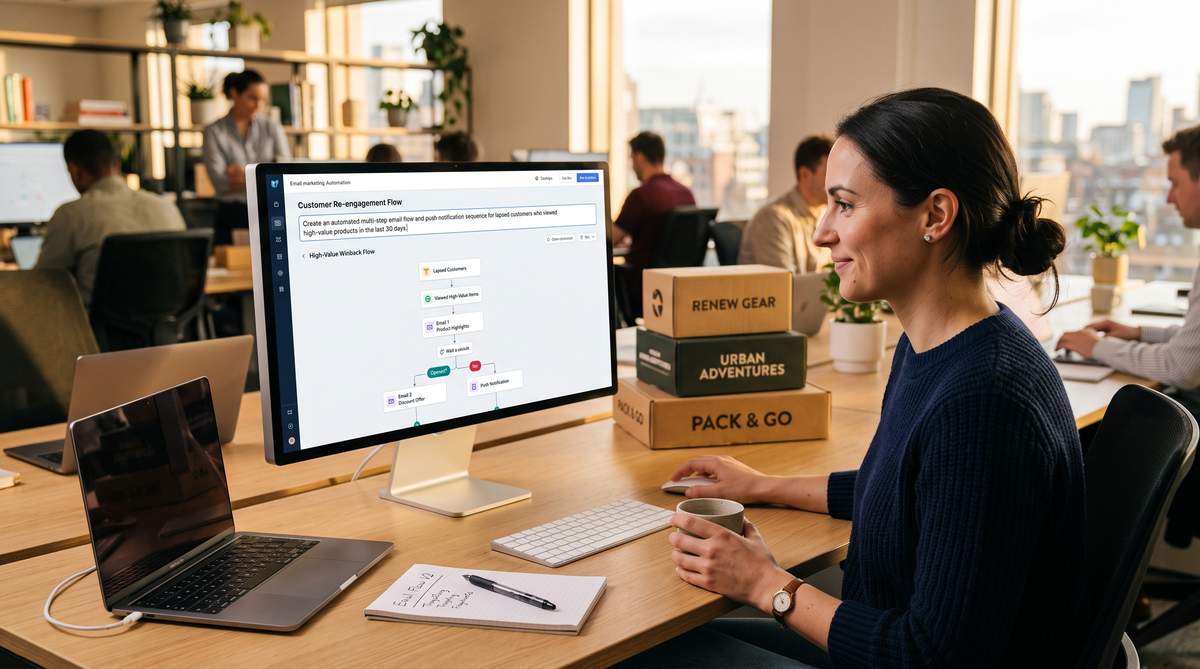
AI-assisted content localization. Head office creates a single post. The platform programmatically inserts local details (city, neighborhood, phone number, local offers) into copies for each location. One post becomes 500 localized posts. Brand consistent. Relevantly local.
Dual-role dashboards. National teams see system-wide performance and set strategy. Franchisees see only their location's data and pre-approved content to customize. No one needs Meta IDs or complex workflows. Franchisees aren't marketing experts; the platform assumes that.
Cross-platform advertising with local budget controls. Run ads on Facebook, Instagram, Google across your network. Set budgets per location. Geotarget down to a custom radius around every address. Built-in payment capture, so local owners fund their own campaigns without HQ managing 500 credit cards.
Lead generation and analytics built for franchise growth. Separate pipelines for franchisee recruitment versus customer acquisition. Landing pages auto-generate with location-specific details. Call tracking. Phone numbers unique per location.
Social publishing at scale. Schedule posts, respond to reviews, manage comments across your entire network from one dashboard. No franchisee ever logs into Meta. No coordination delays. No orphaned pages.
This is not "marketing automation with a franchise setting." This is architecture designed from the ground up for how franchises actually operate.
The Franchise Playbook That Agencies Miss
Here's what 93% of franchisees know and 81% of brands admit: local marketing is critical to success. Yet 45% of franchise systems say coordinating across locations is their biggest challenge. Only 1 in 5 franchises run a true hybrid model that balances brand control with local autonomy.
Why? Because franchisees are not marketers. They're operators, entrepreneurs, small business owners. A survey of 250+ franchise marketers showed that 38% must deliver results with teams of just 2-5 people.
The agencies that win in franchise markets do something radical: they stop selling campaigns and start selling systems.
They understand that the franchisee's primary problem isn't "how do I do marketing?" It's "how do I run my business while meeting brand requirements?" If your product requires marketing expertise to execute, franchisees fail. If your product reduces local execution to a single button, franchisees win. HQ wins. The whole system wins.
Franify succeeded because it flipped the question. Instead of asking "how can we sell more services to franchisees?" they asked "how can we make franchisees so effective that they need us less?"
That's vertical thinking.
What Agencies Can Steal From Franify's Playbook
Franify's architecture reveals a playbook that works across any vertical with distributed execution:
1. Build for the vertical's control structure, not its function. Franchises have headquarters and locations. Franify's dual-dashboard architecture is purpose-built for that. What's the control structure in your vertical? SaaS agencies have resellers and end-customers. B2B service networks have regional directors and account teams. Dental practices have corporate offices and satellite locations. Build dashboards that map to who actually makes decisions and executes.
2. Make execution binary. Franify collapses a complex workflow (content localization, targeting, budgeting, approval, publishing) into a single button. An operator presses it. It works. No marketing training required. What would your vertical's "single button" look like? For a quick-service restaurant chain, maybe it's: "approve this month's promotions" (no creative, no scheduling, no optimization). For an insurance broker network, maybe it's: "generate and publish these 10 compliant local landing pages." The fewer decisions a franchisee has to make, the more likely they execute.
3. Automate approval workflows, not just tasks. Franchisees won't trust a tool that publishes without review. Franify automates the routine checks (brand compliance, local accuracy, platform specs) so humans only review edge cases. That cuts review time from hours to minutes. Most platforms skip this. Good vertical products automate governance.
4. Separate the national strategy layer from the local execution layer. HQ creates strategy. Locations execute. Don't muddy that. Franify's national dashboard lets strategists see trends and set direction. The local dashboard lets owners execute without seeing noise. This isn't just UX design. It's organizational design embedded in software.
5. Price around the vertical's unit economics, not hourly services. Franchises pay per location, per month, with optional add-ons (expert support, franchise development services). The pricing reflects franchise structure. Agencies selling franchise marketing typically bill $3K-$8K per location per month. Franify's model aligns with that without fighting it. Build pricing that franchisees see as inevitable, not exploitative.
The ATLAS Model: Vertical Market Dominance
Franify's approach aligns with what we call the ATLAS Model for vertical market dominance:
Architecture. Build software for the vertical's operating model, not the horizontal function. Franchises have a unique structure (HQ + distributed locations). Design for it.
Transparency. Let each role see the data they need to decide well. HQ needs system-wide trends. Franchisees need their location's performance. Murky dashboards kill adoption.
Localization. What works nationally doesn't work locally. Franify's content localization isn't a feature bolt-on. It's core infrastructure. Every product for a distributed vertical needs the same.
Automation. Reduce decision-making to its minimum. Pre-built templates. Auto-population of local data. One-button publishing. Make the default action right so operators don't have to think.
Scalability. The system works with 5 locations, 500, or 5,000. Not because it's "cloud-based." Because it's designed for distributed execution at scale. Franify's platform operates the same whether you're running Chick-fil-A or a 30-unit burger chain.
The Risk: Vertical Lock-In Cuts Both Ways
Franify's dominance in franchise marketing is also its fragility. The platform is so deeply engineered for franchise structure that it doesn't adapt to adjacent verticals. That's intentional for franchise operators (they get exactly what they need) and constrains Reshift Media's addressable market.
For agencies building vertical products: know your moat. A franchise-specific platform will outperform a generic "multi-location tool" by orders of magnitude. But know your ceiling. Franify's market is every franchise system that's adopted AI-powered marketing. When you've captured that, you've hit vertical saturation. Growth comes from going deeper (more franchisees per system, better integration), not wider (pivoting to hotels, dental practices, or unrelated verticals).
Franchise operators who adopt Franify should know what they're buying: a purpose-built system that will outperform generic tools by a factor of 3-5x, but which won't be flexible enough to handle every franchise model. If you run a master franchise model or a hybrid equity/service structure, Franify may not map cleanly to your operational model. Test before committing.
FAQ
Q: Why didn't an existing platform (HubSpot, Marketo, Sprout Social) just add franchise features?
A: Because franchise complexity requires architectural decisions that conflict with horizontal platforms' core designs. Dual dashboards, permission-based data access, location-based analytics, localization engines—these aren't features you bolt on. They're foundational. A platform built on single-user workflows (like HubSpot) can't cleanly support multi-role, multi-location structures. Starting from scratch was faster than retrofitting.
Q: Is Franify only for large franchises?
A: Franify scales from 5 locations to 5,000. But the ROI story changes. For a 10-location franchise, Franify makes sense if your per-location marketing spend exceeds $500/month. Below that, the platform cost isn't worth it. For a 500-location system, Franify nearly always wins against building custom tooling in-house.
Q: Can agencies use Franify to deliver white-label franchise marketing services?
A: Yes. Franify supports agency partnerships where agencies own the customer relationship and Franify powers the underlying platform. This is Reshift Media's growth engine: they're not trying to sell directly to every franchise. They're embedding themselves into agency workflows.
Q: What happens when AI gets better at content generation?
A: Franify's edge won't be the AI itself (that commodity quickly). The edge is the distribution model. As AI content tools proliferate, what separates winners from commodity is the ability to run that AI across thousands of locations consistently. Franify's architecture: localization, dashboards, approval workflows, analytics: is what makes AI valuable at scale. That architectural advantage compounds as AI gets better.
Q: How does Franify's pricing compare to hiring an in-house marketing director per location?
A: A marketing director costs $65K-$85K all-in. Franify runs $2K-$6K per location per month, depending on scope. For franchises where the franchisee is a full-time operator (not a marketing pro), Franify always wins on cost. For franchises where franchisees have marketing backgrounds (digital agencies, consulting, some creative services), the math flips.
Doctrine Connection: Competence Beats Credentials
Franify won a Gold Stevie Award not because their AI was the cleverest or their feature list the longest. They won because they were relentlessly competent at solving one specific, vertical problem: how to scale brand-consistent, locally-relevant marketing across a distributed franchise network.
They didn't have the biggest budget, the most hype, or the most credentials. They had deep domain expertise in franchise structure and the discipline to build exactly for it.
That's the lesson for agencies and platforms: competence in your vertical beats credentials in the horizontal market. Stop trying to be everything to everyone. Pick a vertical. Understand its operating model. Build software that makes operators in that vertical demonstrably better at their job.
Competence compounds. Franchisees who use Franify do better marketing. Better marketing drives better results. Better results drive word-of-mouth adoption. That's how verticals are won: not through sales teams or brand spend, but through relentless execution in a single domain.
Framework Reference: ATLAS Model for Growth: Architecture, Transparency, Localization, Automation, Scalability
*Jeff Barnes has no personal position in any company, fund, or platform named in this article. demg.ai has no current commercial relationship with any party mentioned. demg.ai provides marketing education and operator strategy, not investment advice. Past performance does not guarantee future results.*