One in four field service calls requires a second truck roll. The industry average first-time fix rate is 75 percent, according to Aberdeen Group research. Best-in-class operators reach 89 percent by combining AI-powered dispatch optimization with systematic parts forecasting. At 500 daily service calls, a 75 percent fix rate generates $25,000 to $37,500 in wasted truck costs per day. AI parts forecasting is one component of a larger system. This article shows field service owner-operators how to build that system using the Data's DNA framework.
Key Takeaways
- The industry average first-time fix rate is 75 percent. Best-in-class operators hit 89 percent. That 14-point gap is either a margin engine or a cost drain, depending on which side you operate from.
- Each failed service call requires an average of 1.6 additional visits. At $200 to $300 per truck roll, those costs compound fast across a fleet.
- AI parts forecasting mines historical job data to predict which parts each technician needs before dispatch. The Data's DNA framework gives you a three-step process to build that prediction layer from data you already own.
- Organizations above 70 percent first-time fix rate average 86 percent customer retention versus 76 percent for those below. Retention is where the compounding financial benefit lives.
The First-Time Fix Rate Gap Is a Financial Problem, Not an Operations Problem
Aberdeen Group data is unambiguous. The industry average first-time fix rate is 75 percent. The best-performing 20 percent of field service organizations hit 89 percent. The lowest performers run 56 to 63 percent. Most field service owner-operators assume their numbers sit somewhere in the middle and that the gap is manageable.
It is not. At 500 daily service calls, a 75 percent fix rate means 125 calls require a second visit. At $200 to $300 per truck roll, that is $25,000 to $37,500 in daily waste. Annualized across 250 working days, that figure approaches $12.6 million in recoverable cost. That is not an operations problem. That is a balance sheet problem.
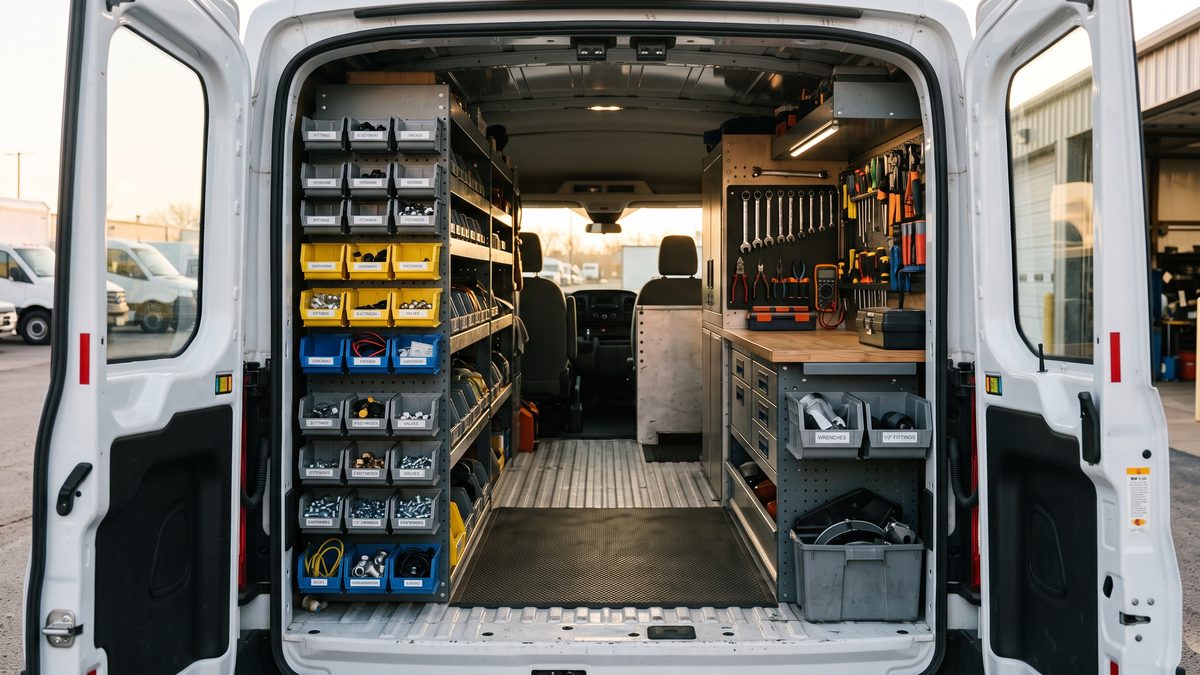
The primary driver of low first-time fix rates is predictable. Technicians arrive without the right parts. They have the knowledge and the tools. They do not have the specific component the job requires. The second trip is a parts run, not a skill gap. That is exactly what AI parts forecasting is built to close.
AEX Inc analysis connects Bain research on retention directly to field service outcomes. Organizations above 70 percent first-time fix rate average 86 percent customer retention. Those below 70 percent average 76 percent. A 5 percent improvement in customer retention lifts profits by 25 to 95 percent per Bain. The math is in the system. Not the slogan.
What Submarine Supply Chains Taught Me About Parts Forecasting
I served on a Navy nuclear submarine. On a submarine, parts failure is not an inconvenience. It is a casualty drill. Every system has a known failure mode. Every failure mode has a documented response procedure. The manual tells you which part fails first and what you need to fix it. Before every deployment, we loaded supplies based on mission profiles, historical failure rates, and repair history from the boat's previous patrols. We did not wait for something to break to figure out what we needed.
That is parts forecasting without the AI layer. It works because submarines accumulate precise operational data over years of watchstanding. The mission determines the load. The load determines the outcome. Field service businesses have the same operational data sitting in their job management systems, their invoices, and their service histories. Most of them are not using it systematically.
The difference between a submarine crew and a field service operator is not discipline or capability. It is process. The submarine has the manual. The field service operator has tribal knowledge stored in the heads of senior technicians. The AI parts forecasting layer converts that tribal knowledge into a documented system. Systems beat slogans. That principle is as true in the engine room as it is on a service truck.
The Data's DNA Framework: Three Steps to Pre-Dispatch Prediction
Data's DNA works because your field service operation already generates the information needed to predict parts requirements. The raw data exists in your job management system, your parts invoices, and your service histories. Most operators cannot see the pattern because the data sits in disconnected places. The Data's DNA framework connects it in three stages.
Data Collection. Pull your last 24 months of job records. For each job, capture the equipment type, the reported problem, the parts used, and whether the job resolved on the first visit. This is the foundational dataset. ServiceTitan's integrated approach connects estimation data directly to material requirements, so this collection step runs automatically when the platform is in place. Operators without an integrated platform can build the same dataset from invoices and job logs in a spreadsheet inside 30 days.
Network Patterns. Once you have clean historical data, the AI layer identifies patterns your team cannot see manually at scale: which equipment type fails at 18 months versus 36 months, which parts appear on 80 percent of HVAC compressor calls, which technician-job combinations produce the best first-time fix rates. ServiceTitan's Titan Intelligence engine runs these pattern matches across thousands of historical jobs to generate dispatch recommendations and parts predictions. Smart inventory systems continuously fine-tune forecasts as new job data arrives, fitting your specific operation rather than applying generic averages.
Action Loading. The prediction layer produces a pre-dispatch protocol. Before each technician leaves, the system recommends parts to load based on the job type, equipment history, technician skill profile, and historical repair data. This is not a suggestion box. It is a standard operating procedure driven by data. When a technician rolls out with the right parts, the repeat truck roll becomes an exception rather than the default for 25 percent of your calls.
How ServiceTitan Implements AI Parts Forecasting End-to-End
ServiceTitan connects four layers that work together rather than in isolation. Dispatch Pro uses AI to score every job for value prediction and matches technician performance history against job requirements. The right technician for a specific job type is the one whose historical performance on that job type produces the highest first-visit resolution. ServiceTitan AI features factor in certifications, skill profiles, location data, and close history when scoring each dispatch decision.
Atlas is ServiceTitan's on-site AI assistant. When a technician encounters an unexpected configuration or unfamiliar part number on site, Atlas matches OEM parts to the Pricebook catalog in real time. No warehouse call. No return visit. Resolution happens on the first visit. That is how you close the gap between 75 percent and 89 percent one job at a time.
The inventory module tracks bin locations, serial numbers, costing methods, and automatic reorder points across trucks and warehouses. Estimation data flows directly into material requirements planning. When a technician closes a job, parts consumption is logged and future forecasts adjust. Field Pro users report a 20 percent average ticket increase year-over-year and 15 percent higher total sales per technician for those recording job data at least once per month.
Connect your parts forecasting work to field service automation ROI and AI scheduling systems for field service to build the complete operational picture. Parts forecasting is one layer. Dispatch optimization and scheduling intelligence complete the system.
What to Build Before You Buy the Software
Software does not fix a process that does not exist. Before deploying an AI parts forecasting layer, field service owner-operators need three things in place.
First, consistent job data entry. If technicians do not record which parts they used and whether the job resolved on first visit, there is no training data for the AI model. Start with a mandatory close-out protocol: every job gets three fields completed before the technician leaves the site: parts used, resolution status, and equipment condition.
Second, a parts catalog with standardized identifiers. Tribal knowledge about part names and numbers does not feed an AI prediction system. Every technician must use the same identifier for the same component. This is the process discipline that separates sellable, acquirable businesses from those that depend entirely on the founder's knowledge to run day-to-day.
Third, a quarterly review cadence for forecast accuracy. Parts forecasting is not a set-and-forget system. Review the hit rate after 90 days, identify where predictions land and where they miss, and adjust. This is damage control applied to operations. The system tells you what is working. You act on what it shows.
See how AI inventory management for small businesses connects to parts forecasting at the full operations level.
Frequently Asked Questions
What is the industry benchmark for first-time fix rates in field service?
Aberdeen Group research sets the baseline: industry average FTFR is 75 percent, meaning one in four service calls requires at least one additional visit. Best-in-class organizations hit 89 percent. Low performers run 56 to 63 percent. Organizations above 70 percent average 86 percent customer retention. Those below average 76 percent. The 10-point gap compounds into significant revenue variation between businesses of otherwise similar size and service quality over a multi-year period.
How does AI parts forecasting predict which parts a truck needs?
The system mines historical job records to identify patterns in parts usage by equipment type, job category, and technician profile. The AI model learns that a specific equipment model in a specific age range requires a predictable set of parts on 70 to 85 percent of service calls. Before dispatch, the system translates that pattern into a pre-load recommendation for the assigned technician. ServiceTitan's smart inventory module continuously refines forecasts as new job completions add data, fitting your specific operation over time rather than applying a generic template.
What does it cost to implement an AI parts forecasting system?
Cost depends on the platform and company revenue tier. Field service operators should plan for a meaningful monthly software investment to access the full Titan Intelligence suite including Dispatch Pro, Atlas, Field Pro, and inventory management. The payback period calculation is direct: a business running 300 daily calls at 75 percent FTFR that improves to 85 percent saves 30 calls per day at $250 each. That is $7,500 in daily savings. A $3,000 per month platform investment pays back in less than one avoided repeat-roll day per month. Verify the ROI math before you sign.
Can smaller field service operators benefit from parts forecasting without enterprise software?
Yes, with a manual version of the Data's DNA framework. Collect 12 to 24 months of job records covering equipment type, parts used, and resolution status. Build a frequency table showing which parts appear on more than 60 percent of calls for each job category. Convert that table into a standard truck load-out checklist per job type. Review it quarterly. This produces a measurable improvement in first-time fix rates before any software investment. Once the business grows to support a platform like ServiceTitan or Housecall Pro, the process discipline is already in place to get full value from the AI forecasting layer.
Doctrine Connection: Systems Beat Slogans
Every field service operator says they are committed to first-time resolution. Most mean it. Very few have a system that makes it likely. A commitment is a slogan. A pre-dispatch parts protocol built on Data's DNA is a system. The difference shows up in the first-time fix rate number, the customer retention rate, and the compounding value of a business that does not depend entirely on the founder knowing which parts to load. Operator-independent systems are sellable assets. Slogans are not. Build the system.