TL;DR: Thirty-one percent of US online shoppers have now used an AI shopping agent to complete a purchase in the past six months (Forrester, July 2026). AI agents read product feeds, not landing pages. They decide in milliseconds whether to recommend you or a competitor based on structured data: feed completeness, real-time inventory, schema depth, review quality. Agencies serving ecommerce clients need to architect this as a systems problem using the ATLAS Model. The funnel isn't broken. It's been rewired. Your client's product feed is their new storefront. Source: Online Store News
Key Takeaways
- Feed-integrated retrieval now accounts for approximately 65% of ChatGPT Shopping recommendations (as of September 2026), up from 8.26% in July.
- Agencies must pivot from page optimization to feed architecture: GTINs, real-time inventory sync, schema depth, and review coverage matter more than hero copy.
- Apply the ATLAS Model to systematize feed readiness across your client roster: Assess current state, Target the bottleneck (usually identifier coverage), Lock in the process, Audit compliance, Scale it.
- Shopify merchants report 8x growth in AI-driven traffic and 13x growth in AI-powered search orders year-over-year (Q1 2026); agencies that don't help clients prep feeds are leaving money on the table.
The Funnel Fractured. The Feed Is Now The Storefront.
I spent fifteen years in the engine room of Hartford Steam Boiler, then at Munich Re Innovation. You learn something critical when you're standing watch at 300 feet below the surface: systems don't break. They get compartmentalized. When one valve closes, the pressure finds another path.
The traditional ecommerce funnel just compartmentalized. The path shifted from "visit the store" to "let an agent do it." Forrester's July 2026 research found that 31% of US online shoppers have used an AI shopping agent (Google Gemini Shopping, OpenAI Operator, Perplexity Buy Now) to complete a purchase in the past six months.
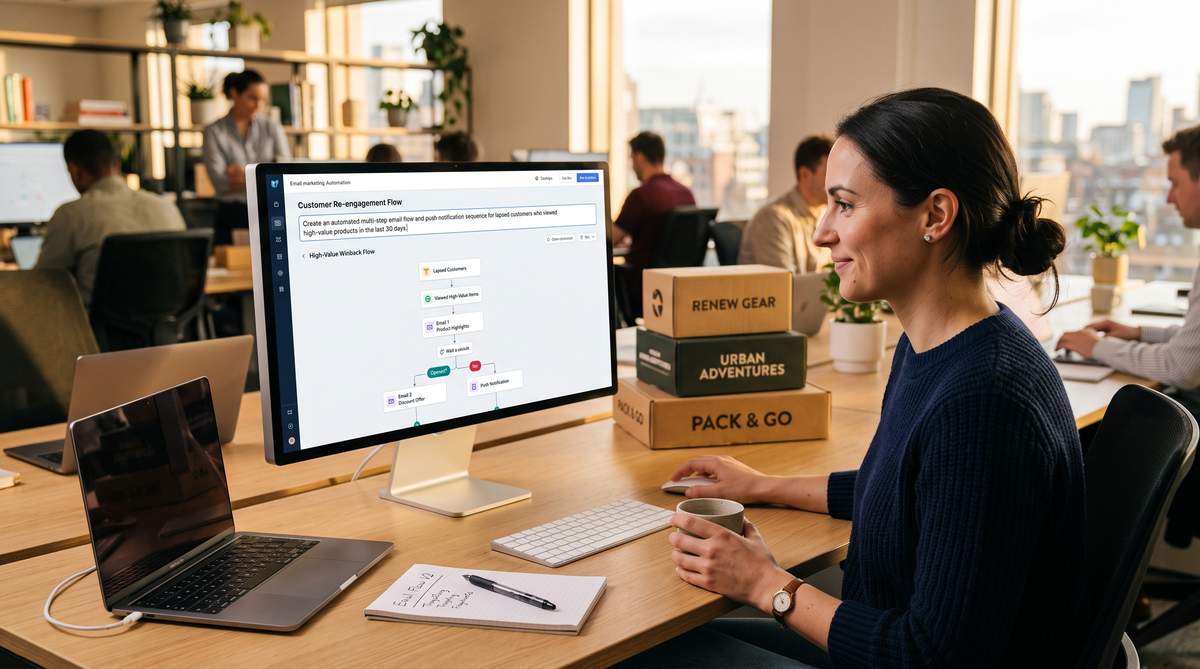
Your clients' customers aren't looking at their product pages anymore. Not first. They're asking ChatGPT or Perplexity to shop for them. The AI agent reads the feed. It does not see the photography. It does not care about the marketing copy. It reads structured fields, checks inventory in real time, cross-references identifiers against a trust database, and decides in milliseconds whether to recommend your client or the store next door.
That decision was built on your feed, not your funnel.
The Math: Feed Readiness Moves The Needle.
At Profound, a data firm tracking ChatGPT Shopping activity across over 1.7 million prompt runs in July, the numbers moved hard and fast.
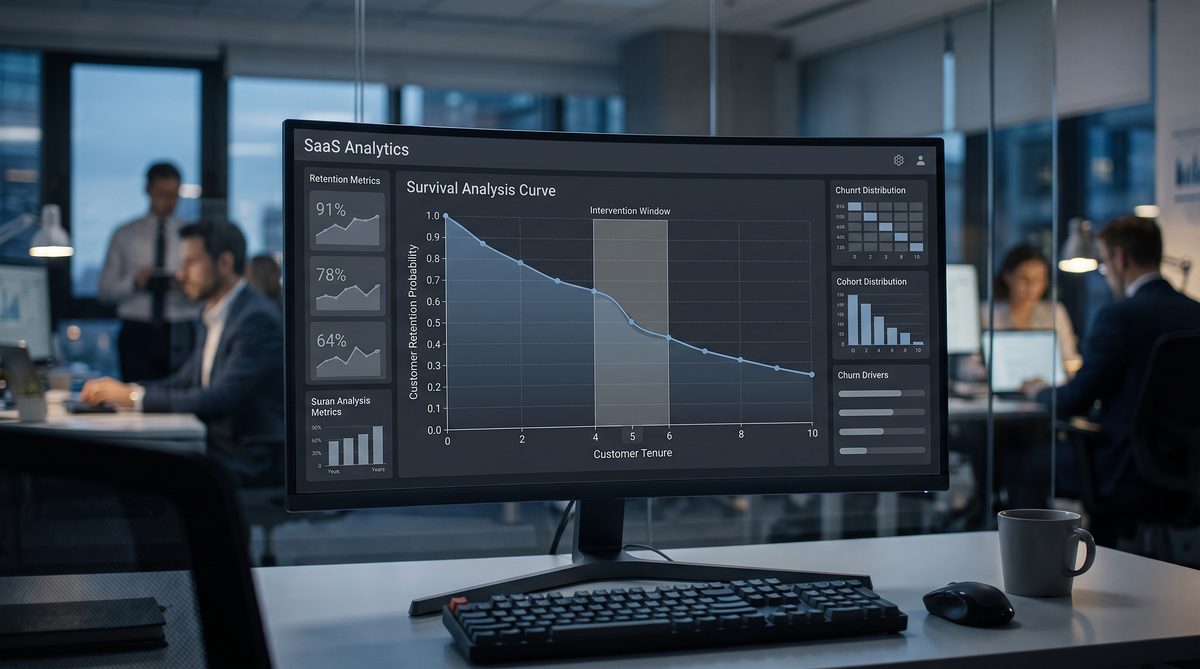
Feed-integrated recommendations jumped from 8.26% to 61.54% on July 10 alone (Search Engine Journal). By early September, feed retrieval accounted for approximately 65% of product recommendations Profound tracked. That is not a pilot metric. That is the infrastructure shift.
The receipts are everywhere. Adobe's Q1 2026 data showed AI-referred shoppers converted about 42% better than the average visitor (Semrush). Shopify's enterprise team reported AI-driven traffic grew roughly 8x year over year in Q1 2026, with orders from AI-powered searches growing nearly 13x. Gartner projects 20% of all transactions will run through AI platforms by 2030. McKinsey's estimate for US agentic-commerce retail revenue by 2030 sits near $900 billion to $1 trillion.
Your clients are not waiting for certainty. They are watching competitors eat their lunch.
What "Agent-Ready" Actually Means. The Manual.
Agent-ready product data is structured, machine-parsable, real-time information that an AI agent can directly query, interpret, and act on (load-bearing words: machine-parsable and real-time).
Most product data was built for a human browsing a website. It lives inside JavaScript-rendered templates. It leans on photography. It describes products in the language of persuasion. An agent cannot use any of that. It needs literal fields it can read without rendering a page. It needs them to be accurate right now, because it may complete a purchase seconds after reading them (Soku, 2026).
That is a higher bar than "having a Google feed." The gap between what renders nicely for a person and what a machine can consume is where most brands lose. Most of your clients are probably failing here.
The procedure is clear. From Soku's 2026 playbook, here is what agent-ready looks like:
- Structured source, not templates: Can you export a CSV where every active SKU has a non-empty id, title, description, price, availability, image_link, link, and GTIN? If not, that is your step-one work list.
- Identifier coverage: Target 95%+ GTIN coverage on branded goods. Missing GTINs drop you out of trust layers. For handmade or private-label items with no identifier, set identifier_exists: false (not blank, but explicitly false). Blank reads as a defect.
- Core attribute density: Get title, price, availability, brand, category, condition, image, and shipping above 95% populated. Run Merchant Center Diagnostics. Fix every error and warning before from here.
- Title and description calibration: Front-load titles with searchable attributes: [Brand] [Product] [Key Attribute] [Size/Variant]. Descriptions: at least five machine-parseable facts (dimensions, materials with percentages, capacity, use cases). Stay within 150 characters for title and 5,000 for description (OpenAI spec).
- Real-time sync: Price and availability must reflect reality within a 15-minute lag. Use Content API pushes on Google, real-time catalog updates on Meta. Out-of-stock and price mismatches don't just waste an impression. They depress your merchant reliability score. That penalty sticks.
The ATLAS Model: Your Client Audit Framework.
You cannot scale what you do not systematize. Use the ATLAS Model to architect feed readiness as a repeatable procedure across your client roster.
Assess. Run a feed audit for each client. Export their current feed. Check GTIN coverage. Count missing core attributes. Pull their Merchant Center Diagnostics. Document the current state. This is your baseline.
Target. Identify the single bottleneck blocking agent readiness. Ninety percent of the time, it is identifier coverage. Bringing GTIN coverage from 60% to 96% moved roughly a third of one real catalog out of the "excluded from trust layers" bucket in one stage. If your client does one thing, it is this one. Everything else is optimization on a clean foundation.
Lock. Build the process. Write the procedure manual. Where does feed data come from? How often does it sync? Who owns the feed file? Who validates changes before they go live? This is not a one-time cleanup. This is a continuous loop. Catalog changes (prices, stock, new SKUs, retirements). Each AI channel scores data reliability over time. Stale or inconsistent data quietly costs rank. The teams that win run the loop on a cadence: audit, fix, syndicate, monitor, repeat.
Audit. Set up compliance checks. Run the feed through Merchant Center Diagnostics monthly. Spot-check five SKUs for accuracy weekly. Monitor price sync lag. Track the percentage of products in "excluded" status. These are your operative metrics.
Scale. Once Google and Meta feeds are clean, the marginal cost of the AI-native channels is low. Enroll in the OpenAI Merchant Program (ChatGPT's product-feed workflow). Add Perplexity's merchant program. Each rewards a slightly tailored feed, but you are tuning a clean catalog, not rebuilding one. Syndicate to the channels that matter. Let the same feed fan out to all endpoints.
The ATLAS Model turns feed readiness from a project into a doctrine. Process beats ego. Systems beat slogans.
The Channel Stack: Where The Feed Lives.
There is no single "AI channel." An agent-ready feed fans out to a stack of endpoints, each with its own spec and its own audience.
Google Merchant Center + AI Mode / Gemini: Feed spec plus Content API. GTIN/identifier compliance mandatory. This is table-stakes. If your client is not here, start here.
ChatGPT Shopping (OpenAI Merchant Program): Agentic Commerce Protocol (ACP) feed spec, pushed to endpoint. Title ≤150 chars, description ≤5,000 chars, ISO 4217 price. This channel alone is now significant traffic. Your clients should be here within 90 days.
Perplexity Merchant Program: Products inside research answers, merchant feed format. High-intent, information-aligned context. Growing fast.
Meta Advantage+ Catalog: Catalog feed or pixel. 1:1 imagery, product sets, custom_label structure. Paid channel. Same feed, different tuning.
The paid catalog channels (Meta Advantage+ and Google Performance Max) are the fastest on-ramp to agent-ready commerce. They run off the same feed the AI shopping surfaces read. Clean your catalog for Google Merchant Center and you have simultaneously fed Gemini and AI Mode. Clean it for Meta and you have fed Advantage+ Shopping. The smartest first move is not to chase every AI protocol at once. It is to get the two channels you already run into agent-ready shape and let that same catalog fan out (Soku, 2026).
The Competitive Penalty: Sitting Still Is Moving Backward.
Here is what happened in July when ChatGPT's algorithm shifted to feed-dominant retrieval. Out of 687 tracked merchants, 450 experienced at least a one-third reduction in Shopping visibility in a single week. Sixty-seven saw increases of that same magnitude. The distribution is not random. The merchants who won had clean feeds. The ones who lost did not.
Your clients are on one side of that distribution now. Probably the wrong one.
The single biggest mistake we see in the field is treating "agent-ready" as a one-time cleanup. It is not. It is a continuous loop. The catalog changes. Each AI channel scores your data reliability over time. Stale or inconsistent data costs rank quietly. The teams that win run the loop on a cadence: audit, fix, syndicate, monitor, repeat. They don't ship a feed and forget it.
This is what build-to-sell looks like in the agent era. The feed is your asset. Its value compounds with freshness and accuracy and coverage. A merchant reliability score forged under pressure is earned capital.
Frequently Asked Questions
Q: We already have a Google Shopping feed. Isn't that agent-ready?
No. A clean Google Merchant Center feed is the foundation. But agent-readiness adds the Agentic Commerce Protocol spec for OpenAI, per-channel semantic tuning, structured-data layers consistent across endpoints, and sub-15-minute freshness. It is a higher bar than "having a feed." Google Shopping ≠ agent-ready. Agent-ready is a superset. Your client's feed has to pass Google's diagnostics first. Then it has to meet ChatGPT's specs. Then it has to sync with Perplexity's requirements. One cleanup does not satisfy all three. You need one source of truth, clean, then tailored per channel.
Q: Which identifier matters most: UPC, EAN, GTIN?
GTIN. GTIN (Global Trade Item Number) is the umbrella term. UPC (Universal Product Code) is a 12-digit GTIN. EAN (European Article Number) is a 13-digit GTIN. For most US-based ecommerce, GTIN is what you want in your feed. If a product doesn't have a GTIN (handmade, private-label), don't leave the field blank. Set identifier_exists: false. The AI agent will know to evaluate the product on other signals (review quality, description depth, price, shipping). Blank reads as an error. Explicit false reads as a statement.
Q: What is the real-time sync requirement? Can we do daily feeds?
No. Daily feeds are death for agent-ready commerce. AI agents browse your feed, see a price, initiate a purchase, and complete checkout in seconds. If your feed says in-stock but your inventory system says sold out, the transaction fails, your reliability score drops, and that score does not recover fast. Price and availability must sync within 15 minutes. Use Google's Content API for push updates (Google Merchant Center), or real-time catalog updates on Meta. Set it up once, correctly, monitor it. A fresh feed is your payback period.
Q: How do we prioritize across multiple AI platforms?
Start with Google + Meta (you already run these channels). Both are infrastructure you know, and both feed directly into the agent surfaces your clients care about: Gemini, AI Mode, Advantage+ Shopping. Once your catalog is clean for these two, the marginal cost of ChatGPT and Perplexity is low. You are tuning a clean source of truth, not rebuilding it. Prioritize in this order: (1) Fix Google Merchant Center, achieve 95% compliance on core attributes and identifiers. (2) Tune for Meta Advantage+ Catalog. (3) Enroll in OpenAI Merchant Program (ChatGPT Ads). (4) Add Perplexity. (5) Add structured data and protocol support. Do them out of sequence and you are redoing work.
The Doctrine Connection
Verification beats optimism. Every stat in your client's feed has to be verifiable. Real price, real inventory, real GTIN, real shipping cost. Not estimated. Not rounded. Not "usually available." Real. That verification is your merchant reliability score. It compounds. Stale data is a form of lying, and the algorithm knows it.
Disclosure
Jeff Barnes, MBA has no personal position in any company, fund, or platform named in this article. demg.ai provides marketing education and systems for owner-operators, not investment advice.
Jeff Barnes, MBA has no personal position in any company, fund, or platform named in this article. demg.ai provides marketing education and systems for owner-operators, not investment advice.