TL;DR: 70% of online shopping carts get abandoned before checkout, and most abandoned-cart emails still read like a form letter. Personalized, behavior-triggered recovery flows convert 3x better than generic blasts. The fix is not a smarter subject line. It is building your recovery system on the actual data trail each shopper leaves behind, not a template that treats every abandoned cart the same.
- The average cart abandonment rate is 70.22% across 50 studies, and mobile shoppers abandon at 77% versus 65% on desktop.
- Segmented, behavior-triggered emails generate roughly 2x the open and click rates and 3x the revenue per recipient compared to mass blasts.
- Personalized recovery emails see open rates of 29 to 35% against 18 to 22% for generic sends, with click-through rates 41 to 100% higher.
- The goal is not more emails. It is fewer, sharper emails that reference exactly what the shopper looked at and why they probably stopped.
Roughly seven out of ten shoppers who put something in a cart never finish the purchase. According to the Baymard Institute's aggregate of 50 abandonment studies, the average cart abandonment rate sits at 70.22%, with mobile shoppers abandoning at 77% compared to 65% on desktop. Most stores respond to this with a single generic email: "you left something in your cart." That email is not wrong, but it is not doing the job either, because it treats a shopper who compared three sizes for ten minutes the same as one who clicked once and left.
Data's DNA: Every Abandoned Cart Tells You Something Different
I run a framework called Data's DNA on every recovery system I build, and the premise is simple: the data a customer leaves behind is not noise, it is a genetic code for why they left. A shopper who viewed the size chart three times abandoned for a different reason than one who checked shipping cost and vanished. A shopper who added a $200 item and browsed for eight minutes is a different animal than one who bounced in nine seconds.
Most stores throw away this DNA. They collect the event (cart abandoned) and discard the sequence that produced it (viewed size chart, checked reviews, opened shipping calculator, left). That sequence is the whole story. Read it correctly and your recovery email writes itself: address the size question directly, or lead with the shipping cost, or answer the specific objection the data shows they hit.
What I Learned Chasing Incomplete Applications
At AIN, we tracked every investor who started an application and did not finish. The follow-up was not a template. It referenced exactly what they looked at, how far they got, and what was likely holding them back.
Response rate tripled versus the generic "complete your application" email. That was not a copywriting trick. It was the difference between guessing at the objection and knowing it, because we had the data trail and used it instead of ignoring it.
Ecommerce cart recovery is the same problem wearing a different uniform. You already have the data. Most stores just are not reading it.
Why Generic Blasts Underperform So Badly
The numbers on personalization versus mass blasts are not close. Klaviyo's analysis of 2.5 billion emails found that segmented sends achieve roughly 2x the open and click rates of mass blasts, and 3x the revenue per recipient. That last number is the one that should change how you budget your marketing time. Revenue per recipient, not open rate, is the metric that pays your bills.
MailerBit's research backs this up from a different angle: personalized emails convert roughly 3x better than generic ones, with open rate lifts of 26 to 50%. Separately, Mailsoftly documents personalized open rates of 29 to 35% against 18 to 22% for generic sends, and click-through rates that run 41 to 100% higher. Three different sources, three different data sets, the same conclusion.
None of this is a marketing trick. It is a trust signal. A generic "did you forget something?" email tells the shopper you know nothing about them except that they have a pulse and a cart ID. A specific email that mentions the exact product, the color they viewed, and the question your FAQ page answers about that product tells them you were actually watching, and that matters more than any discount code.
Building the Recovery Flow Without Sounding Like a Robot
Start with the timing, because timing is the first signal you send. A shopper who abandoned nine minutes ago is still in decision mode. Sending them a discount code that fast teaches them to always wait for one, which quietly trains your best customers to never pay full price again.
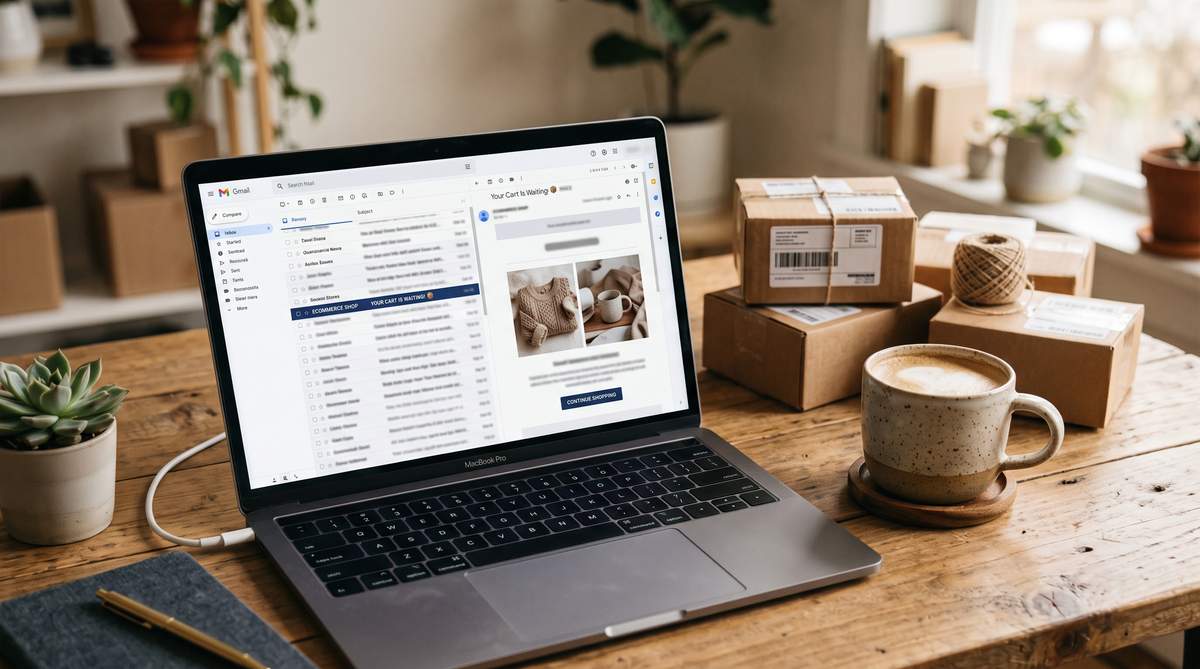
Send the first message within an hour, but make it a reminder, not a bribe. Reference the specific item. If your data shows they viewed the size chart or a return policy page, answer that objection directly instead of just repeating the product name back to them.
The second message, sent roughly 24 hours later, is where you can introduce urgency: low stock, a price change, a related product they also viewed. The third message, at 48 to 72 hours, is where a discount earns its keep, because by then you have already tried to close the sale on value and the shopper who is still on the fence is legitimately price-sensitive.
Klaviyo's AI tools build this kind of flow directly: dynamic content segmentation, predictive analytics on which shoppers are likely to convert without a discount, and behavior-triggered sends that fire off the specific action a shopper took rather than a fixed calendar schedule. The AI is not writing your brand voice. It is deciding who gets which message and when, based on their actual behavior instead of a guess.
The Segments That Actually Move Revenue
Not every abandoned cart deserves the same investment of your attention or your discount budget. Segment first by cart value. A $30 cart and a $300 cart abandoned for the same reason (shipping cost sticker shock, say) need different responses, because the margin you can spend recovering the sale is completely different.
Segment second by customer history. A first-time visitor who abandoned is still deciding if they trust your brand at all. A repeat customer who abandoned probably has a specific, solvable objection, because they already trust you enough to have bought before. Treat the second group like people you know, not strangers you are pitching cold.
Segment third by the behavior sequence itself. Someone who added to cart and left in under a minute was probably comparison shopping and never had real intent. Someone who spent six minutes reading reviews, checked the size guide twice, and then left is close to buying and needs one specific piece of information, not a generic nudge.
This is where Data's DNA does its real work. The behavior sequence tells you which of these three shoppers you are dealing with before you write a single word of the email. Skip the segmentation and you are sending the same message to a browser, a first-timer on the fence, and a loyal customer with one specific question, which is why generic blasts underperform so badly in the first place.
Measuring Whether Your Recovery System Is Actually Working
Open rate and click rate are vanity numbers if you stop there. The number that matters is revenue recovered per abandoned cart, and the number after that is recovered revenue as a percentage of total abandoned cart value. Track both monthly, because a system that looks good on open rate but flat on recovered revenue is optimizing the wrong thing.
Watch your unsubscribe rate on the recovery flow specifically, separate from your regular newsletter. A rising unsubscribe rate on cart recovery emails is usually a sign you are sending too often, too generically, or too early with a discount that trains people to wait. Fix the cadence before you touch the copy.
Run a holdout group if your platform supports it. Send no recovery emails to a small percentage of abandoned carts and compare their natural recovery rate against your treated group. This tells you the true incremental value of the entire system, not just whether people who were already going to buy anyway happened to click your email first.
Your Vertical Changes the Math
Do not benchmark yourself against a generic "70% abandonment" number without checking your category first. EightX's vertical breakdown shows abandonment ranging from around 45% for event tickets up to 85% or higher for finance and travel purchases. A furniture store and a concert ticket site are not fighting the same battle, even if both call it "cart abandonment."
High-consideration purchases (furniture, electronics, anything with a size or fit question) abandon for research reasons. Low-consideration, high-abandonment categories (travel, finance) abandon because the shopper was price-shopping five tabs at once and never intended to buy on the first visit. Your recovery flow should match the reason, not a universal template pulled from a blog post about ecommerce in general.
Doctrine Connection: Capitalism Creates Value
A recovery email that actually helps a shopper finish a purchase they wanted to make is not manipulation. It is removing friction from a transaction both sides want to complete. The shopper gets the product they were already choosing. You get the sale you already earned by building something worth buying.
Personalization is not a dark pattern when it is built on real signals. It is just paying attention, at scale, to something a good salesperson would have noticed in person anyway.
The store that wins is not the one that sends the most emails. It is the one that reads the data trail correctly and says the one thing that matches what the shopper was actually thinking when they left. That is not automation replacing a human touch. That is automation finally being good enough to fake one.
Frequently Asked Questions
How many emails should an abandoned cart sequence include?
Three is usually enough: a reminder within an hour, a value-add or urgency message around 24 hours, and a discount-backed final message at 48 to 72 hours. More emails past that point tend to train shoppers to ignore your list rather than recover more sales.
Does personalization mean using the shopper's first name in the subject line?
No, and that is the most common mistake stores make. Real personalization means referencing the specific product, the objection the data suggests they hit (price, fit, shipping cost), and their actual behavior sequence. A first name is decoration. The behavior data is the message.
Should every abandoned cart get a discount code eventually?
Not automatically. Save the discount for the final message in the sequence, and consider skipping it entirely for high-margin or high-consideration products where the abandonment reason is research, not price. Discounting too early trains repeat shoppers to always wait for one.
How does my industry affect what a "good" abandonment rate looks like?
Significantly. Event ticket sales see abandonment closer to 45%, while travel and finance products can run 85% or higher because shoppers frequently compare across many sites before committing. Benchmark your recovery performance against your own category, not a single blended average.
Jeff Barnes is the founder of Digital Evolution Marketing Group and Angel Investors Network. DEMG provides marketing systems and AI operations consulting for owner-operators. This article reflects operational experience and publicly available data. It is not financial, legal, or investment advice. Tools and platforms mentioned are not sponsored endorsements. Verify all claims, run your own numbers, and consult qualified professionals before acting.