Case Study: One Consultant Built a $35K/Month Pipeline From LinkedIn Without Posting Daily
A consultant built a $35K/month LinkedIn pipeline using signal-driven outreach and 10 daily connections, not daily posting. Here is the system.
Real systems. Real numbers. Real businesses. Case studies on how owner-operators removed bottlenecks, built marketing engines, and grew exit value.
22 articles
A consultant built a $35K/month LinkedIn pipeline using signal-driven outreach and 10 daily connections, not daily posting. Here is the system.
A 12-technician pest control company cut response time by 67 percent and added $18,000 in monthly revenue using AI dispatch and routing. Here is the 90-day blueprint.
One founder, 35 AI agents, 96% margins, $25K monthly retainers. How Linara Bozieva built Ravenopus to scale through systems design, not hiring.
A 12-person accounting firm mapped workflows in 90 days, automated 3 bottlenecks, and cut partner hours 35 percent. Here is the audit that did it.
The Xcite Group runs 11 named AI employees across nearly 200 clients, has not backfilled two account manager seats, and posted 100% retention on AI-powered accounts. Here is the roster, the receipts, and why the model makes the agency more acquirable than one built on headcount.
A $1.8M brand built an AI reorder engine that boosted retention 33%, jumping the exit multiple from 3.0x to 4.2x SDE and adding $300K in proceeds.
A consulting firm owner built her edge inside personal AI accounts, and it nearly killed her exit. Here is the pattern and the fix buyers expect.
A $1.4M HVAC company ran dispatch off a whiteboard and a text thread. A 90-Day Bottleneck Audit and an AI scheduling agent cut errors 70% fast.
TCS acquired MHP for 320M euros plus a 1.25B contract. The deal shows what makes a services business sellable. Process is the moat.
Easy BnB replaced 11 virtual assistants with one AI platform, cut labor costs by 22,000 dollars a month, and scaled by 75 units with zero added headcount.
Shama Hyder built Zen Media to $28M revenue with zero venture capital, operating on pod structures with $50K budget autonomy and 4-year client retention. Now she is fielding acquisition offers she mig
TripleDart crossed $7M ARR at 50% EBIT margin — bootstrapped, zero VC. They rebuilt inbound marketing as software through Slate. How ownership beats VC pressure.
Case Study: A 50-Job-a-Day Plumber Cut Inbound Call Load 85 Percent With One AI Virtual Agent TL;DR: Gardner Plumbing in Murrieta, California runs 50-55 jobs per day with minimal office staff.
The BizBuySell data shows coffee shops median at $150K on $78,780 SDE. But the same shop with clean records and a 5-year lease extension? $350K. That's not luck. That's the math of due diligence.
$188.8B landscaping industry, PE paying 4x-6x EBITDA for add-ons. How one $2.1M operator converted 82 customers to maintenance agreements and doubled estimated valuation using a four-move recurring re
The owner touched 73% of revenue-critical tasks. The ATLAS Model fixed that in 90 days: GHL Voice AI + ServiceTitan dispatching cut owner hours 40%.
A $2.1M HVAC operator ran on five broken platforms. Here's how one n8n + Claude workflow cut $58K in costs and repositioned the business for acquisition.
When third-party cookies disappear, consulting firms that rely on rented audience data face a revenue cliff. This case study breaks down how one $2.8M firm applied the Data's DNA framework to build a proprietary data engine — reducing paid acquisition costs while creating a defensible marketing asset.
A $4.5M ARR vertical SaaS company serving property management firms was spending $1,840 to acquire each customer — nearly triple the SMB benchmark — while the founder worked every deal personally. LTV:CAC sat at 2.1:1. The math did not work. In nine months, applying the ATLAS Model for Growth systematically to every acquisition channel and sales motion, they cut CAC to $699, pushed LTV:CAC to 5.5:1, and dropped CAC payback from 26 months to 10. This is a teaching case study walking through exactly what they changed, in what order, and why the system — not any single tactic — produced the result. Specific numbers. Specific decisions. No vague improvements.
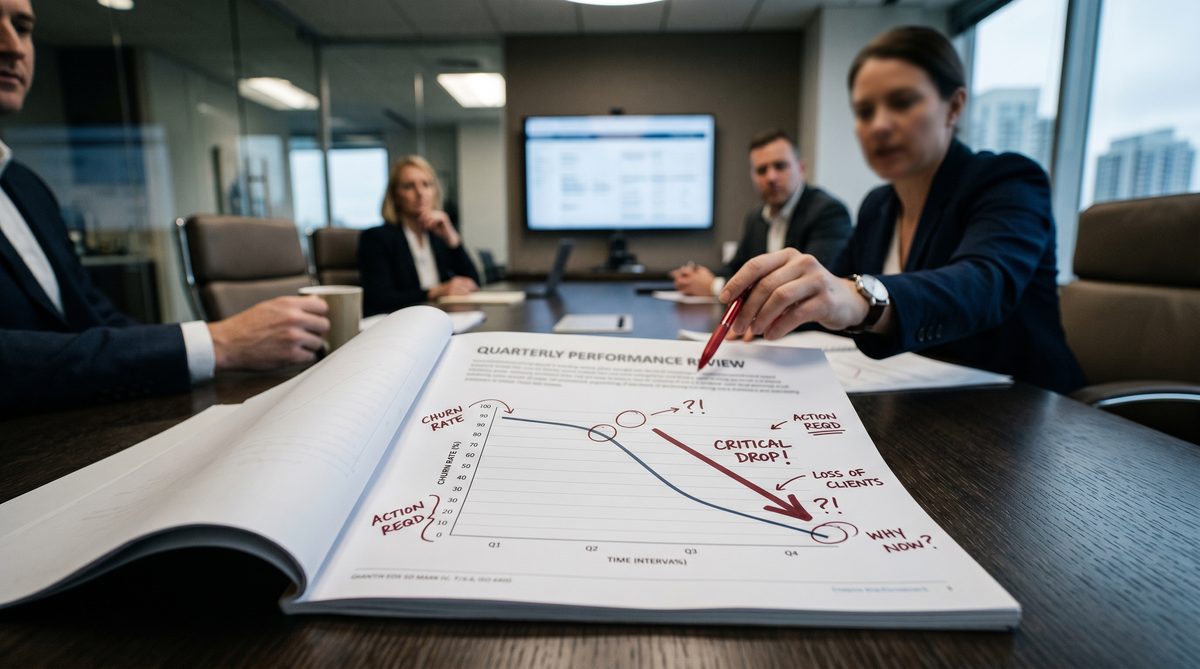
A $3.2M Midwest agency cut client churn from 35% to 8% in nine months by implementing automated onboarding and outcome-focused reporting. The math: 27 percent fewer clients leaving annually. That's recurring revenue that stays.
Marcus wasn't running a business. He was running himself into the ground on behalf of one.