Dan Kennedy taught me a rule direct-response guys learned decades before anyone had a CRM: the fortune is in the follow-up, and the follow-up window is measured in minutes, not days. I watched agency owners with strong creative and solid targeting lose deals to weaker competitors for one reason. The competitor picked up the phone in four minutes. They got to it in four hours. Kennedy's world ran on postcards, hotlines, and phone banks. Today it runs on chat widgets and text automation. The mechanism never changed. Speed still wins the account.
Most agency owners already know this and still can't fix it, because fixing it by hand means being the appointment setter themselves. That's not a business. That's a job you built for yourself with worse hours than the one you left.
The Math on Speed to Lead
The research on this is not close. Leads contacted within five minutes are 21 times more likely to qualify than leads contacted after thirty minutes, and up to 100 times more likely to result in actual contact, according to the landmark MIT study conducted by Dr. James Oldroyd and published via InsideSales.com (summarized here). Seventy-eight percent of buyers go with whichever business responds first, full stop, regardless of price or portfolio.
Here's the part that should bother you: the average B2B response time across industries sits at 47 hours. Two full days while your lead has already talked to three competitors and possibly solved the problem another way. Every hour you wait past minute five is inventory decaying in real time, and it decays on a curve, not a straight line. Most of the damage happens in the first half hour.
An agency owner watching leads pile up in a shared inbox overnight isn't running a sales process. He's running a casualty drill with nobody standing watch.
What a Human Setter Actually Costs
Run the real numbers before you hire. A fully loaded in-house SDR in the US lands between 70,000 and 90,000 dollars a year once you count base pay, payroll taxes, benefits, tooling, and management time, roughly 5,800 to 7,500 dollars a month (Leadium's 2026 buyer's guide). Add a three-month ramp before that hire books a single reliable meeting, and a median annual attrition rate near 40 percent, meaning you have a real chance of repeating the entire hiring and ramp cycle within a year (Division50's SDR cost calculator, sourced from Bridge Group benchmarks).
Outsourcing looks cheaper on the surface but still runs 3,500 to 10,000 dollars a month depending on the provider, with published rates from firms like EBQ and SalesRoads sitting well above 8,000 dollars monthly for a dedicated seat. Even the leaner outsourced tiers start around 3,500 to 5,000 dollars a month, and that buys cold outreach, not always the round-the-clock coverage a lead expects the moment they fill out a form at 10pm.
None of that math includes the actual founder time lost checking a phone every twenty minutes to see if a lead came in. That's the founder dependency tax, and it's invisible until you try to take a week off.
The Stack: Under 500 a Month, No Human Required
You can build a first-touch qualification and booking system inside GoHighLevel that runs continuously for a fraction of any of the numbers above. Here's the exact build.
1. Conversation AI as first responder
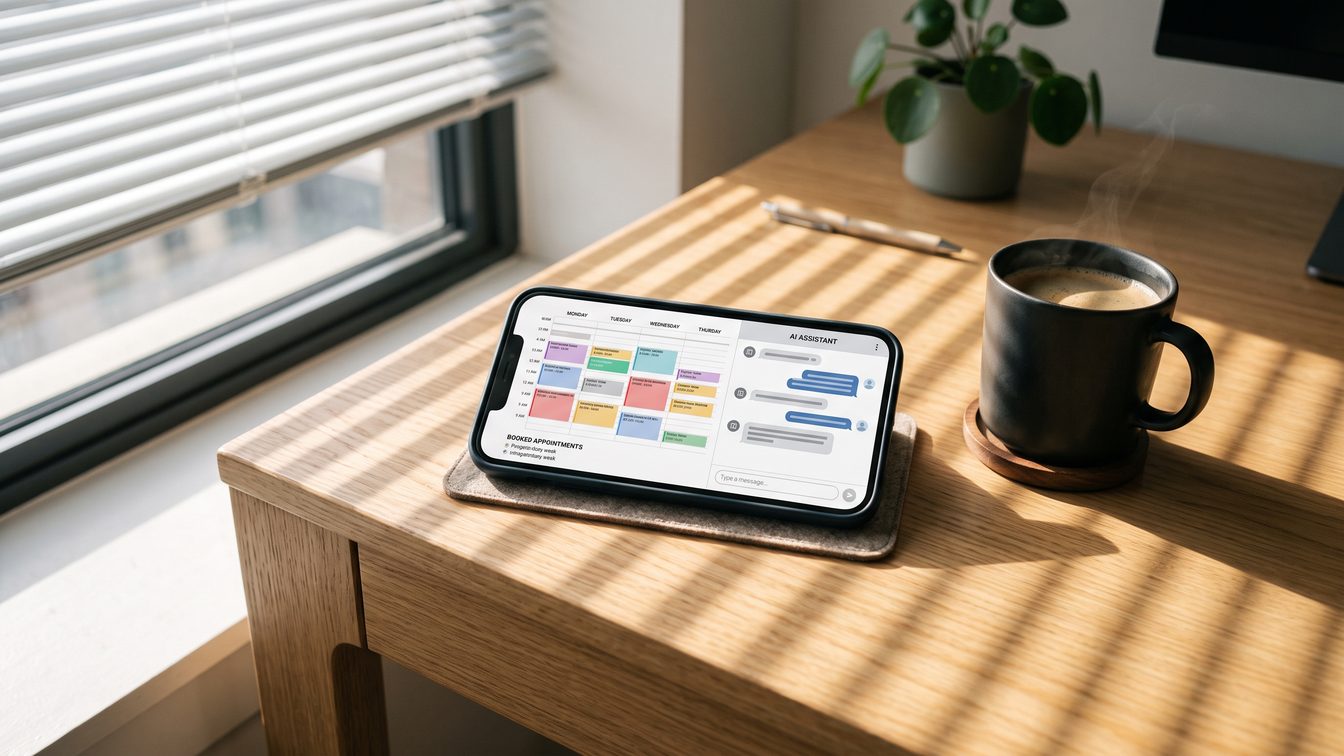
Turn on GHL's Conversation AI across web chat, SMS, and social messages. This is your AI Employee: it answers the phone (or the chat, or the text) in under a few seconds, every time, including 2am on a Sunday. HighLevel's documentation confirms it can book directly against your connected calendar the moment a lead's questions are answered (HighLevel's official Conversation AI booking guide).
2. A tight qualification prompt
Write the bot's scope before you touch the settings. What can it answer, what must it never promise, and what triggers a human handoff. Ask three or four qualification questions woven naturally into the conversation, not a rapid-fire interrogation: budget range, timeline, service needed, decision-maker status. Long intake forms kill completion rates. Keep the ask minimal.
3. Calendar integration with real availability
Connect the bot to your live calendar with correct time zones, buffers, and assignment rules. Once a lead is qualified, the AI offers open slots and books directly, no back-and-forth email chain, no double-booking risk.
4. Confirmation and reminder sequences
Fire an immediate SMS and email confirmation the moment a slot books. Then layer reminders: 48 hours out, 24 hours out, and two hours before the call. Businesses running all three reminders see 35 to 55 percent lower no-show rates than those sending a single confirmation, with the two-hour SMS carrying the most weight (Ecosire's GHL implementation guide). Jeff Barnes, MBA has no personal position in any company, tool, or platform named in this article. DEMG has no current commercial relationship with any party mentioned. DEMG provides marketing strategy and education services, not investment advice. Results described are illustrative and may not be typical. All business decisions involve risk.
5. Human handoff rules, written down
The AI should never pretend to be a person, and it should never handle a pricing dispute, a complaint, or a lead who explicitly asks for a human. Build handoff triggers into the bot's instructions and route those conversations to a real person with the full qualification context attached, so the lead never has to repeat themselves. That handoff record is the difference between an automation and a black hole.
What This Costs, Line by Line
A GHL sub-account with Conversation AI enabled runs in the neighborhood of 97 to 297 dollars a month depending on plan tier, plus AI usage fees that typically add another 50 to 150 dollars a month at normal agency lead volume, plus a phone number and SMS costs in the 20 to 50 dollar range. Total: comfortably under 500 dollars a month for a system that never sleeps, never calls in sick, and never quits fourteen months in to become someone else's account executive.
Compare that to the 70,000 to 90,000 dollars a year for an in-house hire, or the 3,500-plus a month for an outsourced seat that still keeps business hours. The math isn't close, and the math is the whole argument.
Freedom Beats Comfort
The Owner-Operator Frame says the comfortable choice is doing it yourself, because it feels like control. You know the leads got answered because you answered them. That comfort is a cage. It caps your agency at exactly the number of hours you personally have available to chase inbound messages, and it means every vacation, every sick day, every long weekend is a leak in your pipeline.
Freedom is a system that books the call whether you're at your desk or at your kid's game. That's not a smaller ambition than hiring a team. It's the doctrine that lets you build a team on your terms instead of building your schedule around a phone that never stops buzzing. An agency that depends on the owner's personal responsiveness isn't a business yet. It's forged under the same pressure as any other founder-dependent operation, and it sells for less because of it.
Will an AI setter feel robotic to leads?
Not if you write the prompt like a person and set a tight scope. The failure mode isn't the AI sounding artificial, it's the AI overpromising on price or availability it can't verify. Keep the bot inside its lane, hand off anything unusual, and most leads never notice or mind that first contact was automated.
Do I still need a human anywhere in this process?
Yes. The AI handles first response, qualification, and booking. A person still needs to run the actual sales call, handle objections, and manage any lead the bot flags for handoff. This system replaces the appointment setter, not the closer.
What if my lead volume is too low to justify any of this?
If you're getting fewer than a handful of inbound leads a week, the ROI math shifts, since even a slow manual response rarely costs you a deal at that volume. Once you're generating enough leads that follow-up starts slipping through cracks, this stack pays for itself inside the first booked appointment it would otherwise have lost to a 47-hour response time.
Which GHL plan do I need to start?
You need a plan with Conversation AI and workflow automation enabled, which most GHL agency and sub-account tiers include or offer as an add-on. Confirm current pricing directly with HighLevel before building, since plan tiers and AI usage pricing change and promotional windows shift throughout the year.