
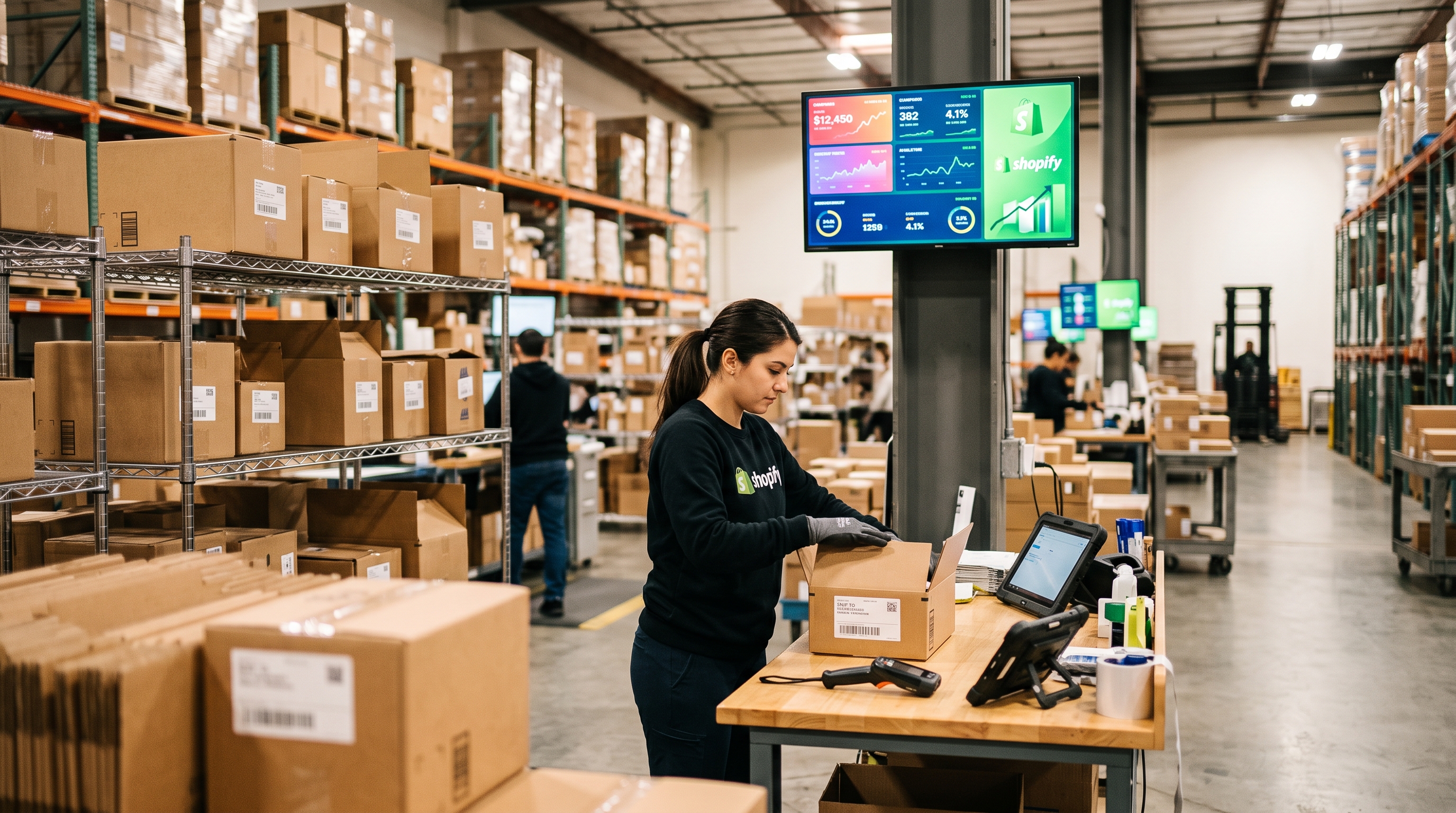
Verdict: Conditional. Use it to generate revenue now. Do not let it replace your marketing infrastructure. The output is rented. The engine underneath belongs to Shopify.
Shopify launched Campaign Autopilot on June 17, 2026. It is free on every paid Shopify plan. You set a budget, approve the creative, and the system deploys across Meta ads, Shop Campaigns, and Shopify Messaging. Coming in July: ChatGPT Ads, Microsoft Advertising, and Snapchat. The tool works. That is not the question. The question is what you own when it stops working, and what a buyer sees when they look at your marketing stack at due diligence.
1. What It Is
Campaign Autopilot is an AI marketing layer built directly into Shopify admin. You do not need an agency. You do not need a media buyer. You set a monthly budget, review what the system recommends, and hit approve. The AI selects products, writes copy, targets audiences, and distributes spend across channels automatically.
Shopify trains the recommendation engine on aggregated data from millions of stores. It knows your category, your region, your growth stage. It matches your store against pattern data from comparable operators and surfaces the tactics that have worked for them. The model auto-pauses when your budget cap is reached. You stay in control of what goes live. (Shopify, June 2026)
This is not a third-party integration bolted onto Shopify. It is native infrastructure. That distinction matters for both the upside and the risk.
2. What It Gets Right
The barrier to entry is zero. A solo operator running a $300K store has access to the same AI marketing infrastructure as a team running $10M. That is a real leveling mechanism. The agency advantage, buying media competence through monthly retainer, shrinks significantly.
The approval gate is the right design decision. You see every campaign before it deploys. Autopilot recommends. You decide. That is the correct distribution of authority between operator and tool. Too many AI marketing products remove human judgment from the loop entirely and then blame the algorithm when ROAS collapses.
Budget autopause is discipline enforcement. Most operators bleed on paid channels because they do not have hard stops. The system enforces the stop. That is not a small thing. I have watched owner-operators burn $40K in a single Meta campaign because nobody had eyes on spend at 2 a.m. Autopause removes that failure mode entirely.
The channel expansion is sound sequencing. Meta and email first. Then Microsoft, Snapchat, ChatGPT Ads. That is a logical priority stack. High-intent channels before experimental ones. The timing of the July expansion suggests Shopify is adding channels based on performance data, not partnership deals. That sequencing matters because it protects operators from burning budget on unproven placements before the core channels are dialed in. Most platform-native ad tools do the opposite.
Shopify processed roughly $290 billion in GMV annually and posted $2.36 billion in Q1 2026 revenue, up 23% year-over-year. (Shopify Q1 2026 Earnings) The company has the financial foundation to keep building this product. It is not vapor. It is funded infrastructure from an operator with real skin in the game.
,
3. What It Gets Wrong: The Sovereignty Analysis
Here is where we run Campaign Autopilot through the Sovereignty Stack.
The Sovereignty Stack asks one question about every tool in your marketing infrastructure: does this increase your operational independence, or does it increase your dependency on a single platform? The answer changes how you value the tool and how a potential acquirer values your business.
Campaign Autopilot fails the Sovereignty Stack test on three counts.
First: You do not own the audience data that trains the recommendations. Shopify aggregates data from millions of stores to build its recommendation model. Your store's purchase patterns, your customer behavior, your winning products feed a model that belongs to Shopify. You get the output. They keep the input. That is a tenant arrangement, not an ownership arrangement. Ownership beats wages. The same principle applies to data.
Second: You do not own the creative process. The AI writes copy. The AI selects creative angles. If you build a brand on Autopilot-generated assets without a parallel in-house process, you have no repeatable playbook when the tool changes, when Shopify adjusts the algorithm, or when you exit the platform. A buyer in due diligence will ask: "If Shopify changes this feature tomorrow, what does your marketing team actually know how to do?" The answer, for pure Autopilot operators, is uncomfortable.
Third: Channel dependency compounds platform dependency. Autopilot manages Meta. Autopilot manages Shop Campaigns, which live entirely inside Shopify's walled infrastructure. Autopilot will manage ChatGPT Ads and Snapchat. Every channel Autopilot absorbs is a channel where your operator knowledge atrophies. The skill of buying media, reading a ROAS curve, diagnosing a frequency problem, recognizing creative fatigue, is a capability asset. Let it atrophy and you lose it. Losing it means you cannot operate without the tool. Which means the tool now owns you.
I learned this the hard way. During one stretch at AIN, a distribution platform we relied on changed its algorithm without notice. Revenue dropped 40% in a week. What saved the operation was the fact that we had built parallel channels with actual operator knowledge, not tools we had merely approved clicks through. The operators who survived that kind of platform shock were the ones who had kept their hands dirty in the engine room. They knew what was working and why. The ones who had outsourced the knowledge to a tool were starting over from zero, without a map.
Campaign Autopilot is a powerful tool. It is not immune to this pattern.
For context on platform dependency risk in ecommerce, see Rand Fishkin's documented analysis of traffic concentration risk (SparkToro, 2024) and the FTC's ongoing scrutiny of platform-bundled advertising products (FTC Platform Report, 2024).
,
4. The Exit Math
Acquirers buy systems, not results. A business that has run $500K in profitable Meta spend through Campaign Autopilot is worth less at exit than a business that has run $500K in profitable Meta spend with a documented in-house media buying process, audience data it controls, and creative playbooks a new operator can execute without the original founder in the room.
Here is why. When a strategic buyer or a search fund operator looks at your business, they are pricing the risk of operating it post-acquisition. If your marketing results live inside Shopify's Autopilot, and the buyer is not sure they will keep the Shopify plan, or not sure Shopify will keep the feature free, or not sure the AI recommendations will transfer, they apply a risk discount to your marketing EBITDA.
This is not hypothetical. Private equity applies this logic to SaaS-dependent operations constantly. A marketing channel that requires a specific vendor's AI to function is treated like a customer concentration risk. Too much of your revenue flowing through a single point of failure lowers the multiple. The discount is not punitive. It is rational. Buyers are pricing in the probability that the tool changes, breaks, or gets paywalled after close. That risk has a number, and it comes off your valuation.
The operator who uses Autopilot to generate cash while simultaneously building documented processes, audience files, creative frameworks, channel-specific SOPs, builds a different multiple. The tool accelerates the operation. It does not define it. That store is more acquirable.
The operator who lets Autopilot define the operation is building revenue, not an asset. Revenue gets you a wage. An asset gets you an exit.
,
5. The Bottom Line
Use Campaign Autopilot. It is free. It is native. It removes media buying friction for operators who cannot afford a media buyer or do not want one. For early-stage stores under $1M GMV, it is probably the highest-ROI marketing move available right now.
But treat it as your revenue engine, not your marketing infrastructure.
Run it in parallel with a process you control. Export your customer data on a schedule. Build your own creative brief templates. Document what is working and why, in plain language, in a system you own. When Autopilot recommends a product, write down your hypothesis for why it worked. Build the operator knowledge that lives outside the tool.
If you are above $2M GMV and building toward an exit in the next 24 to 36 months, the calculus shifts further. You want Autopilot generating cash while a real media buying operation, even a small one, even a fractional one, runs alongside it. Show a buyer two things: results and process. Autopilot gives you results. You have to build the process yourself.
Shopify has built a genuinely useful tool for the engine room. The operators who stay in the engine room alongside it will compound. The operators who step back and let it run unattended will find themselves holding a business that only works with Shopify's lights on.
,
FAQ
Q: Does Campaign Autopilot actually cost nothing? A: The tool itself is free on any paid Shopify plan. You pay only your ad spend. There is no management fee, no platform markup on media costs. That is unusual and worth using while it lasts. Shopify's incentive is GMV growth, and more sales through your store means more revenue for them.
Q: Who controls the creative, me or the AI? A: You approve before anything goes live. The AI generates recommendations. You review copy, creative, and targeting. You can edit. You can reject. The approval gate is real, not cosmetic. That said, if you approve without engaging, you are outsourcing the creative judgment entirely, which is a different kind of problem.
Q: What happens to my ad data if I leave Shopify? A: Your ad spend history on Meta stays in your Meta Business Manager. Your Shopify Messaging data stays inside Shopify's infrastructure. Shop Campaigns data is Shopify-proprietary and does not port. If platform portability matters to your exit strategy, build your primary customer list in a platform with clean data export rights, not only inside Shopify Messaging.
Q: Is this better than hiring a media buyer? A: At sub-$50K monthly ad spend, probably yes for most operators. The AI's access to aggregated store-level performance data is a genuine edge that a solo media buyer cannot replicate. Above $50K monthly spend, the case for human media buying judgment gets stronger. The two are not mutually exclusive.
Q: How does this affect my store's valuation at exit? A: Neutral to slightly negative if Autopilot is your only marketing infrastructure. Positive if it runs alongside documented processes and owned audience data. Acquirers pay multiples for systems that transfer. They discount businesses that require a specific tool to function. Run Autopilot. Document what it does and why it works. That documentation is the asset.