
Every Vacation Was a Casualty
In the Navy, we ran casualty drills until every watchstander knew the procedure cold, no matter who was standing watch that night. If only one sailor on the boat could handle a reactor casualty, that was not a strength, that was a single point of failure with a paycheck. The submarine does not care if that sailor is on leave. The casualty happens on its own schedule. That is the same failure mode the roofing trade is now solving with tools that produce two to three times more estimates per day than manual methods, and it is the failure mode one contractor lived inside for years before we ran the audit.
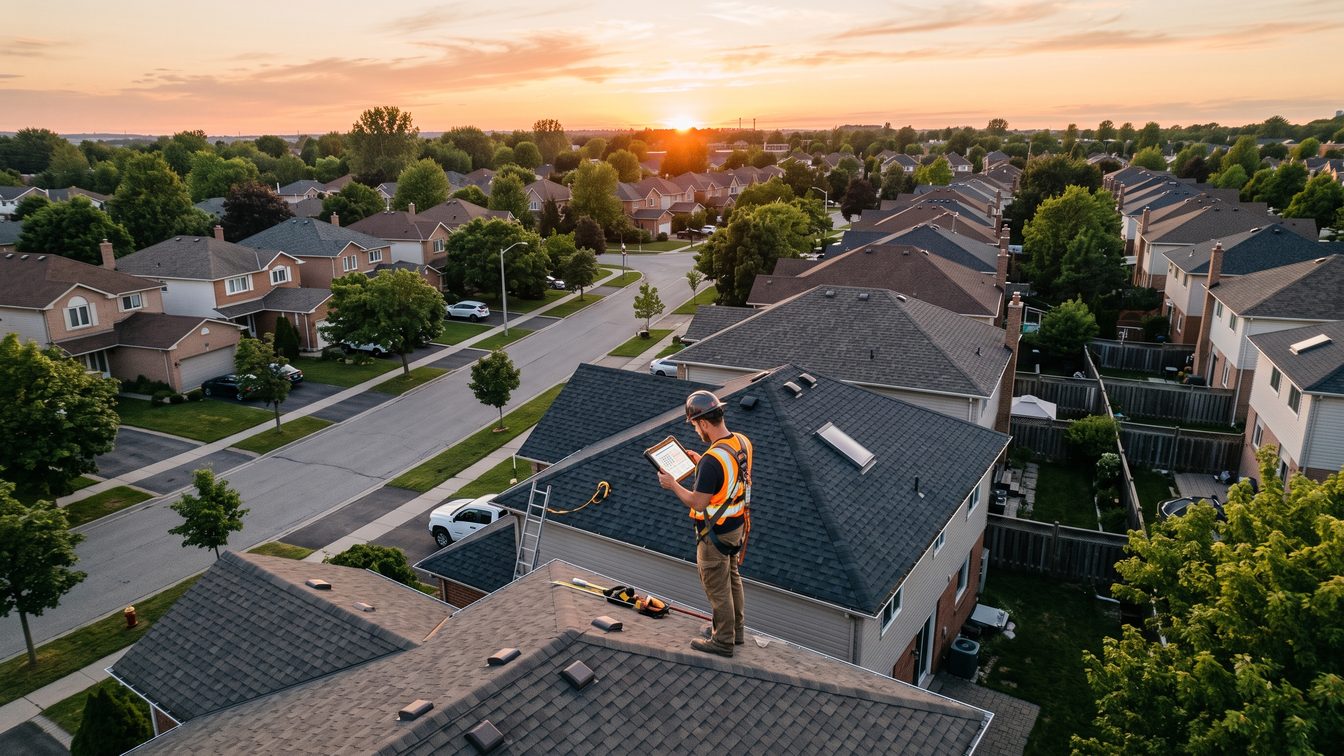
A roofing contractor I worked with was running his business the opposite way, and he did not see it until we put a stopwatch on it. He worked 60-hour weeks. He touched every estimate himself: every measurement, every material calculation, every proposal, every follow-up call. He was the business's reactor operator, its damage control officer, and its only qualified watchstander, all at once. Vacation meant estimates stopped. A sick day meant revenue stopped. That is not an owner-operator running a company. That is a hostage situation with better branding.
Ninety days later he was working 25-hour weeks. Same revenue. Same crew. What changed was the system, not the hours he was willing to grind.
The Bottleneck Audit
We started where every audit should start: find the compartment where the whole ship slows down when one person is missing. For this contractor, that compartment was estimating. Every lead, hot or cold, residential or commercial, ran through his personal calendar for a site visit, his personal judgment for pricing, and his personal follow-up for closing.
This is common in the trade. The throughput math above tells you the bottleneck was never roofing knowledge. It was capacity. One person, no matter how sharp, has a ceiling on how many estimates they can personally produce, price, and send before quality drops or the founder burns out. He had hit that ceiling and mistaken it for the nature of the business.
The 90-Day Bottleneck Audit works like a casualty drill: identify the single point of failure, document the procedure that only lives in one person's head, then build a system that runs the procedure without that person standing over it. Day one to 30, we mapped every step of his estimate process, from first phone call to signed proposal. Day 31 to 60, we installed the tools to automate the repeatable parts. Day 61 to 90, we drilled the new system until his team could run it without him in the room.
What Actually Changed
Three systems did the heavy lifting.
First, AI-assisted measurement and estimating. Instead of the founder driving to every site to measure a roof by hand, tools like EagleView and Hover pull aerial and satellite measurements that feed directly into pricing software. Capital City Roofing used a platform called BuilderLync to cut estimate turnaround from seven days down to 24 hours. That is not a marginal gain. That is the difference between a customer who is still shopping and a customer who has already signed with a competitor.
Second, automated scheduling and follow-up. The founder was personally calling every lead back, which meant leads sat waiting whenever he was on a roof or in a truck. High Ground Service Pros cut its abandoned call rate from 10 percent down to 2 percent using automated response systems, and the result was $250,000 to $300,000 in annual savings from calls that used to go nowhere. Every missed call in a service business is a lead handed to a competitor for free. Automating the response is not a convenience feature. It is damage control for revenue that was leaking out the side of the boat.
Third, automated proposal generation. Once the estimate numbers exist, the proposal itself does not need a founder's personal touch to look professional and go out fast. Standardized templates, populated automatically from the estimate data, went out same-day instead of whenever the founder found an evening free.
The math on this stack is not soft. Quoting automation alone saves roughly 213 hours per year, worth about $8,500, for a roofing company running 150 jobs annually. The broader AI tool stack for a roofing operation runs $500 to $2,000 per month and produces 8 to 20x ROI in year one. Run the payback period on that: at the low end, a $500 monthly spend returning even 8x pays for itself inside the first six weeks of full deployment. This is not a bet. It is arithmetic.
The Close Rate Nobody Expected
Here is the finding that surprised the founder more than the hours he got back. Maven Roofing improved its same-day close rate by 20 percent after adopting AI estimating tools, and our contractor saw a similar shift. Faster estimates do not just save time, they close more deals. A homeowner comparing three roofing quotes signs with whoever gets back to them first with a credible number, all else equal. Speed is not a nice-to-have in this trade. Speed is the sales strategy, and it was one his old process could never deliver because it depended entirely on his personal bandwidth.
Compare that to a Tampa HVAC contractor who deployed an after-hours voice agent and recovered $340,000 per year in revenue for a 6.4x ROI on a $52,000 investment. Different trade, same principle. Every hour a lead sits unanswered because the founder is the only one who can handle it is an hour of revenue at risk. Systems do not sleep, do not take vacations, and do not get sick. Founders do.
The Compartments That Actually Matter
Not every task in a service business needs this treatment. You do not need to systematize how the founder answers a customer complaint with genuine empathy, that is a relationship skill, not a bottleneck. The audit targets a narrower category: high-frequency, high-leverage tasks that currently require the founder's personal judgment for no good reason other than habit.
Estimating fit that description perfectly for this contractor. Every roof is different, but the pricing logic behind material cost, labor hours, and margin is not a mystery locked in one person's head. It is a formula that can be documented, fed into software, and applied consistently by anyone trained on the doctrine. Once we wrote that formula down and built it into the estimating tool, the founder's personal involvement in pricing dropped from every job to spot-checking the exceptions.
Scheduling and follow-up were the second compartment. These are not judgment calls at all, they are logistics. A missed callback is not a strategic decision, it is a process failure. Once we automated the response and routing, the founder's phone stopped being the bottleneck for every incoming lead.
The Watchstanding Standard
Here is the doctrine test we applied, and it is the same one we run on every service business we work with. Pick your busiest revenue-generating task. Ask: if the founder disappeared tomorrow for two weeks with no phone signal, does that task still happen at the same quality and speed? If the answer is no, you do not have a business. You have a job with overhead, and it is not sellable at any real multiple because the whole operation walks out the door with you.
Before the audit, this contractor could not pass that test. If he took two weeks off, estimates stopped, follow-ups stopped, and the pipeline went cold. After the audit, his crew could run the estimate-to-proposal pipeline without him touching a single step, because the system, not his personal judgment, carried the load. That is the entire difference between an owner-operator trapped inside their own company and a founder-operator who built something that runs without them standing at every post.
We used the same tool categories that dominate this trade today: ServiceTitan and Jobber for field service management, EagleView and Hover for measurement, Roofr for instant estimating, and CompanyCam for job documentation. None of these are exotic. They are standard equipment in a modern roofing operation. The differentiator was not which tools he bought. It was whether he built a system around them that did not require him to personally operate every piece.
Why 25 Hours Beats 60
Sixty-hour weeks feel like commitment. They are actually a symptom. A founder working 60 hours a week touching every estimate personally is not proving dedication, he is proving the business has no doctrine, no compartmentalization, and no bench. That is a balance sheet problem dressed up as a work ethic story.
Twenty-five hours a week with the same revenue means the system is doing the work that used to require his personal presence. That is not a lifestyle upgrade, though it is that too. It is proof the business has separated from its founder, which is the exact quality that determines whether a company is acquirable or just a paycheck with a logo. Buyers do not pay a premium for a business that requires the seller to keep working it. They pay a premium for a business that runs the same with or without any specific person standing watch.
Doctrine: Systems Beat Slogans
Every founder says they want to "work on the business, not in it." Fewer will actually run the casualty drill needed to make that true. The difference between the two is whether you build a documented, repeatable system for your highest-leverage bottleneck, or whether you keep telling yourself you will delegate once things calm down. Things never calm down. The bottleneck has to be engineered out, not wished away.
This contractor did not get his life back by working harder or hiring more people to do what he was doing. He got it back by identifying the one compartment where he was the single point of failure, and replacing his personal judgment with a system his team could run without him. That is the whole 90-Day Bottleneck Audit in one sentence: find where only you can stand the watch, then build the doctrine so anyone qualified can.
FAQ
Q: What is the 90-Day Bottleneck Audit? A: It is a three-phase process. The first 30 days map every step of your highest-leverage bottleneck task, typically estimating or scheduling in service businesses. The next 30 days install automation and AI tools to handle the repeatable parts. The final 30 days drill the new system with your team until it runs without the founder in the room.
Q: How much does an AI tool stack for a roofing company actually cost? A: Industry data puts the range at $500 to $2,000 per month for a full stack covering estimating, scheduling, and follow-up, with 8 to 20x ROI in the first year for most operators.
Q: Will AI estimating tools actually replace the need for a site visit? A: Not entirely, but they cut turnaround dramatically. Tools like EagleView and Hover pull aerial measurements that reduce or eliminate manual measurement trips for many jobs, and some operators have cut estimate turnaround from seven days to 24 hours using platforms that automate the paperwork around those measurements.
Q: Isn't automating estimates risky for a business that depends on trust and craftsmanship? A: The trust is in the relationship and the workmanship, not in whether the founder personally typed the estimate. Automating the estimate process actually protects trust, because customers get faster, more consistent numbers instead of waiting on one person's calendar.
Q: How do I know if my business has this same bottleneck? A: Ask if your highest-revenue task can run at full speed and quality if you disappear for two weeks with no phone access. If the honest answer is no, you have identified your bottleneck. Everything else is detail.
Systems beat slogans. That is the doctrine. Build the system, then take the vacation.