
TL;DR: Perplexity's Buy Now agent crossed 2 million monthly active shopping sessions in June 2026. The platform takes 8 to 12% on completed transactions plus Stripe processing fees. For most ecom brands running 20 to 25% margins, that math compresses contribution margin to near-zero or below. Here is how to decide whether to activate, and what to build regardless of your answer.
I have been in capital markets since 1997. I ran the capital formation desk at AIN, and I watched what happened every time a new middleman appeared between a company and its investors. The broker-dealers who controlled deal flow controlled the relationship. Issuers who let that happen paid for it, sometimes permanently. The fee was just the beginning. The real cost was the data they never collected and the relationships they never owned.
That dynamic is now playing out in ecommerce at scale, and the middleman is an AI agent.
Perplexity's Buy Now feature crossed 2 million monthly active shopping sessions in June 2026, according to reporting from Ecommerce Times{target="_blank" rel="noopener noreferrer"}. The Shopify partnership was formalized in March 2026. Fewer than 4,000 merchants had activated by mid-June. That means 2 million shopping sessions are running through a system that most ecom operators have not yet consciously decided to join or avoid.
You should make that decision consciously. Here is the framework to do it.
What Perplexity Buy Now Actually Does
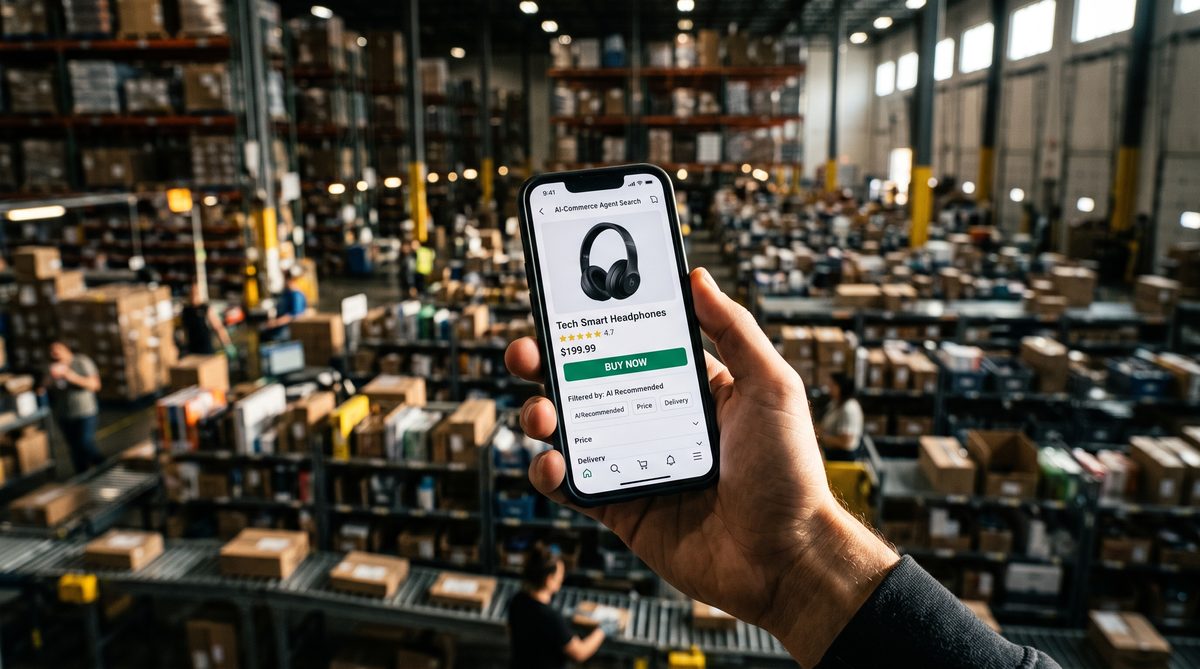
When a user searches for a product on Perplexity and the Buy Now agent activates, the entire transaction happens inside Perplexity's interface. The user never visits your storefront. They never see your brand photography, your editorial content, your reviews, your related product recommendations, or your email capture popup. They buy, Perplexity takes 8 to 12% plus Stripe's standard 2.9% plus $0.30 per transaction, and you fulfill the order.
That is not a distribution partnership. That is consignment with worse terms.
To be precise about the math: a product priced at $80 with a 22% contribution margin generates $17.60 in contribution before the Perplexity take rate. At 10% take rate plus Stripe fees (roughly 3.2% all-in), you lose $10.56 in fees. Your contribution margin on that order drops from $17.60 to $7.04. That is a 60% reduction in margin on a single channel decision.
For brands at 20 to 25% contribution margins, the math does not work unless you are carrying very low customer acquisition cost on those Perplexity-originated orders. And you very likely are not, because you have no retargeting audience, no post-purchase email sequence capture, and no LTV data from those customers.
The Attribution Blind Spot Is the Bigger Problem
The fee is visible. The attribution problem is invisible, which makes it more dangerous.
Every customer who transacts through Perplexity Buy Now never touches your storefront. That means they never fire your pixel. They never enter your Klaviyo flow. They never become a retargeting audience segment. They are customers in your fulfillment system and ghosts everywhere else.
Post-purchase email sequences typically recover 15 to 30% of first-order losses on customer acquisition for DTC brands, based on benchmarks from Klaviyo's 2024 Ecommerce Benchmarks report{target="_blank" rel="noopener noreferrer"}. If you cannot trigger those flows for AI-originated customers, your LTV model for that cohort is broken from order one. You cannot measure what you cannot see.
There is a partial fix, and I'll cover it in the playbook section. But I want to be direct: the fix requires you to take deliberate steps that Perplexity has no incentive to make easy for you.
The Sovereignty Stack Applied Here
The Sovereignty Stack has one central premise: own your customer relationship, or someone else will. It is not a philosophical point. It is a revenue model point.
Platforms that sit between you and your customer are not distribution partners. They are toll operators. Amazon took 19 cents of every dollar sold on its marketplace in 2023, up from 15 cents in 2019, according to data tracked by Marketplace Pulse{target="_blank" rel="noopener noreferrer"}. That trajectory does not reverse. Toll operators increase tolls when they control the road.
Perplexity is not Amazon. It does not have Amazon's logistics network or its Prime membership moat. But it has something Amazon did not have in 2005: 2 million monthly shopping sessions growing in a market where Google's traditional search share is declining. That trajectory is real. Gartner projected{target="_blank" rel="noopener noreferrer"} in 2024 that search engine volume would drop 25% by 2026, driven by AI chat interfaces. Perplexity is one of those interfaces.
The question is not whether AI-mediated commerce will grow. It will. The question is whether you participate in it on terms that preserve your customer relationship or terms that sacrifice it.
The Sovereignty Stack answer: build the infrastructure to capture the customer relationship regardless of the originating channel. That means product feeds, schema markup, server-side tracking, and post-purchase capture sequences that work even when the first touchpoint is an AI agent.
The Ecom Operator Response Playbook
Step 1: Calculate your margin floor before anything else.
Your margin floor is the minimum contribution margin you need to remain profitable on a transaction after fees, fulfillment, and returns. For most DTC brands it falls between 12 and 18%. Calculate it for your specific product catalog. Every product line will be different.
Then run the Perplexity math against each product. Take your average selling price, subtract COGS, subtract fulfillment cost, subtract a 10% Perplexity take rate, subtract Stripe fees (roughly 3.2%), and subtract your average return rate cost. If the number is below your margin floor, that product should not be available through Perplexity Buy Now at its current price.
Step 2: Make an activation decision based on margin, not FOMO.
If the Perplexity take rate puts your contribution margin below 15% on the majority of your catalog, do not activate the integration. You can revisit the decision if Perplexity adjusts its fee structure, if you raise prices to offset the take rate, or if you build enough evidence that LTV from AI-originated customers justifies the compressed first-order margin.
If you are above 15% contribution margin after all fees, activating can be justified as an incremental revenue channel. Treat it as you would any lower-margin wholesale channel: acceptable volume on terms you have consciously agreed to.
Step 3: Build an AI-ready product feed with schema markup.
This step matters whether you activate Perplexity or not, because Perplexity is not the only AI shopping agent that will emerge. Google's Shopping AI features, ChatGPT's browsing capabilities, and others will all parse structured product data. If your product feed is not structured with proper schema.org{target="_blank" rel="noopener noreferrer"} markup, you are invisible to these agents or presenting inaccurately.
Product schema should include: name, description, price, availability, SKU, brand, GTIN, and high-quality image URLs. Review your Shopify store's schema output by running a URL through Google's Rich Results Test{target="_blank" rel="noopener noreferrer"}. Most Shopify themes generate basic schema automatically, but product descriptions, bundle configurations, and variant pricing frequently contain errors.
Clean this now. It is a one-time investment that pays across every AI channel that emerges in the next three years.
Step 4: Build post-purchase capture for AI-originated customers.
When a customer orders through Perplexity, you receive order data through your Shopify or platform integration. That data includes an email address and shipping address. The customer is not in your pre-purchase funnel, but they are in your fulfillment data.
Build a post-purchase email sequence that is specifically triggered for orders with no pre-purchase email open history. Customers who have never opened a marketing email from you need a different onboarding sequence than customers who clicked a Facebook ad and browsed your site for 20 minutes. The AI-originated customer sequence should prioritize: delivery confirmation, product use guidance, review request, and a second-purchase offer. Keep it simple. The goal is to move them from a one-time transaction into a recognizable customer relationship before they forget your brand name.
According to Shopify's Commerce Trends 2025 report{target="_blank" rel="noopener noreferrer"}, repeat customers spend 67% more per order than first-time customers. That LTV differential is exactly what you lose if you let AI-originated customers remain anonymous.
Step 5: Monitor attribution with UTM tags and server-side tracking.
Perplexity Buy Now orders should be tagged at the order level so you can isolate this cohort in your analytics. Work with your developer to implement server-side event tracking via your Shopify store's webhook integrations so that Perplexity-originated orders fire server-side events even when no browser pixel fires. This gives you the data to measure actual LTV from AI-originated cohorts over a 6 to 12 month window, which is the only honest way to evaluate whether the channel is profitable.
> Doctrine Connection: "Ownership beats wages." A wage is what you earn when someone else controls the relationship. Every sale that passes through Perplexity Buy Now without a post-purchase capture strategy is a wage: you did the fulfillment work and Perplexity kept the customer. Build the system that converts AI-originated transactions into owned customer relationships. That is the difference between a distribution channel and a dependency.
FAQ
Q: Should I pull my products from Perplexity entirely if the take rate compresses my margins?
If your catalog cannot sustain 10 to 12% in additional fees and remain above your margin floor, yes. Opt out of the Shopify/Perplexity integration until you either raise prices or Perplexity adjusts its fee structure. There is no strategic value in driving revenue at negative contribution margin. That is not growth. That is a cost.
Q: With fewer than 4,000 Shopify merchants activated by mid-June, is it better to be an early mover?
Early mover advantages in marketplace-style platforms are real but often short-lived. The early mover advantage here would be gaining experience with the attribution blind spot, the post-purchase capture mechanics, and the margin math before your competitors have to learn those lessons under Q4 pressure. Whether that justifies activation depends entirely on your margins. If you cannot afford the take rate, being early to a channel you cannot profit from is not an advantage.
Q: How does the Perplexity integration actually work with Shopify?
The Shopify partnership, formalized in March 2026, allows Shopify merchants to connect their product catalog to Perplexity's shopping index. When a user's search query matches a product, the Buy Now button surfaces within Perplexity's interface. The transaction is processed through Stripe, with revenue share flowing to Perplexity. Merchants receive order data through standard Shopify order management. The integration is opt-in through the Shopify App Store.
Q: Will Perplexity's take rate decrease as competition increases?
Historically, platform take rates increase as platforms gain use over sellers, not decrease. Amazon's trajectory is the clearest example. Perplexity's current 8 to 12% range may reflect introductory pricing to attract merchants. If the platform grows and merchants become dependent on the volume, there is no structural incentive for Perplexity to lower its rate. Build your margin model assuming the current rate is a floor, not a ceiling.
Q: What is the single highest-use action for an ecom operator this week?
Run the margin math on your top 10 SKUs against a 10% take rate and 3.2% Stripe fees. If more than half of those SKUs fall below a 15% contribution margin after fees, do not activate. Spend the time you would have spent on integration building your post-purchase email sequence for AI-originated customers. That sequence will pay dividends across every AI shopping agent that emerges, not just Perplexity.
*Jeff Barnes, MBA has no personal position in any company, fund, or platform named in this article. demg.ai has no current commercial relationship with any party mentioned. demg.ai provides marketing education and systems for owner-operators, not investment advice. Past performance does not guarantee future results.*