
The Clean Exit Was Always a Fantasy
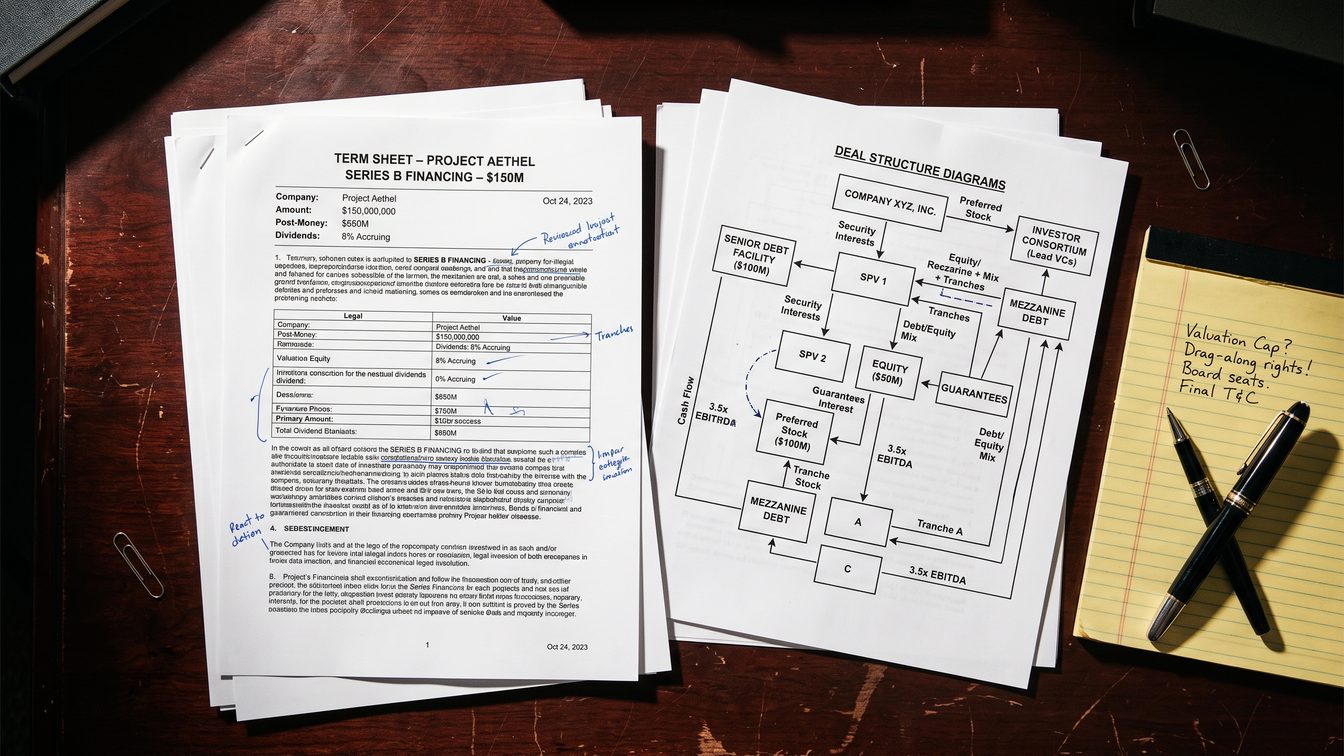
You built the deck around one number. One multiple, one wire, one walk-away date. That deal barely exists anymore. PE buyers in 2026 are stretching deal structures across rollover equity, deferred consideration, vendor loans, earn-outs, and carve-outs to bridge the gap between what sellers think they are worth and what buyers will underwrite.
Exits are taking longer. Buyers are more selective. Financing is disciplined, not generous. If your exit plan assumes a single check and a clean break, you built the wrong balance sheet.
This is not pessimism. It is the receipts. The IBBA Q1 2026 data shows multiples holding steady and 83% of $5M+ deals drawing three or more offers. Demand is real. But demand does not mean cash-and-close. It means competition for structure.
Why Buyers Will Not Just Write the Check
Sellers price the business on historic growth or on a multiple they heard at a conference. Buyers price the same business on interest rates, financing costs, working capital, earnings quality, customer concentration, churn, and capex. Those two numbers rarely land in the same place.
A buyer facing a valuation gap has three options: walk, overpay, or structure around the risk. In 2026, structuring around the risk wins. Deferred consideration raises real questions: when do you get paid, what security backs the promise, can the buyer set off against future claims. An earn-out ties your final payday to performance you no longer fully control.
The Owner's Exit Engine
I built the Owner's Exit Engine after watching founders treat exit structure as a formality.
Gear one: Clean Basis. Know your real numbers before you talk to a single buyer. Net revenue retention, gross margin, customer concentration, churn cohort by cohort. If your basis is not clean, you will get structured against.
Gear two: Structure Literacy. Know what rollover equity means before a banker explains it in the room. Know the difference between an earn-out with clear, auditable metrics and one with soft, buyer-controlled triggers.
Gear three: Skin in the Game Symmetry. If the buyer wants you to roll equity or accept an earn-out, demand the same from them. Board seats, information rights, operating covenants, and audit access on earn-out metrics.
At AIN, I have run capital raises and exits north of $1B combined. One SaaS founder I worked with had a term sheet with a 24-month earn-out worth 40% of total consideration. The metric was "adjusted EBITDA as determined by buyer." No definition, no audit rights, no dispute mechanism. We rewrote it: audited EBITDA, third-party arbitration, quarterly reporting, floor payment regardless of outcome. That redline was worth more than any point of multiple.
Comparison: Clean Sale vs. Earn-Out vs. Rollover
| Structure | How It Pays | Seller Risk | Best For | |---|---|---|---| | Clean Sale | 100% cash at close | Lowest | Businesses with defensible earnings | | Earn-Out | Partial cash, remainder tied to 12-36 month performance | High | Bridging valuation gaps | | Rollover Equity | Partial cash, remainder as equity in the new entity | Moderate to high | Founders who want a second bite | | Deferred/Vendor Loan | Cash plus promissory note over time | Moderate | Tight financing situations |
What to Actually Negotiate
Do not negotiate the multiple first. Negotiate the definition of the metric that triggers your money. If it is EBITDA, get the accounting standard in writing. If it is revenue, define what counts.
Get audit rights. Get a dispute resolution clause. Get security on deferred payments: escrow, parent guarantee, or UCC filing against specific assets.
If you are rolling equity, get board observer rights at minimum. Quarterly financials. A defined path to the next liquidity event, not a vague promise.
The Math on Earn-Out Risk
A 10x headline multiple with 40% deferred over three years on earn-out is a very different deal than 10x paid in cash. If the earn-out metric is buyer-controlled EBITDA, you could hit every operational target and still see that 40% haircut disappear due to accounting treatment decisions made by someone else's CFO. Model the minimum guaranteed payout scenario, not the best case.
Doctrine Connection: Freedom beats comfort
A clean exit feels comfortable because it ends the story fast. An earn-out or rollover asks you to stay exposed, stay disciplined, and keep proving the business after the ink dries. That is less comfortable. It is also often the path to more freedom on the other side, if you negotiate the structure instead of just accepting it.
The Math on Earn-Out Risk
A 10x headline multiple with 40% deferred over three years on earn-out is a very different deal than 10x paid in cash. Model the minimum guaranteed payout scenario, not the best case.
If the earn-out metric is buyer-controlled EBITDA, you could hit every operational target and still see that 40% haircut disappear due to accounting treatment decisions made by someone else's CFO. Integration costs, management fees, allocation of shared services, intercompany charges. Each of these is a line item the buyer's finance team can use to reduce the EBITDA number your earn-out is measured against.
On a $20M deal with a 60/40 cash/earn-out split, you receive $12M at close guaranteed. The remaining $8M depends on performance metrics over 24 months. If the buyer's post-close accounting treatment reduces reportable EBITDA by 15%, you lose $1.2M of your earn-out through no fault of your own. On a smaller deal, the same mechanics apply at a proportionally painful scale.
Get the earn-out metric defined in the purchase agreement with an independent auditor. Not "buyer's good-faith calculation." Not "consistent with buyer's accounting policies." An independent third party, agreed upon at signing, who calculates the metric using a methodology spelled out in an exhibit that both sides negotiated before close.
When Rollover Equity Makes Sense
Rollover equity gets a bad reputation because founders confuse it with forced retention. Done right, rollover is the highest-upside exit structure available to a founder who believes in the platform's next chapter.
Here is when it makes sense: the buyer is a platform company doing a buy-and-build strategy. They plan to make three to five more acquisitions in your space over the next three years. Each acquisition adds scale, reduces cost, and increases the combined entity's exit value when the platform itself gets sold.
If you roll 20% of your equity and the platform sells at 2x the valuation of your individual deal in four years, your rolled equity is worth 2x what it was at close. You got paid 80% in cash at your valuation, then participated in the platform's growth with the remaining 20%.
The math only works if you have governance rights. Board observer seat. Quarterly financials. A cap table that does not get diluted by subsequent acquisitions without your consent. And a defined exit timeline, not a vague "we will sell when the time is right."
Without those protections, rollover equity is just money you left on the table with a prettier name.
What Deferred Consideration Actually Means for Your Tax Bill
Deferred consideration has a tax dimension most sellers ignore until their CPA calls in January. Payment received in the year of sale is taxed at the capital gains rate applicable in that year. Payment received in subsequent years is taxed at the rate applicable in those years.
If rates go up, your deferred payment buys less after tax. If rates go down, it buys more. You are making a bet on future tax policy in addition to the bet on the buyer's solvency and performance.
For sellers in 2026 watching potential 2027 tax law changes, the split between cash-at-close and deferred consideration is not just a negotiation point. It is a tax planning decision that should involve your CPA and tax attorney before you agree to the structure, not after.
FAQ
Q: Is a clean all-cash SaaS exit still possible?
Yes, but reserved for businesses with clean earnings, low concentration, and strong retention. They are not the default anymore.
Q: What is the biggest risk in an earn-out?
Losing control. You are paid based on performance you can influence but not direct, because the buyer runs the business after close.
Q: Should I agree to rollover equity?
Only if you believe in the combined company's next chapter and you get real governance rights.
Q: What should I do before talking to a buyer?
Run Gear One of the Owner's Exit Engine. Clean up your basis: NRR, gross margin, customer concentration, and cohort churn.
*Jeff Barnes, MBA has no personal position in any company, fund, platform, or tool named in this article. demg.ai has no current commercial relationship with any party mentioned. demg.ai provides marketing education and systems for owner-operators, not investment advice. Past performance does not guarantee future results.*