
TL;DR
Meta just eliminated the biggest drop-off in your lead funnel. Leads can now book appointments without leaving Facebook. HighLevel is a launch partner. Full rollout hits every advertiser by November 2026.
If you run a service business and you have ever watched a lead go cold between the form submission and the follow-up call, this is the update you have been waiting for since Instant Forms launched.
What Actually Happened
On June 24, 2026, Meta announced Embedded Appointment Booking for Facebook Lead Ads, and named HighLevel one of only two launch scheduling partners, alongside Calendly. Meta picked HighLevel specifically because of how many lead-gen advertisers already run their booking calendars on it. That is not a small detail. Meta does not hand out launch-partner slots to be nice. They picked the tool their advertisers were already using at scale.
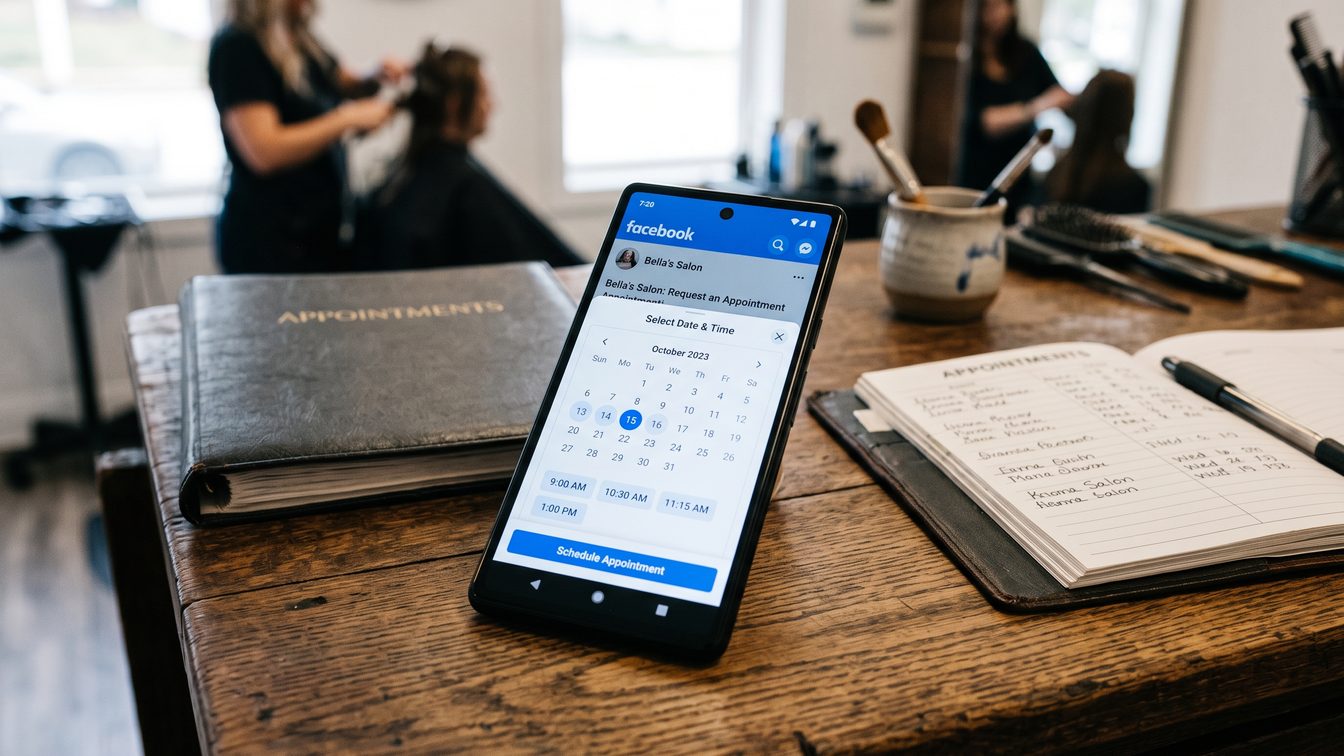
Here is the plain version of what changed. Right now, when someone fills out a Facebook Lead Ad form, they land on a Thank You page and that is it. The lead is in your system, but the appointment still has to happen through a phone call, a text, an email, or a separate booking link that half of them never click. With Embedded Appointment Booking, a HighLevel calendar loads directly inside that Thank You page. The lead's name, email, and phone number carry over automatically. They pick a time. They are booked. They never left Facebook.
Meta said it plainly in their own announcement: "The gap between form submission and appointment booking has always been a challenge for service-based advertisers. A lead might fill out your form with genuine interest, but by the time they receive a follow-up email or work through to your booking site hours later, that intent has cooled. With embedded appointment booking, you eliminate that gap entirely."
That gap is the single biggest leak in a service business funnel. Meta just patched it at the platform level, not the CRM level. That is a different kind of fix, and it matters.
How It Works
The setup lives entirely inside two places you already touch every week: Meta Ads Manager and your HighLevel calendar settings.
Step 1: Build your HighLevel calendar. Create or confirm the calendar you want Facebook leads to land on. Set your availability, your team assignments, your buffers, your booking rules. This calendar is doing real work now, not just sitting behind a link in a follow-up text.
Step 2: Grab the scheduling link. Copy the public scheduling link for that specific calendar. Use the LeadConnector domain link, not a branded domain. Branded links currently break the embedded preview and will kick the lead into a separate browser instead of keeping them inside Facebook.
Step 3: Build your Instant Form. In Ads Manager, create your Lead campaign, select Instant Forms as the conversion location, and build the form as usual.
Step 4: Select Book Time as your ending action. In the form's Ending section, choose Book Time under Additional Actions, then paste your HighLevel scheduling link into the Scheduling Link field. Meta auto-detects HighLevel as the calendar provider and shows you a live preview of the embedded widget right there in Ads Manager.
Step 5: Publish. No developer, no API key, no code. That is the whole technical lift.
Step 6: Build your HighLevel workflows around the new events. This is the part most operators will skip and later regret. Set up a workflow that fires on Facebook Lead Form Submitted for leads who fill out the form but do not book. Set up a second workflow that fires on Customer Booked Appointment for leads who do. Add appointment reminders and internal notifications to both. The embedded calendar handles the booking. Your workflows handle everything that keeps the appointment from becoming a no-show.
One limitation worth knowing now. The embedded experience currently works on Facebook's mobile app. On other placements, including Instagram, the Book Time button still shows, but it opens the booking page in a separate in-app browser instead of embedding it on the Thank You page. Design your campaigns with that in mind if Instagram is a big chunk of your spend.
The Math
Here is where this gets real for your P&L.
Industry data on form-fill funnels shows only 20 to 30 percent of leads ever answer the phone after submitting a form. Of those, a fraction actually book. Across service businesses running Meta Ads with solid follow-up automation, the benchmark lead-to-appointment rate sits at 20 to 40 percent. Below average operators land closer to 10 to 15 percent because their follow-up is slow, manual, or both.
Compare that to self-booked funnels. When a lead books directly instead of waiting for a callback, show-up rates jump to 80 to 85 percent, versus roughly 70 percent for staff-booked appointments. One study comparing a form-fill funnel to a booked-call funnel at identical ad spend found the booked-call version produced nearly five times the paying clients from the same budget, because contact rate, show-up rate, and close rate all improved at once. Same cost per lead. Wildly different cost per client.
Run the numbers on a typical HVAC campaign. Say you generate 50 leads a month at $40 cost per lead, spending $2,000. At a 25 percent form-fill-to-appointment rate with staff follow-up, you get 12 to 13 booked appointments. At 90 percent show-up, since homeowners tend to show for home service calls, that is 11 to 12 completed jobs. Now put embedded booking in front of that same traffic. If even half your leads book on the spot instead of drifting through a callback queue, you are not adding a few percentage points, you are compounding two numbers that both move in your favor. More leads convert to bookings, and self-booked appointments show up at a higher rate than staff-booked ones. That is the difference between 12 completed jobs and 18 to 20 from the identical ad spend.
Do not confuse this with a free lunch. Meta's own Ads Manager will not show you booked appointment counts for the embedded flow. You still need to watch your HighLevel calendar for the real number, and you still need a second conversion event feeding back to Meta so the algorithm learns to find people who actually book, not just people who fill out forms. Report the form submission as one event and the confirmed booking as a separate one. If you only report form submits, Meta's delivery system optimizes toward the cheapest people willing to type their name into a box, and those are also the cheapest people to no-show. Feed it the booking event and the audience it finds next month gets sharper.
Setup Guide for Service Business Operators
If you are running HighLevel and Facebook Lead Ads today, here is your punch list before the November full rollout.
- Audit every calendar link currently tied to a Facebook campaign. Confirm each one uses the LeadConnector domain.
- Rebuild your top three performing Instant Forms with the Book Time ending action instead of a generic Thank You message.
- Split campaigns by service type. A dental clinic should separate cleanings from cosmetic consults from emergency visits. An HVAC company should separate repair from install from maintenance. Each gets its own calendar and its own qualifying questions.
- Add two to three qualifying questions to your form, no more than four. Budget, timeline, and property type work well. This keeps unqualified leads from clogging a calendar meant for real buyers.
- Build the two-event workflow in HighLevel. Fire one event on form submission for measurement. Fire a second event on confirmed booking, and set that as the one Meta optimizes against.
- For quote-required work like full HVAC installs, commercial roofing, or anything that needs a site visit, do not auto-book. Route those leads to a callback queue with a fast response SLA instead. Embedded booking is built for consultations, demos, estimates, and service calls, not for jobs that need a human to scope first.
- Set your show-up automation. Confirmation text on booking, reminder at 24 hours, reminder at 2 hours. This is what protects the show-up rate gain you just bought yourself.
Expect your reported cost per lead to look a little different once you switch what you are optimizing for. That is not a problem. It is the metric finally telling you the truth.
The Angel Investors Network Story
When I built Angel Investors Network back in 1997, the conversion killer was the same problem wearing a different coat. Friction between interest and action. Someone would find us, want in, and then hit a wall. It took three clicks to get a person fully registered. Three separate screens between "I'm interested" and "I'm in."
We cut it to one. Registration doubled. Not because the offer changed. Not because the traffic changed. Because we removed two steps standing between a person's intent and the moment we captured it.
Meta just did the same thing for your appointment book. The offer is the same. The traffic is the same. The only thing that changed is the number of steps between a stranger deciding they want to talk to you and that appointment landing on your calendar. In 1997 that gap cost us half our registrations. In 2026 it is costing service businesses the same share of their bookings. Fix the gap and the math fixes itself.
Framework: FOCUS Strategy
This update rewards businesses that already know exactly who they serve and what they are booking. The FOCUS Strategy is about finding your unique market position before you scale your spend. A generic HVAC ad running a generic form into a generic calendar will fill that calendar with generic leads, no-shows included. A campaign built around one service, one ideal customer, and one calendar with the right buffers and qualifying questions will fill that same calendar with people who show up and buy.
Embedded booking removes friction. It does not remove the need for positioning. If your targeting is soft, you will now get bad-fit leads booking appointments faster than ever, which just moves the problem from your inbox to your waiting room. Know your customer first. Then let Meta remove the friction.
Doctrine Connection: Ownership Beats Wages
Every update like this favors the operator who owns the funnel over the one renting it. If your booking calendar, your follow-up workflows, and your customer data live inside a system you control, this update is pure upside. You capture the extra bookings and you keep the data that compounds your targeting month over month.
If you are outsourcing your entire lead process to an agency that will not show you the calendar or the workflow, you are paying wages for something you should own. Ownership beats wages applies to your marketing infrastructure the same way it applies to your business. Own the system that turns strangers into booked appointments. Do not rent it.
FAQ
Does embedded booking cost extra to use? No. There is no additional fee from Meta or from HighLevel for the embedded experience itself. You are already paying for your ad spend and your HighLevel subscription. This is a feature inside tools you already have.
Do I need a developer to set this up? No. The entire setup is pasting a scheduling link into the Instant Form editor and selecting Book Time as your CTA. Meta auto-detects the calendar provider.
Does this work on Instagram too? Not the embedded version, at least not yet. On Instagram and other non-Facebook-mobile placements, the Book Time button opens your booking page in a separate in-app browser rather than embedding the calendar directly on the Thank You page.
What if my service requires a quote before anyone can book a real appointment? Do not use auto-booking for that traffic. Route those leads to a callback queue with a response time SLA instead. Embedded booking is built for consultations, demos, estimates, and standard service calls, not jobs that need scoping first.
When do I need to have this live? HighLevel's rollout reached 25 percent of advertisers on June 24, 2026, hits 50 percent by August 10, and reaches full availability by November 2026. If you have not seen the Book Time option in your Instant Form editor yet, check again as the rollout expands.
Disclosure
This article discusses HighLevel as a Meta launch partner for Embedded Appointment Booking. Jeff Barnes and demg.ai may have a commercial relationship with HighLevel. All performance figures cited are drawn from third-party industry data and public statements from Meta and HighLevel as of the publication date. Individual results vary by vertical, ad spend, and funnel execution.