
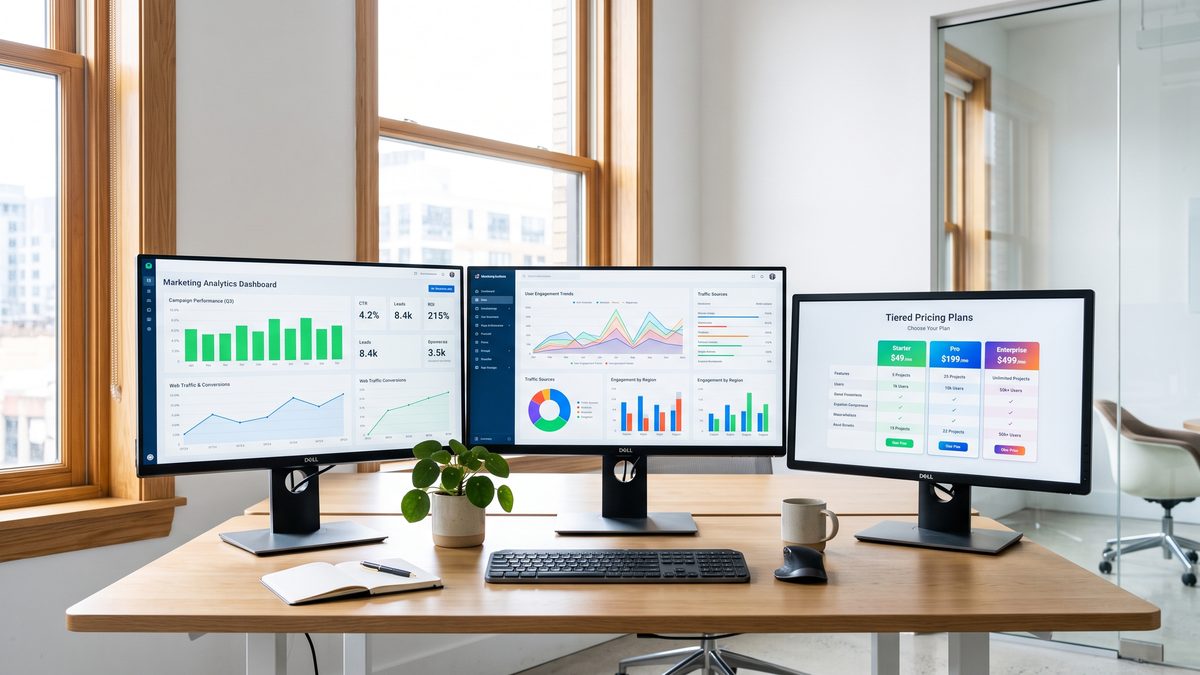
TL;DR: OpenAI launched GPT-5.6 on July 9, 2026, as three separate tiers: Sol ($5 input / $30 output per 1M tokens), Terra ($2.50/$15), and Luna ($1/$6). The context window is 1.05 million tokens, not the 1.5 million figure that circulated and was later debunked. For agency owners, the story is not the model. It is the tiered pricing, which lets you route ad copy to Luna, client summaries to Terra, and deep account reviews to Sol. Get the routing wrong and you pay Sol prices for Luna work, all month long.
I sat in on a call last year with an agency owner who ran every single task through the most expensive model available. Every subject line. Every meta description. Every internal Slack summary. His reasoning: "the best tool for the job." His invoice told a different story. He was paying premium rates for work a cheaper engine could do in the same second.
That is the mistake GPT-5.6 makes easy to fix, or easy to repeat, depending on whether you build a system around it.
What Actually Shipped on July 9
GPT-5.6 is not one model. It is a family with three durable capability tiers, according to OpenAI's own launch post. Sol is the flagship. Terra is the balanced, everyday-work tier, priced at roughly half of Sol. Luna is the fast, cheap tier built for volume.
Pricing per 1 million tokens:
- Sol: $5 input / $30 output
- Terra: $2.50 input / $15 output
- Luna: $1 input / $6 output
All three share a 1.05 million token context window and a 128,000 token maximum output, per independent testing from developer Simon Willison, who ran side-by-side benchmarks the day of launch. That figure matters because a rumor of a 1.5 million token window spread in the days before release. It was wrong. Plan your workflows around 1.05 million, not the bigger number that never shipped.
TechCrunch's coverage of the launch frames the three-tier structure as OpenAI's answer to a market that has moved past "which model is smartest" and into "which model is smartest per dollar, for this specific task." That framing is the whole game for agency owners.
Why Tiered Pricing Is the Real Story
Every prior model launch asked one question: is this model better than the last one. GPT-5.6 asks a second question that agencies have never had to answer this cleanly before: better at what price, for what task.
That second question is the one that separates agencies that scale margin from agencies that scale headcount. A shop billing clients a flat retainer for content production has a fixed revenue ceiling per account. The only lever left is cost of production. Three-tier pricing hands you that lever directly, denominated in dollars per million tokens instead of vague promises about "efficiency."
I have run agencies. I know the instinct to grab the newest, shiniest model and put it everywhere. That instinct is expensive. It treats a pricing menu like a single price tag.
The ATLAS Model Says Route by Task, Not by Habit
I built the ATLAS Model for exactly this kind of decision. The A stands for Assess: before any tool gets deployed, you assess what the task actually requires, not what feels impressive to run.
Applied to GPT-5.6, the assessment is blunt:
- Luna for high-volume ad copy. Fifty variations of a Facebook headline do not need frontier reasoning. They need speed and low cost per unit. Luna at $1/$6 per million tokens is built for exactly this compartment of work.
- Terra for client summaries and weekly reports. These require coherence and structure, not creative leaps. Terra performs competitively with the prior GPT-5.5 generation at roughly half the cost, according to OpenAI.
- Sol for deep account reviews and strategic decks. When the deliverable is a quarterly business review that a client CMO will read line by line, that is when you pay for the flagship. The cost of a wrong strategic call dwarfs the token bill.
An agency that runs Sol on everything is not being thorough. It is failing to compartmentalize. Compartmentalization is a watchstanding discipline: you do not flood every space on the ship because one compartment has a leak. You seal it, assess it, and route resources to where they are needed. Token routing works the same way.
The rest of the ATLAS Model applies here too. Track cost per deliverable weekly, not quarterly. Layer in a review step where a human checks Luna output before it ships, since the cheapest tier is also the least forgiving of ambiguous prompts. Assign ownership of the routing table to one person, usually an ops lead, so it does not silently drift back to "everyone uses whatever they used last week." Scale the system once it holds for a full month without correction.
The Adoption Numbers Say This Is Not Optional Anymore
This is not a hypothetical for early adopters. Generative AI use inside agencies has become the baseline. Joint research from Forrester and the 4A's puts adoption at 87 to 90 percent of U.S. agencies now using generative AI in some part of their workflow. That is not a leading edge. That is table stakes.
And it is paying off in hours, not just headlines. AgencyAnalytics' 2026 benchmark report finds 79 to 80 percent of agencies using AI tools save five or more hours per week. Five hours a week, per employee, compounds fast across a ten-person shop. That is roughly 2,500 hours a year freed up, assuming a modest team, which is either reinvested in billable strategy work or lost to Slack scrolling. The choice is the owner's, not the tool's.
Here is the part most owners miss: adoption at 87 to 90 percent means the competitive advantage of simply "using AI" has already evaporated. Your competitor down the street uses it too. The advantage that remains is operational: who routes tasks intelligently, who audits cost monthly, who has a documented system instead of a founder's gut feel about which model "feels right" for a given brief.
How GPT-5.6 Sol Stacks Against Claude Sonnet 5
Agency owners running a multi-model stack need the comparison, not the marketing copy. A DataCamp comparison of Claude Sonnet 5 against the GPT-5.6 family notes Sonnet 5's introductory pricing of $2 input / $10 output per million tokens, running through August 31, 2026, before reverting to $3/$15. That places Sonnet 5 between Terra and Sol on raw token cost, while offering a different reasoning profile.
The lesson is not "pick one model forever." The lesson is that pricing tiers are now a competitive layer in their own right, and the agencies that win margin in the next eighteen months will be the ones with a documented routing doctrine, not a favorite chatbot. I tell clients the same thing I tell myself: loyalty to a vendor is a liability if the vendor's pricing structure changes faster than your habits do. Sonnet 5's price steps up after August 31. If your routing table has not accounted for that date, you will find out about the increase on an invoice instead of in a planning meeting.
Build the Routing System Before You Need It
Here is the failure mode I see most: an agency adopts a new model the week it launches, uses it for everything out of excitement, and only audits cost three months later when the invoice triples. By then the habit is baked into five different client workflows and unwinding it costs more than the savings would have been worth.
The fix is a written routing table. Task type, required reasoning depth, acceptable latency, assigned tier. It takes an afternoon to build and it is the single highest-leverage document an agency owner can write this quarter. Systems beat slogans. A slogan says "we use AI." A system says which model handles which client deliverable, and why, in a document any account manager can follow without asking the founder.
A simple version looks like three columns on a shared doc: task category, tier assigned, and a one-line reason. Ad copy variants, Luna, high volume low stakes. Client-facing weekly report, Terra, needs coherence not creativity. Quarterly strategy deck, Sol, cost of error exceeds token cost by orders of magnitude. That is the whole system. It does not need software. It needs someone to write it down and someone else to enforce it.
What This Means for the Next Model Launch
GPT-5.6 will not be the last model to ship with tiered pricing. Anthropic, Google, and every serious lab now understands that agencies and other high-volume commercial users want cost control as much as they want intelligence. Expect the next generation from every major lab to arrive with three or four tiers instead of one flagship number.
That means the routing table you build this month is not a one-time fix. It is infrastructure. Treat it the way you would treat a media-buying rulebook: reviewed quarterly, updated whenever a new tier or a new vendor enters the stack, owned by a named person, not a folder nobody opens. Agencies that treat model selection as infrastructure will compound a cost advantage over agencies that treat it as a one-off decision made in excitement on launch day.
I have watched two agencies of similar size and similar client rosters diverge over eighteen months purely on this discipline. One built the routing table in month one and revisited it every quarter. The other never wrote anything down and re-decided model choice every time a new headline dropped. The first agency's AI production cost, as a percentage of revenue, dropped by roughly a third over that period. The second agency's cost crept up, because habit is expensive when the underlying menu changes and nobody updates the map.
Doctrine Connection: Systems Beat Slogans
Every agency claims to be AI-forward now. Adoption at 87 to 90 percent means the claim is worthless as a differentiator. What differentiates is the system behind the claim: the routing table, the cost audit, the discipline to assign Luna to volume work and Sol to the work that actually needs it. A slogan is something you post on LinkedIn. A system is something your ops team can execute on a Tuesday without you in the room. Build the system. The slogan takes care of itself.
FAQ
Is GPT-5.6 Sol's context window really 1.5 million tokens?
No. That figure circulated before launch and was debunked. Independent testing on launch day confirmed a 1.05 million token context window across Sol, Terra, and Luna, with a 128,000 token maximum output.
Which GPT-5.6 tier should a small agency start with?
Start by mapping your recurring deliverables to the three tiers before you commit spend anywhere. High-volume, low-stakes work belongs on Luna. Client-facing summaries and reports fit Terra. Reserve Sol for strategic work where the cost of a wrong output exceeds the token bill by a wide margin.
How does GPT-5.6 pricing compare to Claude Sonnet 5?
Sonnet 5 launched at an introductory $2 input / $10 output per million tokens through August 31, 2026, reverting to $3/$15 after. That places it between GPT-5.6 Terra and Sol on cost, according to DataCamp's comparison.
Do agencies actually need three separate AI tiers?
Not three separate tools. Three tiers inside one routing doctrine. The tiers exist because tasks are not equally difficult, and paying flagship prices for commodity work is a margin leak most owners do not notice until the quarterly P&L.
Jeff Barnes, MBA has no personal position in any company, fund, or platform named in this article. demg.ai has no current commercial relationship with any party mentioned. demg.ai provides marketing strategy and education for owner-operators, not investment advice.