
TL;DR
GoHighLevel opened private beta on RCS messaging inside Workflows on July 7, 2026. General availability is targeted for the end of Q3. Two new actions, Send RCS and RCS Interactive Message, let you automate branded, card-based messages with tappable buttons, and branch a workflow based on which button a contact taps. RCS open rates run 90-95%, just under SMS at 98%, but click-through rates run 3-7x higher and conversion rates run 5-10x higher, because a button beats a copy-paste link every time. If you run client campaigns in GHL, get on the beta list now, pick two accounts to pilot, and have booking and product-carousel workflows ready the day GA lands. Agencies who wait for GA to start learning this will be six weeks behind the ones who start today.
Rich Communication Services is not a marketing buzzword. It is a carrier-level protocol upgrade to SMS, and it just became automatable inside GoHighLevel. Here is what changed, why it matters for the accounts you manage, and how to build the pilot campaign this week.
What RCS Actually Is
SMS has run on the same infrastructure since 1992. One hundred sixty characters. No images beyond crude MMS compression. No read receipts. No sender identity beyond a ten-digit number your client's prospects don't recognize and often don't answer.
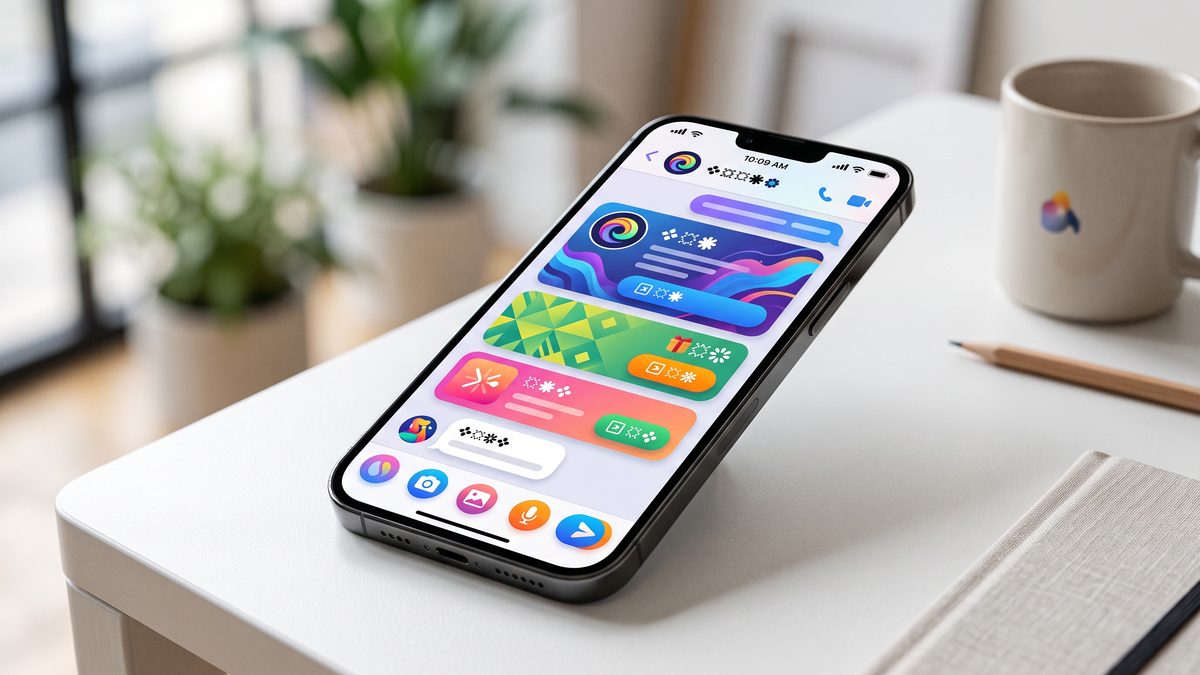
RCS (Rich Communication Services) is the GSMA-backed successor. It rides the same carrier rails as SMS but delivers what a modern messaging app expects: a verified sender name, a brand logo, high-resolution images, rich cards, horizontally scrolling carousels, and tappable buttons that trigger actions (open a link, dial a number, book a slot) without the recipient typing a word.
Apple added RCS support in iOS 18 in September 2024, which killed the "Android-only" objection agencies used to hear from skeptical clients (Sinch, 2025). Coverage now sits north of 90% of US smartphones. Where a device or carrier doesn't support RCS, GoHighLevel automatically falls back to plain SMS. Nobody gets dropped. They just get the lesser version.
The July 2026 Beta, Straight
Here is the sequence of events, confirmed from HighLevel's own support documentation and changelog:
- May 2026: RCS messaging began rolling out in GHL via Twilio's RCS product, initially for 1:1 conversations and Bulk Actions (Snippets).
- July 7, 2026: HighLevel shipped RCS support into Workflows, private beta. Two new workflow actions arrived: Send RCS and RCS Interactive Message. The second one is the operator-grade feature. It lets you build rich cards with buttons and route the contact down a different workflow branch depending on which button they tap (HighLevel Support, July 2026).
- End of Q3 2026 (target): General availability. Access right now runs through your Customer Success Manager, and onboarding requires registering an RCS Sender ID through Twilio, including brand logo, banner image, accent color, and carrier/Google approval (HighLevel Support, "Onboard an RCS Sender ID").
Onboarding is not instant. Sender ID approval requires carrier and Google review, and the industry benchmark for that review runs 8-16 weeks when you're not going through an aggregator's fast lane (OneSignal RCS documentation). That is the single biggest reason to move now instead of waiting for the GA announcement. If your Sender ID application goes in today, you might clear approval right around GA. If you wait until GA to apply, you're staring at Q1 2027 before your first client campaign ships.
The 1MC Principle
On the submarine, we had one communication channel that mattered: the 1MC. When the captain spoke on the 1MC, every compartment heard it, clearly, instantly, with zero ambiguity. There was no static, no guessing what he meant, no wondering if the message actually landed. You heard it, you knew who said it, and you acted.
RCS is the 1MC of customer messaging. Branded. Rich. Unmistakable.
SMS is a broadcast from an unknown number. The recipient doesn't know who's calling until they read the words, and half the time they never open it because it looks like spam. RCS shows up with your client's business name, their logo, their brand color, and a verified checkmark before the recipient reads a single word of copy. That is the difference between a rumor and an order. Command clarity, applied to a text message.
How RCS Works Inside a GHL Workflow
The mechanics are straightforward once you've built one:
- Register your Sender ID. Go to Develop → RCS → Senders inside GHL, create the sender profile with your client's logo, banner, and accent color, then submit for carrier approval.
- Build the RCS Snippet or Interactive Message. Snippets are pre-designed templates, plain rich messages, no buttons. Interactive Messages carry rich cards with up to four suggested actions each: link buttons, keyword-reply buttons, phone-dial buttons, or calendar-event buttons.
- Drop the action into a Workflow. Navigate to Automation, then Workflows, add the Send RCS or RCS Interactive Message action, and configure the card content, media, and button set.
- Branch on the tap. This is the feature that matters for agencies. The RCS Interactive Message action reads which button the contact tapped and routes them down a different path. "Book Now" goes to a calendar-confirmation sequence, "See More Options" goes to a second carousel, no reply within 24 hours goes to an SMS follow-up.
- Publish. GHL falls back to SMS automatically for any recipient whose device or carrier doesn't support RCS, so you never build two versions of the same campaign.
That branching step is what separates RCS-in-Workflows from RCS-as-a-broadcast-tool. A static RCS blast is a nicer-looking SMS. An RCS Interactive Message wired into a branching workflow is a conversation the contact drives with their thumb, and your automation reacts in real time.
Why the Engagement Numbers Matter to Your Client
Open rates alone will not sell your client on switching budget from SMS to RCS. SMS still edges RCS on raw opens: about 98% versus 90-95% (Sinch, 2025 and Gartner, 2024). What sells the switch is what happens after the open.
- Click-through rate: SMS runs 4-7%. RCS runs 15-30%, occasionally reaching 51% on strong offers (Infobip, "Key RCS statistics & market insights for 2026").
- Conversion rate: SMS converts engaged recipients at 3-5%. RCS converts at 20-40%, largely because a one-tap booking button eliminates the multi-step website navigation that kills mobile conversion (Infobip, 2025).
- Real campaign results: Clarins ran RCS against SMS for a promotional push and saw double the click-through rate on the RCS side, driven by product images paired with a "Shop Now" button (Sinch case study, 2024). Brazilian retailer Casas Bahia used RCS carousels to showcase deals and generated 6.2x the ROI of the equivalent SMS campaign (Google RCS case study, 2024). Indian fintech BankBazaar A/B tested RCS against SMS for acquisition and measured a 130% lift in click-through rate off the verified-sender badge alone.
Run the math for a local client with a 2,000-contact list. A 5% SMS CTR nets 100 clicks. A 20% RCS CTR nets 400 clicks on the same list, same offer, same budget. That is not incremental. That is four times the volume flowing into the funnel your client already paid you to build.
Practical Campaign Use Cases for Client Accounts
Build these into your pilot before GA hits and every competing agency floods the same feature.
Appointment booking with a tap. Skip the "reply YES to confirm" SMS pattern. Send a rich card with the appointment time and a "Confirm Appointment" button that fires a calendar-event action. No typing, no ambiguity, no double-booking from a mistyped reply.
Product carousels for retail and service upsells. A home services client with three maintenance packages sends one RCS carousel (three cards, three images, three "Book This" buttons) instead of three separate SMS messages nobody reads past the first line.
Branded review requests. A verified sender with the client's logo asking for a Google review converts better than a bare number, because the recipient can see who's asking before they decide to engage.
Abandoned-cart or missed-appointment recovery. Branch the workflow on tap behavior. Tap "Reschedule" routes to a live calendar link. No tap within four hours triggers an SMS fallback with a phone number. You are not guessing at re-engagement. You are reacting to a signal the contact gave you directly.
Lead qualification carousels. Instead of a static intake form, send a card sequence, "What's your timeline?" with buttons for "This month," "This quarter," "Just researching," and route each tap into a different nurture sequence automatically.
Every one of these was possible in email or a landing page. None of them landed with 90%+ open rates until now.
What to Do This Week
Get your agency and your top two client accounts onto HighLevel's private beta list through your Customer Success Manager. Start the Twilio Sender ID application in parallel: logo, banner, accent color, agent description, launch URL, because that approval clock is the real bottleneck, not the GHL feature build. Pick one client with a booking-dependent business model (dental, home services, fitness) and build the appointment-confirmation RCS workflow first. It is the simplest use case, it has the clearest ROI story, and it gives you a live case study to show every other client on your roster before GA opens the floodgates.
The ATLAS Model, Applied to RCS Rollout
Every new channel launch on a client account should run through the same operator sequence. Call it the ATLAS Model:
- Audit the current SMS performance baseline on the account before you touch anything. You cannot prove lift without a number to lift from.
- Target one workflow, not ten. Appointment confirmation or one product carousel. Resist the urge to rebuild the entire messaging stack in week one.
- Launch the pilot on a segment, not the full list. Test the Sender ID, the fallback behavior, and the branching logic on 200 contacts before you touch 20,000.
- Automate the branch logic once the pilot proves out. Button taps should route contacts without a human touching the workflow again.
- Scale to the full account and the next client only after you have a documented before/after number. That number is what you show the next prospect.
Skip a step and you either ship something broken to a full list or you never ship at all because you kept "researching." Both cost you the client relationship eventually.
Doctrine Connection
Capitalism creates value. RCS didn't create new demand for your client's product or service. It removed friction between a customer who already wants to book, buy, or reply, and the action that gets them there. Every step you strip out of that path is value you created for someone willing to pay for it. That is the entire job, not chasing a shiny new channel but using the new channel to move more real transactions across the finish line, faster, for a client who's still paying you a management fee at the end of the quarter.
FAQ
Q: When will GoHighLevel RCS in Workflows be generally available to all agencies? HighLevel has targeted general availability for the end of Q3 2026. As of July 2026, access to the Send RCS and RCS Interactive Message workflow actions is private beta only, granted through your Customer Success Manager.
Q: Does RCS work on iPhone inside GoHighLevel? Coverage runs through Twilio's RCS product and depends on carrier support. Apple added RCS to iOS 18 in September 2024, which pushed US device coverage above 90%, but actual delivery still depends on the recipient's carrier having RCS enabled. GHL automatically falls back to standard SMS for any recipient whose device or carrier doesn't support RCS, so no contact gets dropped from the send.
Q: How long does RCS Sender ID approval take? Industry approval timelines for a premium RCS sender resource typically run 8-16 weeks, since both the carrier and Google review the brand assets (logo, accent color, agent description, launch URL) before granting verified sender status. Start that application now if you want it cleared by GA.
Q: Is RCS worth the switch if SMS still has a higher open rate? Open rate is the wrong metric to optimize. SMS opens run around 98% versus RCS at 90-95%, a small gap. Click-through and conversion are where RCS wins decisively: 3-7x higher CTR and 5-10x higher conversion, because a tappable button removes the copy-paste-a-link step that kills mobile conversion. Judge the channel on downstream action, not on whether the message got opened.
Q: What's the single highest-ROI first use case for an agency piloting RCS? Appointment confirmation and rescheduling for booking-dependent clients (dental, home services, fitness, salons). It requires only one rich card, one or two buttons, and it replaces a "reply YES" SMS pattern that already has friction baked in. It is the fastest workflow to build, the easiest to measure against a clean SMS baseline, and the clearest story to bring to your next client renewal conversation.
*Jeff Barnes, MBA has no personal position in any company, fund, or platform named in this article. demg.ai has no current commercial relationship with any party mentioned. demg.ai provides marketing education and systems consulting, not investment advice. Past performance does not guarantee future results.*