
The Interchangeability Problem
I spent 20 years in the Navy, working in the engine room of a submarine. (achrnews.com) One lesson stuck with me: when something breaks, you don't try to fix everything at once. You isolate the casualty. You focus on one problem. You handle it. Then you move to the next.
Most service businesses do the opposite. They try to be everything to everyone. The result? They're interchangeable.
Here's the hard truth: 95% of service contractors in HVAC, plumbing, electrical, landscaping, and cleaning are functionally indistinguishable. A homeowner in Wichita searches "AC repair near me" and gets hit with fifteen contractors claiming the same things: fast, affordable, reliable, licensed, insured, professional. All true. All meaningless.
When a customer can replace your logo with a competitor's and nothing changes, you don't have a brand. You have a label.
The service industry doesn't suffer from a competence problem. Most contractors are competent. What it suffers from is a positioning problem. And that's what the FOCUS Strategy solves.
What Is the FOCUS Strategy?
FOCUS stands for this: Find one specific outcome your competitors avoid. Commit to it. Use it to filter your ideal customer. Stake your reputation on it. Strategy—execute everything around it.
It's not about being better at everything. It's about being meaningfully different in one specific way that your target customer actually cares about.
Let me walk you through an example.
The HVAC Wedge: Predictive Maintenance
Evergreen HVAC in Spokane didn't try to out-price competitors. They did something else. They built their entire positioning around preventing problems before they happen.
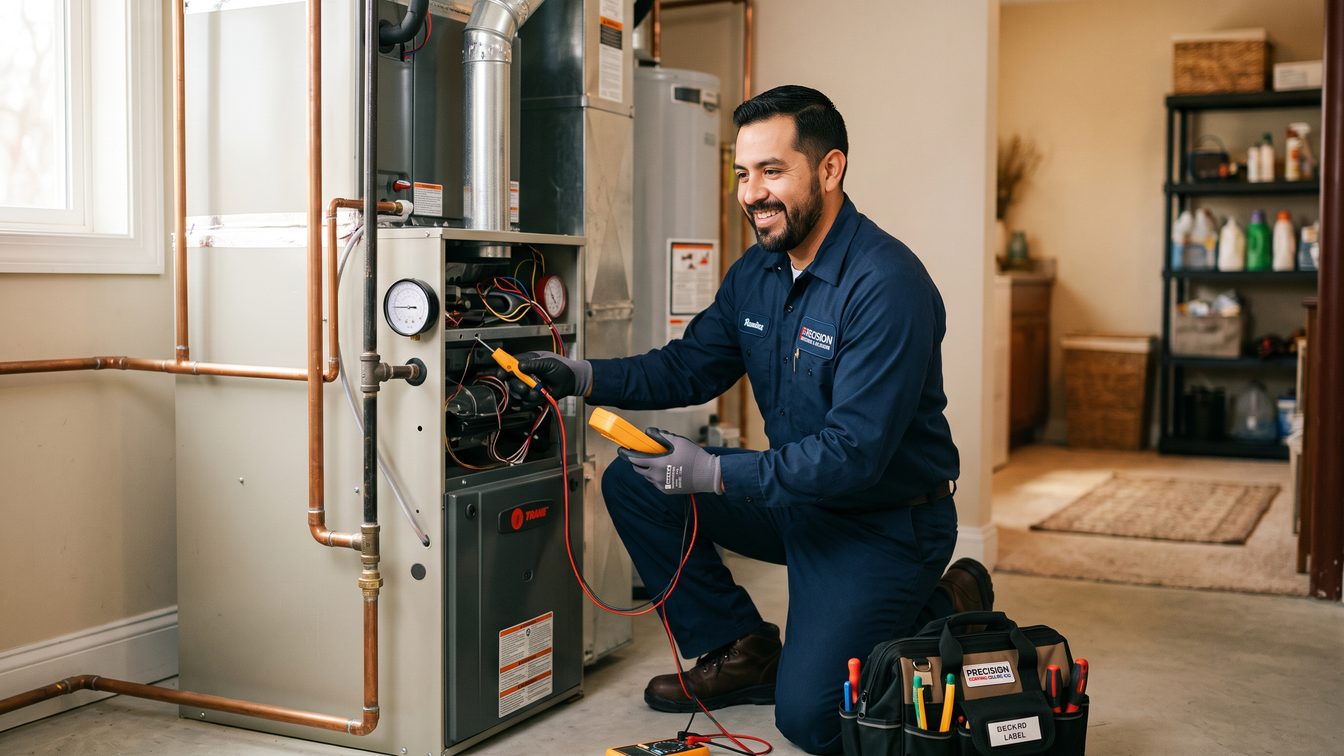
Here's how it works: Instead of waiting for your AC to break down on the hottest day of summer, Evergreen runs proactive diagnostics during routine maintenance. They flag potential issues months in advance. They send alerts. They use thermal imaging to spot refrigerant leaks other contractors miss.
Their promise is simple: "Your smart HVAC alerts are already running. You just haven't activated them yet."
They don't compete on price. They compete on peace of mind.
The result? Evergreen's customers aren't price-sensitive. They're priority-sensitive. And they pay 20-30% more than commodity HVAC contractors because the outcome they're buying is different. They're buying a summer with no emergency calls. They're buying certainty.
This is FOCUS in action. Find one thing your competitors avoid promising. Own it. Prove it. Build everything around it.
The Landscaping Wedge: Data-Backed Reputation
Every landscaping company claims quality service, responsive communication, fair pricing. That's table stakes now. Differentiation comes from proving those claims through transparent data that clients can verify independently.
The US landscaping industry generates $176.7 billion annually. The market is intensely fragmented: 556,000 businesses competing in 2026, with average profit margins around 7.9%. That fragmentation is your opportunity if you know how to position.
Forward-thinking landscaping firms are moving away from the aesthetics-only pitch. They're repositioning around asset management. They're deploying IoT-enabled irrigation systems. They're using AI-driven predictive maintenance. They show clients real-time progress through digital portals. They provide historical performance data with their estimates.
One firm might send a proposal. This firm sends a proposal backed by their last three years of on-time delivery records, quality scores, and transparent pricing methodology. That difference is enough to justify a 15-20% price premium.
They're not better at landscaping. They're positioned differently. And they filter for clients who value proof over promises.
The Plumbing Wedge: Specialized Service, Higher Margins
Here's what most plumbers claim: "We fix any plumbing problem."
Here's what smart plumbers claim: "We specialize in panel upgrades for homes built before 1970, and we've developed a process that minimizes drywall repair."
Specific. Defensible. Valuable to a particular customer.
That narrow focus does something counterintuitive: it raises average job value and close rates. A homeowner with a 1940s home facing panel work that other plumbers dread becomes your ideal customer. You charge more. You win more deals in your niche than generalists win in the broad market.
Generation matters too. In the service industry, roughly 70% of revenue comes from repeat business and word-of-mouth referrals. When you own a specific niche, those referrals are warmer and more qualified. Your close rate goes up. Your discount requests go down.
Why Price Competition Loses
Compete on price and the market sets your price. You have no control. Your margins compress every year. You're competing against every contractor who can fog a mirror and buy a van.
Compete on positioning and you control the terms. You're not one of twenty options. You're the option for people who care about the specific outcome you own.
Here's the data: Commercial market contractors report that 59% of their revenue comes from maintenance contracts. Another 35% comes from repeat business. 26% comes from word-of-mouth referrals. These are the high-margin revenue streams. They don't come from price competition. They come from reputation and specialization.
The contractors winning in this market aren't the cheapest. They're the most focused.
How to Apply FOCUS to Your Business
Start with your own operation. Look at your last twenty jobs. Which ones felt easy? Which clients didn't haggle? Which jobs left you feeling good about your margins?
Now ask: What was different about those jobs? Not better. Different.
Maybe you finished faster because they had a clear problem you'd solved before. Maybe they valued thoroughness over speed. Maybe they appreciated your communication more than they cared about the price. Maybe you brought specialized equipment that solved a problem nobody else could.
That pattern is your wedge. That's where your FOCUS Strategy starts.
Next, define what you're actually promising. Not "quality work." That's table stakes. Define the outcome. "Same-day response for any call received before noon, or your diagnostic fee is waived." "First-visit completion rate of 90% or higher." "Thermal imaging on every estimate so you see exactly what we see."
Promises matter because they filter. A homeowner who cares about fast response will call you. A homeowner who cares about price won't. You want to repel the second customer, not attract him.
Then, build your entire operation around that promise. Update your website. Update your truck wrap. Update your sales script. Train your team. Measure it. Prove it with data.
Most contractors stop here because it's uncomfortable. They're not accustomed to saying no to work that doesn't fit. That's your competitive edge. Most contractors take anything. You take what you're positioned to win.
The Doctrine Connection
You've heard this framework before: Competence beats credentials.
FOCUS is the application of that principle to positioning. You're not hanging more certificates on the wall. You're demonstrating that you operate differently in ways customers can feel and verify. You're showing competence through outcomes, not credentials through claims.
A contractor who brings thermal imaging to every estimate demonstrates competence differently than a contractor with a certification badge. Both might be competent. Only one is positioned.
The Stakes
The service industry continues to grow. The US service sector generated roughly $382 billion in 2025 across administrative support, repairs, and maintenance. But that growth is uneven. It goes to the businesses that can escape commodity pricing.
You can compete where you are. Keep doing what the other ninety-five percent do. Keep saying you're fast, affordable, reliable. Keep watching homeowners pick the cheapest bid.
Or you can isolate your casualty. Find one specific outcome your competitors avoid. Own it. Build your reputation on it. Filter for customers who care.
That's the FOCUS Strategy. It works in HVAC, plumbing, electrical, landscaping, cleaning, and any service business where margins matter more than volume.
You already have the competence. The wedge you're missing is positioning.
Sources
- achrnews.com
- servicelabsgroup.com
- servicelabsgroup.com
- strategyforindustry.com
- youraspire.com
- ibisworld.com
FAQ
Q: Won't specializing limit my revenue?
A: The opposite. When you specialize, your close rate goes up, your average job value increases, and your repeat business improves. You lose the low-margin, price-shopping customers and win the high-margin, outcome-focused ones. One contractor taking 20 jobs at wide margins beats ten contractors taking 50 jobs at thin margins.
Q: What if my market is too small to specialize?
A: You're already specialized. You're local. You serve a specific geography. That's your starting point. Now find what your best customers have in common beyond geography. Are they older homes? Busy professionals? Commercial property managers? That's your niche. That's where FOCUS applies.
Q: How long does it take to build a positioning?
A: Weeks, not months. Pick one specific outcome. Make one promise. Update three customer-facing touchpoints. Measure results. That's not a rebranding project. That's an operational choice. It changes how you market, how you sell, and how you operate. Most contractors see traction within 30 days.
Q: What if I have 'good' positioning already?
A: Test it. Can your customers finish this sentence: "We specialize in _______"? If they can't, you don't have positioning. You have a nice website. Positioning is what customers say about you when you're not in the room. If their answer is vague, FOCUS applies to you.
Q: Can I have multiple focal points?
A: One. FOCUS stands for that. Most positioning fails because contractors try to own too much. Fast, affordable, and reliable is three things. Nobody remembers it. "We specialize in preventing emergency AC calls through predictive maintenance" is one thing. Customers remember it. They refer it. They pay for it.