
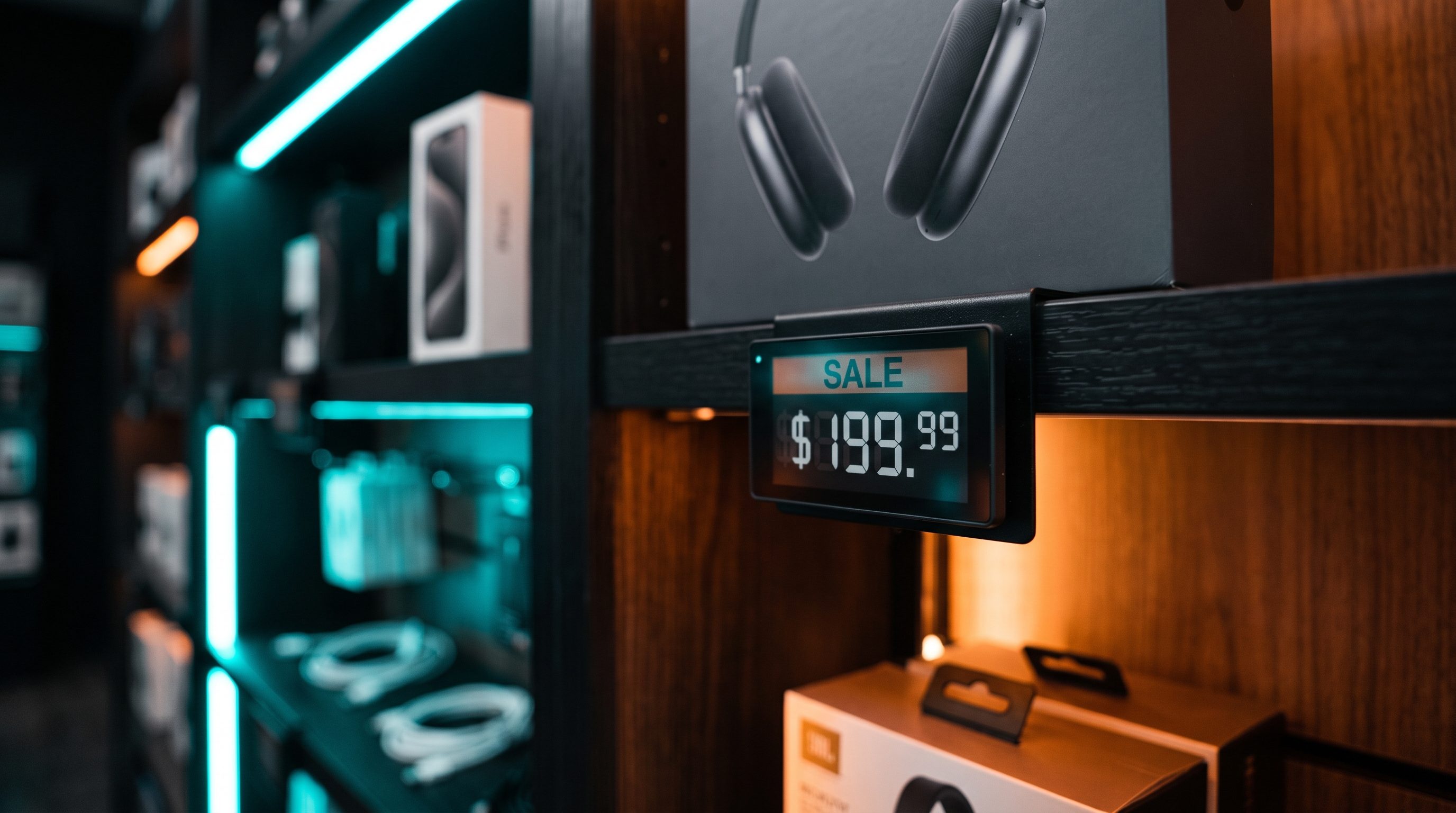
The FTC settled with Instacart's pricing division for $60 million after an algorithm built by an acquired company called Eversight charged different customers different prices for the same box of cereal. Gaps ran up to $2.56 per item. Basket-level swings hit 7 percent (Veriprajna, 2026). Seventy-five percent of the catalog got caught in the variance.
Nobody built a cage around the math.
That is the risk side. Here is the reward side. A $2.8M Shopify Plus home goods brand deployed dynamic pricing automation and recovered $130,000 in annual gross profit in 90 days. Gross margin improved 12.4%, and the platform paid for itself in 44 days (US Tech Automations, 2026).
Same category of tool. Opposite outcome. The difference was not the algorithm. It was the operator.
TL;DR: Dynamic pricing AI works when you have high SKU counts, commodity products, and clean data feeding the model. It fails when brand equity, loyalty relationships, or loss-leader strategy sit on top of the price.
Tools like Prisync ($99/month), Competera (enterprise), and Feedvisor (Amazon-focused, $8B+ GMV optimized) each solve a different version of this problem. Case data shows margin lifts of 12% to 16.5% are common when implemented correctly.
Case data also shows a $420 pendant getting sold for $4.20 because of a decimal error, fourteen times, in seventeen minutes. Let the algorithm handle volume. Keep a human on the trigger for anything that touches brand, loyalty, or legal exposure.
Two Fleets, Two Outcomes
I spent time in the Navy before I spent time in marketing. The lesson that transferred cleanest: automation extends your reach, it does not replace your judgment. A ship on autopilot still needs someone on watch.
The autopilot handles the thousand small corrections a human would get tired of making. The human handles the iceberg.
Dynamic pricing AI is autopilot for your price list. It handles thousands of SKU-level corrections per day that no human team could sustain.
It does not handle the iceberg. The iceberg, in ecommerce, looks like a loyal customer noticing your algorithm charged her more than a stranger, or a decimal error that torches your margin on your best product in a single afternoon.
When the Algorithm Should Set the Price
Dynamic pricing works best under three conditions, and the case data backs this up hard.
High SKU count, low differentiation. Summit Outfitters, an $8.7M outdoor gear retailer with 3,400 SKUs sourced from 140 brands, deployed automated repricing. Gross margin moved from 34.2% to 37.3% while conversion rose 11% over eight months (US Tech Automations, 2026).
Before automation, the team manually tracked 280 of 3,400 SKUs. Coverage jumped from 8.2% to 100%, and the system caught 47,000-plus competitor price changes in the first month alone. That is not a job for a human analyst. That is a job for a machine that does not sleep.
Commodity products with visible competitor pricing. A home improvement retailer running Hypersonix's Pricing AI across 1,000-plus SKUs against big-box competitors posted a 16.52% profit lift after one pricing cycle (Hypersonix, 2025). Commodity hardware has no brand story to protect.
A hammer is a hammer. The algorithm wins because there is nothing for it to damage.
Demand-signal capture. Summit Outfitters also found that automated stockout detection, raising prices 5-8% when competitors sold out, captured an additional $142,000 in margin over eight months without hurting conversion. Total implementation cost was $18,200. Total measured return was $467,000, a 2,465% first-year return (US Tech Automations, 2026).
Response time to competitor moves dropped from 4.3 days to 12 minutes. Numbers like that beat gut instinct every time.
A global apparel brand running AI-driven price experimentation across 500 products posted a 31% revenue increase, a 39% profit increase, and a 6% gross margin lift. All automated. Zero manual pricing work (DynamicPricing.AI, 2026).
High-SKU-count catalogs beat manual spreadsheets. Every time.
When You Override the Algorithm
Now the part most vendors leave out of the demo.
Brand-sensitive categories. A women's apparel brand running Hypersonix's engine saw a 12% gross margin increase and a 24% reduction in over-discounting (Hypersonix, 2025). Read that second number carefully.
The win was not just margin. It was discipline. Left unmanaged, discounting algorithms race each other to the bottom. A brand's equity does not recover from a permanent discount posture.
Override the algorithm on anything wearing your logo where the price itself communicates status.
Loyalty segments and repeat buyers. One agency operator watched a pricing algorithm raise prices on retargeted, high-intent shoppers, the exact customers already primed to buy, because the model read demand heat and pushed the number up (Sagum, 2026).
The customer clicked through, saw a higher number than expected, and bounced. The ad platform logged a failed conversion and punished the account. Your pricing engine and your ad account can go to war without anyone declaring it.
Never let dynamic pricing touch a customer you paid to bring back.
Loss leaders and anchor products. Some SKUs exist to bring traffic, not margin. An algorithm optimizing purely for per-unit profit will "fix" your loss leader by raising its price, and quietly kill the acquisition funnel it was built to feed.
If a product's job is top-of-funnel, its price is a strategic decision, not a statistical one.
Anything touching personal data. This is the Instacart lesson, and it is now written into law. New York's Algorithmic Pricing Disclosure Act, effective November 10, 2025, requires real-time disclosure whenever a price is generated using personal data (Veriprajna, 2026).
The federal Algorithmic Accountability Act adds mandatory impact assessments for companies over $50 million in revenue. You do not need $50 million in revenue to get burned. You need one customer who compares screenshots with a friend.
Data's DNA: How to Decide What the Algorithm Touches
I built a framework at AIN, the agency that crossed $1 billion in managed ad spend, for deciding what gets automated and what stays human-reviewed. I call it Data's DNA. Four strands, checked before any pricing rule goes live.
Differentiation. Is this product a commodity, or does the brand carry the margin? Commodities go to the algorithm. Brand-carriers get a human floor and ceiling.
Network. Does this price touch a relationship, a loyalty tier, a win-back segment, an existing customer? If yes, the algorithm proposes, and a human approves.
Auditability. Can you explain, in one sentence, why this price is what it is? If the answer requires a data scientist and forty-five minutes, you have a liability, not a pricing engine.
Amplitude. How far can this price move, and how fast? Set hard rails: no price below cost, no swing greater than a set percentage in a day, no discount below your floor margin.
The jewelry retailer that watched a $420 pendant sell for $4.20 fourteen times in seventeen minutes had no amplitude rail. A decimal error in the currency normalization layer divided the price by ten, and the system had no idea it should stop itself (Stackademic, 2026). Eleven days into deployment. That is how fast this goes wrong without rails.
Run every SKU through those four strands before you let the algorithm anywhere near it.
The Tools, Priced Straight
Prisync starts at $99 a month. It is competitor price tracking plus rule-based dynamic pricing, built for catalogs from 500 to 50,000 SKUs. Best for owner-operators who want automated competitor matching without an enterprise contract (Prisync, 2026).
Competera runs enterprise custom pricing, no published rate. It layers elasticity modeling and demand-curve analysis on top of competitor tracking, aimed at retailers managing tens of thousands of SKUs across channels (Competera, 2026). Overkill for a $1M brand. Correct scale for an $8M-plus operation.
Feedvisor is Amazon and Walmart-specific, built around ProductSphere technology that maps demand curves and price elasticity at the ASIN level, with MAP floor enforcement built in. Client-reported results include roughly 40% TACOS improvement and 10%-plus average margin expansion, with $8 billion-plus in GMV optimized on the platform (Feedvisor, 2026).
If your business lives on Amazon, this is a category-fit tool, not a general one.
Hypersonix targets mid-market retailers on Shopify with SKU counts in the four figures. Case-reported profit lifts range from 12% to 16.5% depending on category (Hypersonix, 2025).
None of these tools is magic. A small Australian gift shop with 800 SKUs paid $150 a month for a pricing tool that could only match 40% of its catalog against competitor data. Five hundred of its products had no clean SKU or barcode match in any competitor database (SmallBizAI, 2026).
Garbage data in, garbage pricing out. This is not a software problem. It is a due diligence problem.
Implementation Checklist
Run this before you flip the switch on any pricing engine.
- Audit your product data. Clean SKUs, GTINs, and barcodes for at least 80% of revenue-driving products before you buy anything.
- Segment your catalog into three buckets: commodity/high-SKU (automate fully), brand-sensitive (automate with human review), loss-leader/loyalty-touching (manual only).
- Set hard rails before go-live: price floor at cost plus minimum margin, price ceiling at a percentage above MSRP, and a maximum daily swing.
- Wall off any pricing logic from personal identifiers. Location, device, and browsing history do not belong in a consumer-facing price.
- Run a 30-day shadow period where the algorithm recommends prices but a human approves each change, before granting full autonomy.
- Reconcile pricing logic against ad account bidding logic monthly. A price hike on retargeted traffic is a hidden CPA killer.
- Review margin and complaint data weekly for the first 90 days. Summit Outfitters and the $2.8M home goods brand both hit their strongest gains inside that window.
An Anecdote on Rails
Before marketing, I did open-heart surgery support work. You learn fast that the machine keeping a patient alive during bypass has alarms for a reason, and the alarms are not suggestions. Every threshold is a rail somebody bled to define.
Dan Kennedy used to say the money is in the follow-up. I'd add that the money that survives is in the guardrail. Hartford and Munich Re did not become reinsurance giants by trusting every model's output.
They built capital reserves specifically because models are wrong sometimes, and the business has to survive the times they are wrong. Treat your pricing algorithm the same way. It is a powerful instrument. It is not a fiduciary.
Doctrine Connection
Due diligence is non-negotiable. A dynamic pricing tool is a decision-maker wearing your logo. You would not hand a new hire your price list and walk away for 90 days without checking their work.
Do not do it to an algorithm either. Audit the data before you automate the decision. Check the guardrails before you check the margin report.
*Jeff Barnes is the founder of demg.ai and the Digital Evolution Marketing Group. demg.ai has no commercial relationship with any tool, platform, or company named in this article unless explicitly stated. This content is educational, not a substitute for professional advice. Results vary by business, market, and execution.*
FAQs
Does dynamic pricing AI work for a business under $1M in revenue? It works if your SKU count is high and your product mix is commodity-heavy. Below roughly 200-300 SKUs with unique or handmade products, most tools return incomplete data because there is no clean competitor match, as the Geelong gift shop case shows.
How fast is the payback on these tools? The $2.8M home goods brand hit full payback in 44 days. Summit Outfitters generated a 2,465% first-year return on an $18,200 implementation. Payback speed correlates directly with SKU count and data cleanliness.
Can dynamic pricing hurt my ad performance? Yes, if the pricing engine and the ad platform are not reconciled. Raising prices on high-intent retargeted traffic increases bounce rate and inflates cost per acquisition, even while margin dashboards look healthy.
Is personalized pricing legal? Increasingly, no, without disclosure. New York's Algorithmic Pricing Disclosure Act requires real-time disclosure when personal data drives a price. The Instacart FTC settlement, at $60 million, is the cautionary marker for the entire category.
What is the single biggest implementation mistake? Skipping the amplitude rail. A missing maximum-swing constraint let a decimal error sell a $420 pendant for $4.20 fourteen times in seventeen minutes. One rule would have stopped it.