
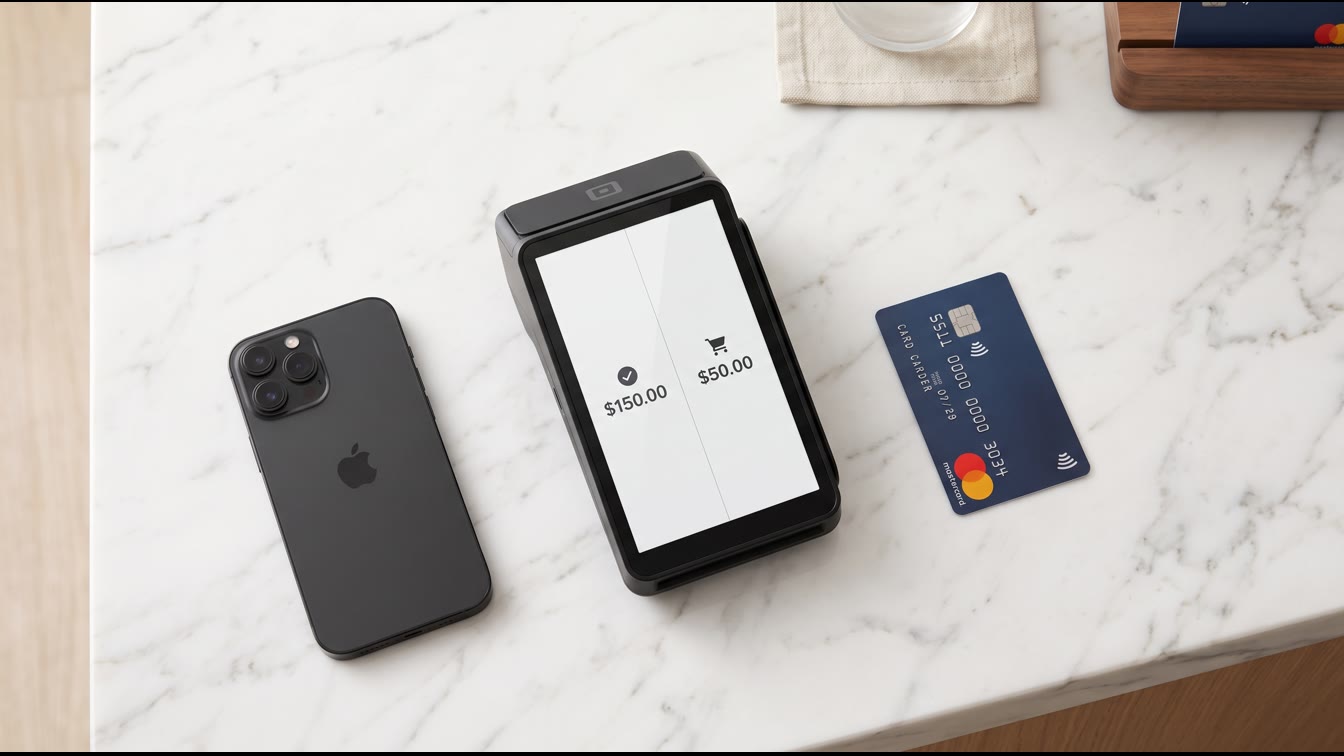
GoHighLevel shipped a checkout update in July 2026 that lets customers pick between a deposit and full payment directly on Services checkout pages. That is a small UI change with a large downstream effect on revenue, and most operators running high-ticket service offers through GHL have not turned it on yet.
Think of your checkout page as the torpedo room. Every abandoned cart is a dud that never left the tube. You built the funnel, you spent the ad budget getting the customer to the payment page, and then the payment page itself sinks the sale because it demanded the full number up front. Systems beat slogans. A better headline will not fix a checkout flow with one payment option and a four-figure price tag on it. We have covered this principle before in the GHL funnel audit checklist: the leak is rarely the top of the funnel.
The Baseline Problem: 70% of Carts Never Convert
Cart abandonment has held near 70.19% for the better part of two decades, according to Baymard Institute's aggregation of 50 independent studies. Roughly seven in ten shoppers who start a purchase do not finish it. That number is not a fluke of bad UX design across every store on earth. It is a structural feature of online buying behavior, and it gets worse, not better, as price climbs. Statista's tracking shows the same figure, 70.22% in 2026, confirming this is not a single-source anomaly.
Luxury and high-consideration categories confirm the pattern. Jewelry and luxury goods run an abandonment rate around 81.7%, the highest of any tracked category, driven by extended consideration periods and price sensitivity at the moment of commitment. High-ticket service businesses, the ones selling four and five-figure engagements through GHL funnels, live in that same danger zone. A prospect who is ready to say yes to your offer can still bail at the payment screen if the only option on the table is the full balance, charged today, no flexibility.
This is the part operators underestimate. The abandonment problem does not shrink as your offer improves. It grows with your price point, because a bigger number at the payment screen triggers more hesitation, not less. A better headline on your sales page will not offset a checkout page that demands the full four figures on the spot.
What the GHL Update Actually Changes
GoHighLevel's Services checkout has historically forced a binary choice at the account level: collect the full amount, or run a manual workaround through Stripe products and payment links to fake a deposit structure. The July 2026 update puts deposit and full-payment options natively on the checkout page itself, selectable by the customer at the point of purchase. No custom Stripe product juggling. No payment-link hacks. The buyer sees both options and picks the one that gets them to yes.
That distinction matters operationally. A workaround that requires a funnel builder to manually configure two Stripe prices and a custom payment link is a workaround most agencies never actually maintain past the first client. A native toggle on the checkout page is a system. Systems beat slogans, and this is the system finally catching up to what high-ticket service operators have needed for years.
Why Deposits Work: The Math Behind the Behavior
The psychology here is not complicated. A $3,000 service package feels like a wall. A $500 deposit with a clear balance schedule feels like a door. Removing the full number from the first decision point does not change the total price. It changes whether the customer's brain treats the purchase as one enormous decision or two smaller ones.
The data backs this up across adjacent payment categories. Buy-now-pay-later options, which operate on the same psychological principle as a deposit, reduce cart abandonment by roughly 20% on orders above $100. Adobe Analytics data from Q1 2026 puts average order value at $312 for transactions with BNPL enabled versus $189 without it, a 65% premium, up from a 54% premium the year before. That gap exists because splitting the payment removes the sticker-shock veto that kills a purchase decision before it starts.
Deposit-specific data tells the same story from a different angle. Clear deposit messaging on checkout pages for orders above $150 has been shown to lift AOV by roughly 34%, because customers commit to larger packages when the number due today is a fraction of the total. That is not a coincidence. It is the same mechanism BNPL uses, applied to a service business instead of a product SKU.
The Receipts, Category by Category
Look at furniture and home goods, another high-ticket, high-consideration category. Abandonment there runs 78% to 82%, nearly identical to luxury goods, and for the same reason: customers hesitate to pay the full amount for something with a lead time or a big commitment attached. Merchants who introduced deposit options in that category saw average order value climb 20% within three months, with some reporting spikes well above that when comparing against a full year of baseline data.
Klarna's own merchant data shows checkout pages offering an installment option see cart abandonment drop 14 percentage points compared to full-payment-only checkouts. Fourteen points is not a rounding error. On a service business closing $200,000 a year through a GHL funnel, that swing is the difference between a good quarter and a great one. The same report found merchants who moved installment options from a footer badge to a primary checkout placement saw average order value jump within eight weeks, not eight months.
For a high-ticket service operator, the math is direct. If your close-page traffic has been converting at 25% and your checkout abandonment mirrors the category average, adding a deposit option is one of the few changes on your entire funnel that can plausibly recover 10% to 15% of currently lost revenue without touching ad spend, offer, or copy. It is a checkout fix, not a marketing fix, and it is available today inside a tool most DEMG clients already run.
How to Set It Up Without Breaking Your Funnel
Three steps, and none of them require a developer.
First, decide your deposit structure. A flat dollar amount works better for offers with a consistent price point. A percentage works better for tiered service packages where the ticket size varies. Most high-ticket service operators land on 20% to 30% as a deposit that feels meaningful to the business without feeling threatening to the customer.
Second, update your checkout copy before you flip the toggle. "Pay Deposit" and "Pay in Full" as button labels outperform generic language, because the customer needs to understand exactly what happens next. Label the deposit as non-refundable if that is your policy. Ambiguity at checkout kills conversion faster than a high price does.
Third, build the follow-up sequence for the remaining balance before you launch. A deposit is not a full sale. It is a commitment with a balance still owed, and the businesses that benefit most from this update are the ones with an automated workflow already built to collect that balance on schedule, whether that is a card on file charged at a set interval or an invoice sent through the same GHL pipeline. Skip this step and you have traded cart abandonment for accounts-receivable chaos, which is a worse problem with better optics. We break down the exact automation sequence in our GHL invoice collection playbook.
What This Means for the P&L
Run the numbers on a modest scenario. A service business doing $50,000 a month through a GHL checkout, converting at the category-average abandonment rate, recovers even a conservative 10% lift from deposit options. That is $5,000 a month, $60,000 a year, generated by a settings change, not a media buy. Compare that to the cost of acquiring the same $60,000 through paid ads at a typical blended CAC, and the payback period on flipping this toggle on is measured in hours, not months.
Scale that up. A business doing $200,000 a month, which is a common ceiling for owner-operators before they add a second sales rep or a second offer tier, recovers $20,000 a month under the same conservative assumption. That is not a rounding error on the annual balance sheet. It is a full-time hire, funded entirely by a checkout setting most competitors have not turned on yet. The ROI on this change does not depend on your ad creative, your close rate, or your pricing strategy. It depends on whether you flip the toggle.
Compare this to the alternative most agencies chase first: a landing page redesign, a new ad angle, a pricing test. All three take weeks to build, weeks to test, and weeks to read results with statistical confidence. The deposit toggle takes an afternoon and starts producing receipts the same week. That asymmetry, in time invested versus dollars recovered, is why this belongs at the top of the priority list for any operator running high-ticket offers through GHL, not buried in a someday list behind three other initiatives that feel more strategic.
This is the kind of fix that never makes it onto a strategy deck because it looks too small to matter. It is not small. It is the difference between a funnel that leaks at the last step and one that does not. If you have not audited your full checkout flow for leaks like this one, start with the high-ticket checkout conversion audit before assuming the problem is your offer instead of your payment page.
FAQ
Does the GHL deposit option work with existing Stripe integrations?
Yes. The July 2026 update runs on the same payment gateway connections most operators already have configured, including Stripe, NMI, and Authorize.net.
What deposit percentage should I start with?
Twenty to thirty percent is the range most high-ticket service operators land on. Test lower if your close rate is strong and you want to lower friction further, or higher if no-shows and cancellations after deposit have been a problem.
Will this hurt cash flow since I am collecting less upfront?
Usually the opposite. The revenue you recover from customers who would have abandoned the full-payment checkout entirely outweighs the smaller upfront collection on customers who would have paid in full anyway. Model it against your specific abandonment rate before rolling it out broadly.
Does this apply to product sales too, or only services?
The July 2026 update is scoped to GHL's Services checkout. Product-based deposit workflows still require the Stripe multi-price workaround unless GHL extends the feature to other checkout types in a future release.
How fast can I get this live?
Most operators can configure the deposit toggle, update checkout copy, and test the flow within a single afternoon. The harder work is building the balance-collection automation, which should be in place before you turn on deposits at scale.
Disclosure: This article references third-party statistics from Baymard Institute, Adobe Analytics, and Klarna merchant data current as of the publication date. Figures may shift as new reporting periods are published. DEMG is a marketing and systems firm for owner-operated businesses and does not process payments on behalf of clients.
Jeff Barnes is the founder of Digital Evolution Marketing Group (DEMG). This article reflects operational experience, not investment advice. Results vary by market, execution, and business model. Do your own due diligence.