
The Gap Nobody Closes
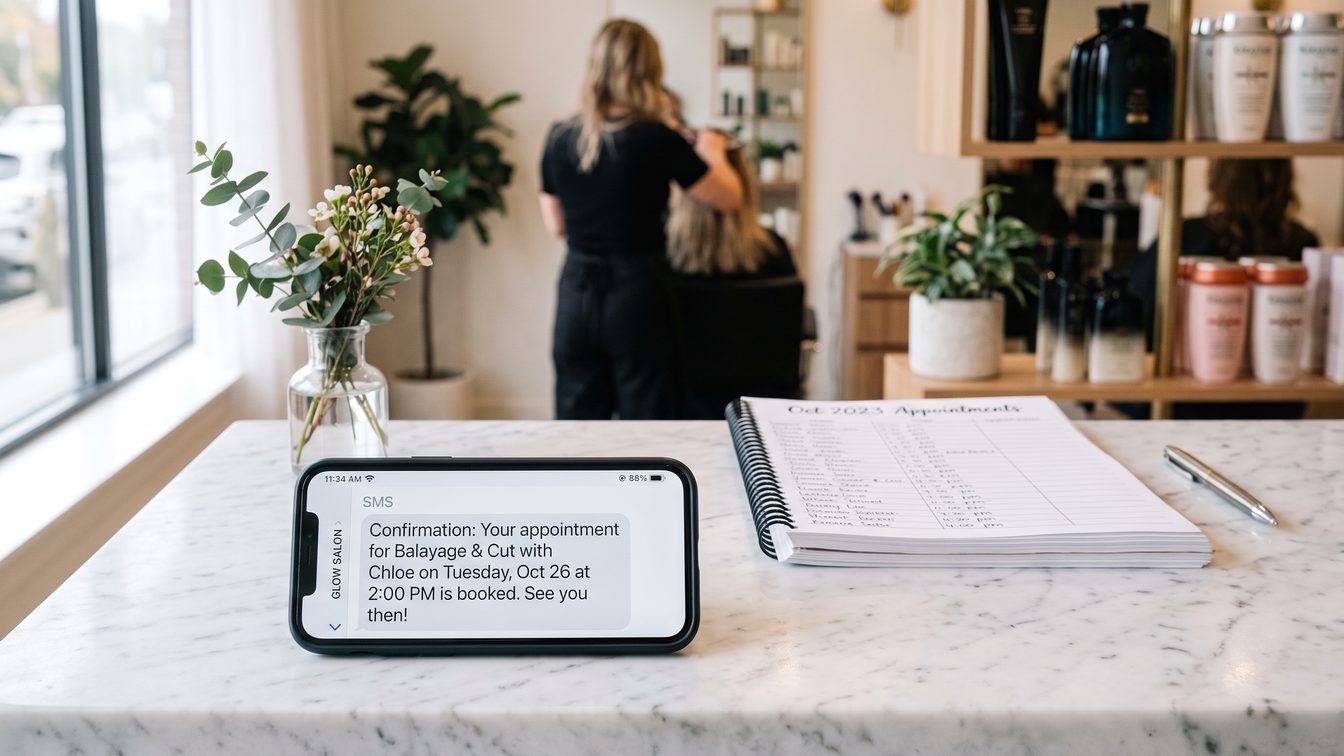
A client cancels at 2:47 PM. You have a 12-person waitlist. By 3:15 PM, that slot is still empty. By day's end, you have lost $200 to $400 in revenue nobody reclaimed.
This is not neglect. It is friction. Manual workflows do not scale at appointment-shop speed.
Healthcare practices report a 19 percent no-show rate. Beauty and fitness businesses see 15 to 23 percent cancellations. When you layer cancellations on top of no-shows, you are bleeding 25 to 30 percent of potential revenue in real time.
A single practitioner with 20 weekly appointments at a 17 percent no-show rate loses 177 slots annually. That is nine full working weeks of unpaid capacity.
The 90-Day Bottleneck Audit
Pull your last 90 days of appointment data.
- Identify slots that went empty after cancellation. Count them.
- Calculate the revenue loss per slot. Service price multiplied by the 90-day count.
- Measure your current response time. Cancellation received to first outreach to the waitlist.
- Assess waitlist depth. How many people are sitting on the list? How many are warm?
Most operators I work with see 40 to 60 of these avoidable losses per quarter. At $200 per slot, that is $8K to $12K in friction.
The Damage Control Analog
I was a nuclear power plant operator on the USS Jefferson City. During damage-control drills, the moment a compartment took water, we had seconds to identify the breach and plug it. Not minutes.
Your cancellation slot is that breach. The moment the cancellation hits your system, the clock starts. Every minute you do not act, the water spreads. By the time you manually review your waitlist and send a group text, the gap is already critical.
A good operator closes the breach in the first five minutes. An automated operator closes it in 11 seconds.
How the System Works
You need four moving parts.
1. Cancellation Detection
When a client cancels via your booking software, text, or call, trigger an event. Zapier, Make, or native API integrations work. This should take milliseconds.
2. Waitlist Query and Ranking
Your system pulls everyone on the waitlist for that service and time slot. It ranks by availability, recency, engagement score, and provider match. One database lookup. Under one second.
3. Personalized SMS with Time-Decay Discount
Discount gets more aggressive over time.
Minute 1 to 3: Your usual service. Same price. 2 PM slot open now?
Minute 4 to 7: 10 percent off if you confirm in next 5 min. 2 PM today.
Minute 8 to 11: 20 percent off. Last chance for 2 PM.
Each SMS is personalized with first name, specific service, exact time, and a one-tap confirmation link. SMS open rates run above 40 percent versus 20 percent for email.
4. One-Tap Booking Confirmation
They tap the link. Slot books immediately. No form. No call. Done.
If nobody responds by minute 11, escalate: call the top 3 candidates. One usually says yes.
The Tech Stack Under $500 Per Month
You do not need enterprise software.
Booking platform: Acuity, Calendly, or Mindbody. You already have this.
Automation: Zapier ($25 to $50 per month) or Make ($10 to $50).
SMS sender: Twilio ($0.01 to $0.05 per SMS) or Sinch.
Optional AI personalization: Claude API ($10 to $20 per month for modest volume).
Total: $100 to $150 per month for a small operation. Scale to multiple locations and you stay under $500.
You will recover your first month of costs in the first week.
Building the Automation: 4-Week Sprint
Week 1: Map your data. Pull your booking software's API docs. Identify the cancellation trigger. Verify your waitlist structure.
Week 2: Build the trigger. Connect your booking software to Zapier or Make. Create a workflow: cancellation detected, log to a test spreadsheet. Confirm it fires 10 times.
Week 3: Add waitlist logic. Pull top 5 waitlisted contacts for that service. Sort by most recent booking date. Send yourself a test SMS.
Week 4: Deploy time-decay. Add time-based conditions. Write three SMS templates (full price, 10 percent off, 20 percent off). Deploy to 3 non-critical cancellations as a test.
By week 5, you are running live. By week 6, you have baseline data.
Results: What Owner-Operators See
Recovery Rate. Before: 15 to 20 percent of cancellations get filled. After: 45 to 65 percent of cancellations get filled.
On 8 cancellations per month, that is going from 1 to 2 fills to 4 to 5 fills. At $200 per slot, an extra $600 to $800 per month recovered.
Customer Experience. Your client gets a real offer in under a minute. Personal. Immediate. Most say yes because timing is perfect, the discount is real, and friction is zero.
FAQ
Q: Will people feel spammed if I send three SMS in 11 minutes?
Not if you time-gate them right. Send the first at minute 1. Wait 3 minutes before the 10 percent offer. Wait another 4 minutes before 20 percent off. Most responses come from SMS 1 and 2. SMS 3 is the hail mary.
Q: What if no one on the waitlist is available in time?
Expand your window. Check the next service slot. Or call directly. You still beat zero fills.
Q: Do I need custom development or can I use Zapier?
Zapier handles 80 percent of this. The only custom piece is the discount-escalation logic, which you can do with conditional blocks.
Q: What is the time-to-ROI?
If you fill just 2 extra cancellations per month at $200 each, you are at $400 per month upside. Automation costs $100 to $150. ROI hits in week 3.