
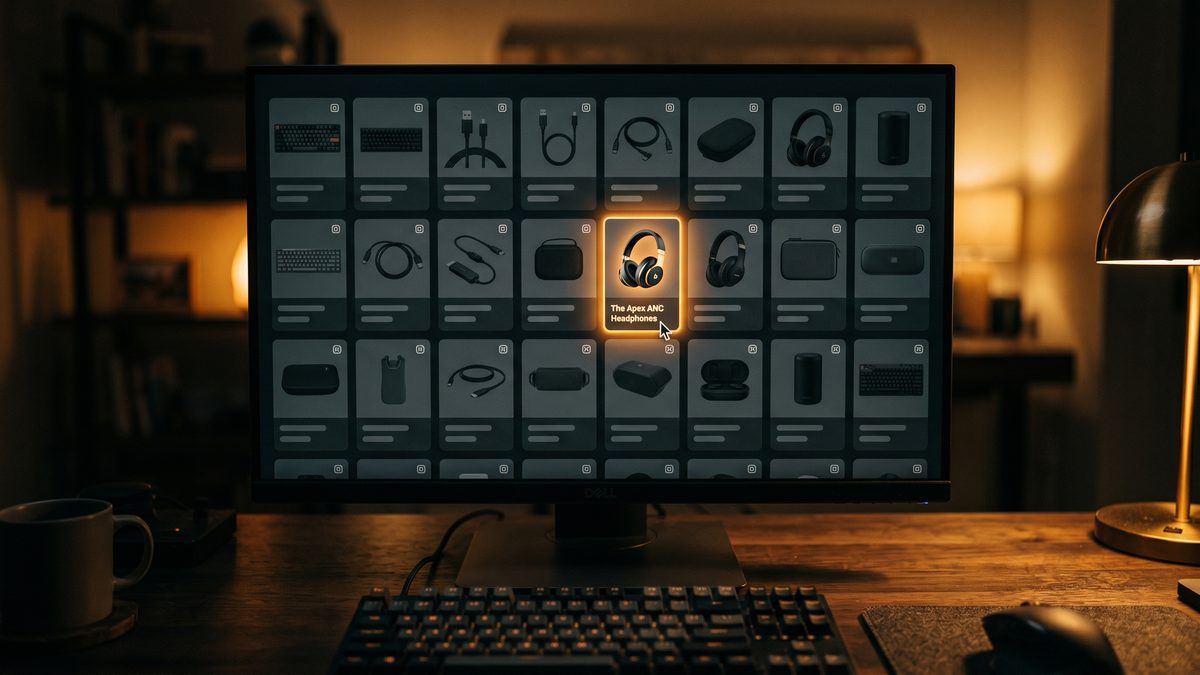
90% of Your Website Visitors Leave Without Adding to Cart. You Are Not Following Up.
Cart abandonment gets all the attention. A 70% abandonment rate. Automated recovery emails. Revenue recaptured. But cart abandonment only applies to shoppers who added an item. Browse abandonment, where visitors view products but leave without adding to cart, runs at 85% to 92%. That is 10 times more volume than cart abandonment. Most ecom stores do nothing about it.
This is the revenue layer most stores never build. The data says they should.
The Data Gap: Cart vs. Browse
Cart abandonment recovery is mature. Email conversion rates run 5% to 10%. Revenue per recipient: $1 to $5. Every Klaviyo or Omnisend user has a cart flow running.
Browse abandonment is different. Conversion rates are lower, 1% to 3% per email. Revenue per recipient: $0.15 to $0.50. But the addressable volume is 5x to 10x larger. When you multiply lower conversion by much higher volume, total recovered revenue from browse can match or exceed cart recovery in mature programs.
The math is straightforward. A store with 100,000 monthly visitors, a 2% add-to-cart rate, and a 70% cart abandonment rate generates 1,400 cart abandonment emails per month. Browse abandonment captures the other 98,000 visitors who viewed products but did not add. Even at 1% conversion, that is 980 additional purchases.
What Navy Watchstanding Taught Me About Signals
On a submarine, you monitor every signal, not just the loud ones. The reactor alarm is obvious. The slight temperature shift in a cooling loop is subtle. But the subtle signal, caught early, prevents the casualty that the alarm would have announced too late.
Browse abandonment is the subtle signal in ecom. A customer viewed your product. They spent time on your page. They were interested. The signal is weaker than "added to cart," but it is a signal. Ignoring it because it is not as strong as a cart event is like ignoring the cooling loop temperature because the alarm has not sounded yet.
Data's DNA framework says: analyze every signal customers leave behind. Browse behavior is a signal. Build the system to capture it.
How AI Personalizes Browse Recovery
Modern browse recovery tools personalize across three dimensions.
Product recommendations. AI scores product affinity for each visitor in real time. Nosto's integration with Klaviyo uses on-site behavior to enrich customer profiles and insert personalized product blocks into recovery emails. Harney and Sons, a specialty tea retailer, achieved a 5.64% conversion rate and $2 revenue per email recipient using personalized search-abandonment journeys.
Timing optimization. Machine learning models predict peak engagement windows. Industry consensus: send the first browse email 1 to 4 hours after the event. Email two at 24 hours with social proof. Optional email three at 48 to 72 hours with a final offer.
Channel selection. Klaviyo's channel affinity AI ranks each customer's most responsive channel. Email is primary (35% to 45% open rates for browse). SMS increases recovery by 32% to 50% when deployed to opted-in segments.
Case Studies With Real Numbers
Paul Fredrick, a menswear brand, generated over $300,000 in incremental sales from browse-abandonment campaigns. Open rates hit 38%. Click-through rates reached 46%. Transactional sales grew 18% year-over-year. The key: they segmented browse emails by product category and enforced 30-day frequency caps.
Harney and Sons achieved $2 revenue per email recipient on search-abandonment recovery, approaching cart-abandonment performance despite targeting higher-funnel visitors.
A DTC fashion brand used multi-channel recovery (email, SMS, WhatsApp, Instagram DMs) to reduce checkout abandonment by 42% and recover over $1 million quarterly while increasing average order value by 15%.
The Implementation Playbook
Step 1: Choose your platform. Klaviyo is the market leader for AI-powered browse recovery. Omnisend is simpler and cheaper. Nosto specializes in on-site personalization that feeds into email flows.
Step 2: Set up browse event tracking. Your ecom platform needs to fire a "product viewed" event with product ID, category, and timestamp. Shopify and most platforms do this natively with Klaviyo.
Step 3: Build the flow.
- Email 1: 2 hours post-browse. Show the product they viewed plus 2 to 3 similar items. No discount.
- Email 2: 24 hours later. Add social proof (reviews, best-seller badge). Include a category-level recommendation.
- Email 3 (optional): 48 to 72 hours. Small incentive (free shipping, 10% off) for first-time buyers only.
Step 4: Set frequency caps. One browse-abandonment email per customer per 7 to 14 days. If a customer enters your cart abandonment flow, suppress the browse flow immediately.
Step 5: Measure and iterate. Track revenue per recipient, conversion rate, and unsubscribe rate by flow. If unsubscribes exceed 0.3% per send, reduce frequency.
Doctrine Connection: Systems Beat Slogans
"We should do more email marketing" is a slogan. A browse-abandonment flow that fires automatically, segments by category, and suppresses against cart flows is a system. Build the system. The revenue shows up on its own.
Q: What is the difference between browse and cart abandonment?
Cart abandonment: shopper added items to cart but did not check out (70% rate, strong intent). Browse abandonment: shopper viewed products but did not add to cart (85% to 92% rate, weaker intent, much higher volume).
Q: What conversion rate should I expect from browse abandonment emails?
1% to 3% is typical. Top performers reach 5% to 6% with personalized content and multi-channel approaches.
Q: Which platform should I use?
Klaviyo for advanced AI and multi-channel. Omnisend for simplicity and lower cost. Both integrate with Shopify, WooCommerce, and BigCommerce.
*Jeff Barnes, MBA has no personal position in any company, fund, or platform named in this article. demg.ai has no current commercial relationship with any party mentioned. This content is for education and operational guidance, not investment advice.*