
The 90-Day Bottleneck Audit
You cannot monitor what you do not measure. Service businesses live in the gap between customer intent and response. That gap costs you deals. When a prospect's company reports earnings, funds a round, hires a new VP, you miss it. When a client opens a support ticket at 2 AM, it sits for 8 hours. When a customer's payment fails, you find out when they stop calling back. Not because you do not care. Because you are not looking.
AI background monitoring changes this equation. These agents run 24/7 without hiring. They watch customer signals across dozens of data sources. They alert your team the moment something shifts. The numbers are blunt: teams using signal-anchored outreach see reply rates jump from 1-5% to 25-40%. They catch high-intent opportunities 3-6 months earlier. Account research time drops by 80%.
This is not about sentiment analysis or chatbot responses. This is about knowing what your customers are doing before they tell you.
Why Background Monitoring Matters Now
Service businesses operate in real-time. A plumber's dispatch window is 4 hours. A consultant's project window is weeks. A managed services provider's renewal window is months. Miss the signal in those windows and you lose the deal or the relationship.
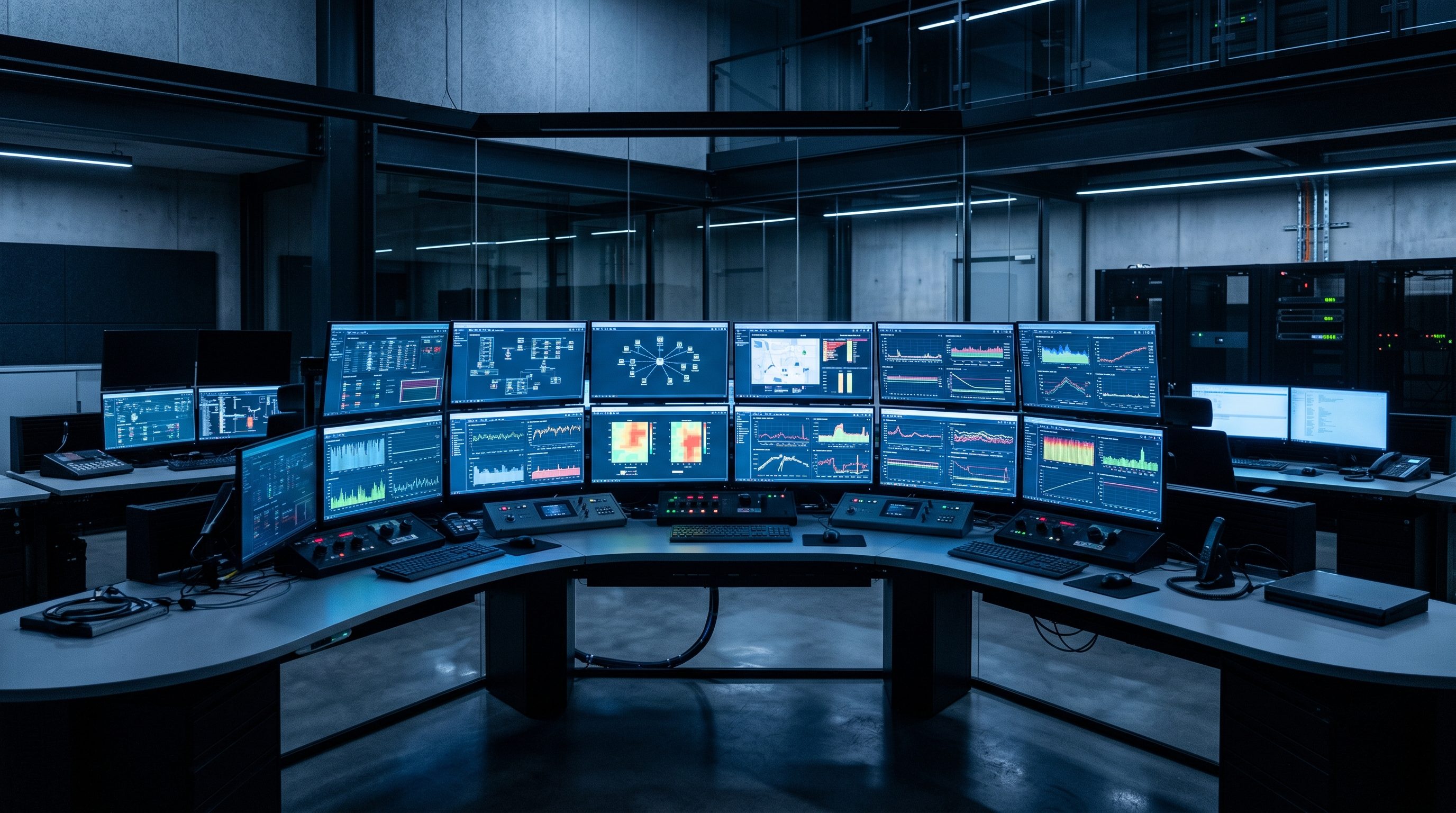
On the USS Jefferson City, we ran continuous monitoring on every system. The reactor, the weapons systems, the propulsion plant. Every reading, every cycle. Not because we expected failure. Because we refused to be surprised by it. Service businesses need the same posture. Not paranoia. Preparation.
Background monitoring means you stop reacting to customer needs and start anticipating them. A service business using AI agents to monitor customer signals can:
- Track 500+ accounts with 3 full-time employees instead of 12.
- Identify buying signals before competitors even know about them.
- Route high-intent opportunities to the right person in 90 seconds instead of 3 days.
- Catch churn signals the moment a customer's behavior changes.
- Build personalized outreach anchored to actual customer events, not guesses.
This is the difference between reacting to the market and leading it.
How Service Businesses Use AI Agents to Monitor Customer Signals
Background monitoring works through autonomous AI agents that watch your customer universe continuously. You set the rules. The agent runs them 24/7.
Here is what the agent monitors: earnings calls and SEC filings. News articles mentioning your accounts. Leadership changes and hiring patterns. Funding announcements and M&A activity. Website updates and job postings. Support ticket patterns and payment failures. Social media mentions and engagement spikes.
Instadesk exemplifies this approach. Their platform monitors voice, chat, and email all in one view. Deployment takes 2-4 weeks. That is 3-4 times faster than legacy vendors like NICE and Verint, which require 3-6 months. Why the speed? Prebuilt industry templates. A plumbing company does not need generic AI. They need AI trained on plumbing compliance, industry terminology, and customer expectations. Instadesk ships that out of the box.
Artisan's Ava agent operates differently. It works as a fully autonomous BDR running on behalf of your team. Ava manages 15,000+ companies continuously. It finds prospects, researches accounts, drafts personalized messages, and sends outreach without requiring your team to touch a single email. For service businesses with small teams (think 5-50 people), this is massive operational gain.
Salesmotion monitors 1,000+ data sources. Apollo.io tracks 275 million+ contacts and 73 million+ companies. Clay combines data from 150+ providers. Each tool is built for different team sizes and use cases. The common thread: they all run in the background. Your team sleeps. The monitoring does not.
The 90-Day Implementation: From Zero to Full Monitoring
Days 1-30: Select Your Tool and Scope
Start with a focused audit. How many accounts do you actually need to monitor? If it is fewer than 100, Salesmotion at $85/month works. If it is 500+, you need something more capable. If you need fully autonomous prospecting, Artisan at $5,000/month is the play. The mistake most service businesses make: they think they need enterprise-grade monitoring on day one. They do not.
Define what "signal" means for your business. For a consulting firm, a signal is a competitor hire or a strategic announcement. For a managed services provider, a signal is a hiring spike or an infrastructure refresh cycle. For a home services business, a signal is a new permit or a commercial expansion. Specificity here saves you from noise later.
Days 31-60: Configure Monitoring Rules and Alert Workflows
Your agent only runs as well as your rules. Build 3-5 trigger categories for your first sprint. Do not build 50. Triggers need to map to your sales cycle and your team's capacity to act.
Example for a service business:
- High-intent trigger: A prospect's company announces funding, hiring, or a major contract win. Alert goes to the account owner. No waiting.
- Churn trigger: A customer's invoice bounces twice. A support ticket is marked high-severity. Their usage drops 40% from baseline. Alert goes to your CSM the moment it hits.
- Upsell trigger: A customer hires in a new department that aligns with your service offering. Alert includes context and suggested talking points.
- Competitor trigger: A prospect starts following competitors or visits their pricing page 3+ times. Alert goes to your BDR with research.
- Renewal trigger: 90 days before renewal, the agent pulls customer usage, support metrics, and sentiment from recent interactions. Alert includes a brief executive summary.
Days 61-90: Test, Measure, and Refine
Run your monitoring in silent mode for the first month. Do not act on every alert yet. Let the system gather 30 days of signal data. Then look at the data. Which alerts are actually leading to conversations? Which are noise? Which are being ignored because they lack context?
Measure 3 metrics during this phase:
- Alert-to-action ratio. Of 100 alerts, how many lead to a conversation? If it is below 20%, your triggers are too broad.
- Conversion velocity. How fast does an alert convert to a deal? If your baseline close time is 60 days and alerts cut it to 45 days, you have a signal worth monitoring.
- False positive rate. If more than 30% of alerts are not relevant, your AI is calibrated wrong. Tighten your rules.
Once you have clean signal, scale. Add a second trigger category. Run it through the same 90-day cycle. After 4-6 months, you will have a background monitoring system that generates 3-5 qualified opportunities per week without adding headcount.
The Tools That Actually Work for Service Businesses
Instadesk leads in speed. 2-4 week deployment, 92% precision rate, and pay-as-you-go pricing with no minimum seat requirements. For a service business that wants to pilot fast, this is the move. Start with voice or email monitoring. Expand to other channels as your rules sharpen.
Artisan works best if you want to outsource the entire prospecting operation to an AI agent. Ava handles 15,000+ accounts. It catches signals from multiple data sources. It drafts personalized outreach. For teams under 50 people, this collapses your GTM complexity by 40%. You pay per month. No hiring.
Salesmotion targets teams managing 100-1,000+ accounts. It monitors 1,000+ sources and synthesizes intelligence from 42+ data providers. The platform starts at $85/month. Ideal for service firms with some scale but still lean on resources.
Apollo.io is the foundational database play. 275 million+ contacts, 73 million+ companies. If your signal monitoring needs to be anchored in clean contact data, Apollo is the backbone. Pair it with a monitoring layer and you have end-to-end coverage.
For pure AI quality assurance on customer interactions (calls, chats, emails), Instadesk is fastest to deploy. It boosts recognition accuracy by 50%, reduces labor costs by 30%, and covers 100% of interactions instead of the traditional 5% manual sample rate.
Why This Works: Verification Beats Optimism
The doctrine here is simple. Verification beats optimism. You do not assume your customer is happy. You monitor their behavior and know it. You do not guess when a prospect is ready to buy. You catch the signal and move fast. You do not hope your team will remember to follow up. The AI agent reminds you automatically.
Background monitoring is operationalization. It turns customer intent into data. Data into alerts. Alerts into action. And action into revenue.
Service businesses that implement background monitoring in the next 90 days will own their markets by Q4. Those that wait will spend the next year wondering why their competitors seem to always know what is happening first.
The difference is not talent. It is visibility.
FAQ
Q: Does AI monitoring require hiring data scientists? No. Modern platforms like Instadesk and Artisan are designed for business teams, not engineers. Instadesk deploys in 2-4 weeks with prebuilt templates. Artisan runs fully autonomous. You set triggers and rules in plain language. The AI handles the rest.
Q: How much does background monitoring cost? It scales with your needs. Salesmotion starts at $85/month. Instadesk uses pay-as-you-go per-minute pricing. Artisan starts at $5,000/month for fully autonomous BDR. For most service businesses, the ROI breaks even in 4-6 weeks if you are using it to accelerate sales cycles by 30-60 days.
Q: What if our team ignores the alerts? You have a process problem, not a technology problem. Start with 2-3 trigger types. Make sure your team has capacity to act on them. Once adoption is solid, add more. Better to have 3 high-signal categories your team acts on than 50 categories no one trusts.
Q: Can AI background monitoring work for small service teams (5-10 people)? Yes. Artisan and Salesmotion are built for it. Artisan explicitly targets teams of 5-50 people. With a small team, you want an agent that works autonomously. With a larger team, you want monitoring that routes alerts to specialists. Right-size the tool to your headcount.
Q: How long until we see ROI? Salesmotion users report that teams using signal-anchored outreach see reply rates jump from 1-5% to 25-40%, and catch high-intent opportunities 3-6 months earlier. If your sales cycle is 60 days, a 30-day acceleration is 50% faster to revenue. On 5-10 new customers per month, that is 1-2 months of revenue acceleration annually. Most service businesses hit break-even on the software cost in 4-6 weeks.
*Jeff Barnes, MBA has no personal position in any company, tool, or platform named in this article. demg.ai provides marketing education and systems for owner-operators, not investment advice. Past performance does not guarantee future results.*