
A salon owner walks into the engine room of her business in week four and realizes she's bleeding $31,000 a year to no-shows. She's got 25 weekly appointments. She's doing nothing special about the 15% who vanish. That's $31,187 in foregone revenue.
She's not alone. The average service business operates at a 23% no-show rate. For a solo practitioner—therapist, dentist, personal trainer—that translates to $80,000 to $200,000 annually lost to empty chairs. Not overutilization. Not market collapse. Just scheduled revenue that never converts because the customer forgot or changed their mind between booking and arrival.
I worked with a plumbing company that was losing $150,000 a year to no-shows. That wasn't a pricing problem. That wasn't a sales problem. That was a procedure problem. They had zero automation. A customer would book. Nobody confirmed. Nobody reminded. Nobody re-offered the slot to a waitlist. By the time the technician arrived at an empty address, the revenue was ash.
Here's what changed: AI-driven sequences. Not as a marketing layer. As a recovery system baked into the appointment engine itself. The math: SMS reminders reduce no-shows by 38 to 50 percent. Voice AI can push that to 75 percent. Multi-touch sequences. 72-hour SMS, 24-hour voice, 2-hour push notification. Recover an additional 15 to 20 percent of would-be no-shows. Combined, businesses see a 47 percent reduction in missed appointments.
That's not theory. That's what the casualty drill looks like when you actually execute it.
The Three Sequences
Sequence One: The 72-Hour Confirmation Touch
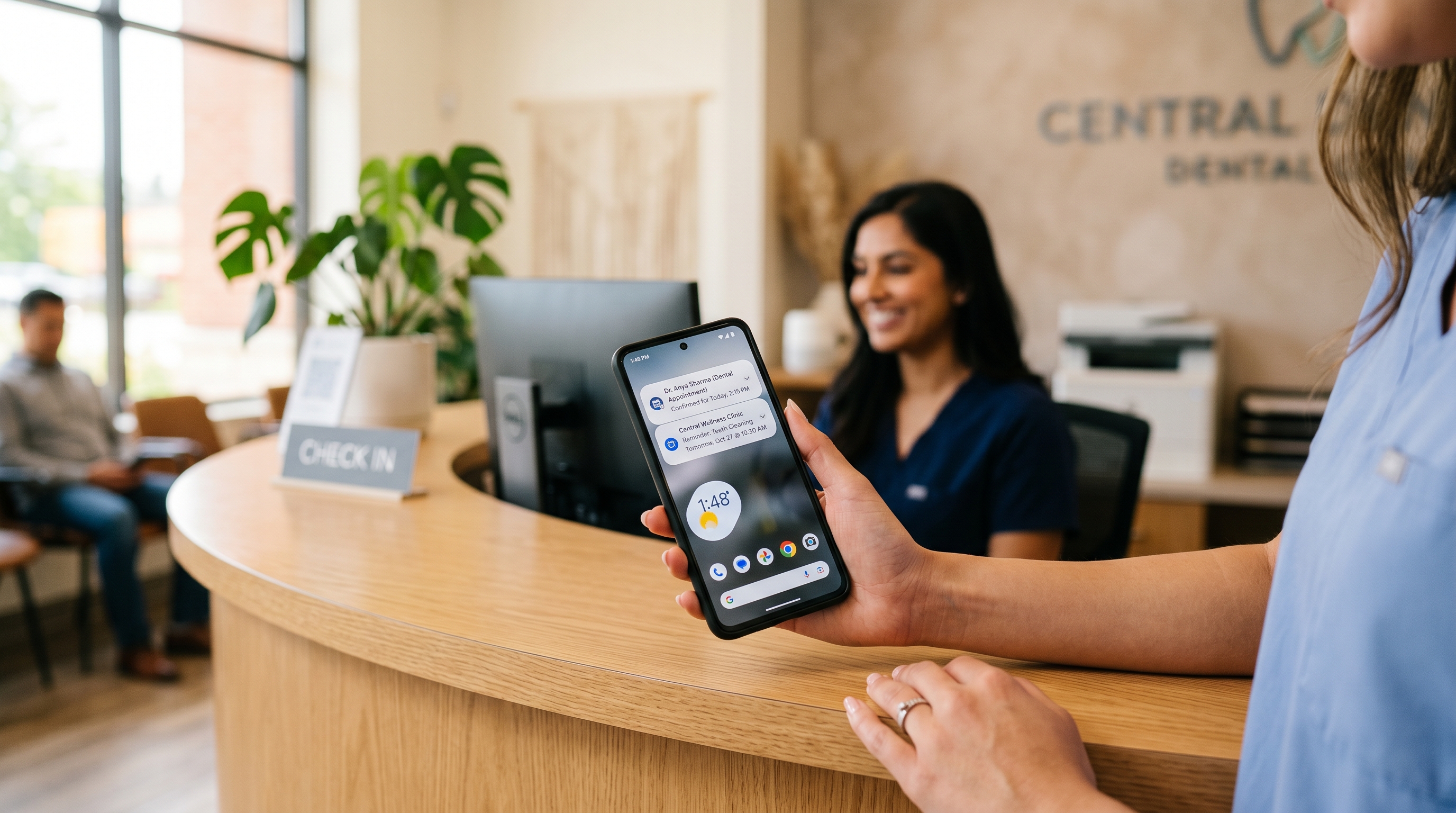
This runs automated. Customer books on Monday. At the 72-hour mark. Friday morning. They get an SMS confirming their appointment and their slot. No human labor. No admin work. The message is templated, personalized with their name and appointment time, and includes a one-tap confirmation link.
Why 72 hours? It's the compounding interval. Early enough that they remember their reason for booking. Recent enough that cancellations register before you start readying the engine room. The data is decisive: SMS reminders hit 98 percent open rates in three minutes. Email sits at 20 to 30 percent.
When a customer confirms, their record updates in your PMS. When they don't. When they go dark. That's your flag. That customer is now in the "at-risk" bucket.
Sequence Two: The 24-Hour Voice Reconfirmation
Twenty-four hours before the appointment, at-risk customers get a call. Not from your team. From an AI voice agent that sounds professional and has a specific job: confirm attendance or ask if they need to reschedule.
This is where the procedure gets muscle. Voice agents reduce no-shows by up to 75 percent because they create a psychological artifact. When you pick up the phone and hear a person. Even a synthetic one. Asking if you're still coming, your brain knows the appointment is real. It's happening. You have to actively decide to back out. Silence or a forgotten SMS doesn't carry that weight.
The agent offers three outcomes: confirm, reschedule to an open slot, or cancel. All three end up in your system. Confirmed appointments move forward. Cancellations open the door for Sequence Three. Rescheduled appointments move to a new timeline with their own sequence restart.
This automation is the difference between a casualty drill and reactive firefighting. You're standing watch before the emergency. Not after.
Sequence Three: The Two-Hour Slot Recovery
Ninety minutes before an appointment, you know who's coming and who isn't. The no-shows are flagged. That slot is dark. Here's where AI actually saves money.
An automated system immediately texts customers on your waitlist or customers who've previously no-showed and are now re-engaging: "We have an opening for [service] at [time]. Book now." One-click confirmation. That slot fills. You recover 30 to 50 percent of the revenue that would otherwise evaporate.
This is the asymmetry of automation. Your team is not scrambling to fill the gap. Your system is. And it works fast enough that it actually matters.
The Implementation Doctrine
I've seen businesses install these three sequences and watch their no-show rate drop from 20 percent to under 12 percent. The revenue recovery compounds monthly.
Here's the payback period: A business losing $150,000 annually to no-shows recovers $70,500 in year one from a 47 percent reduction. Most AI appointment automation platforms cost $800 to $3,000 monthly. Annual software cost: $9,600 to $36,000. Net recovery in year one: $34,500 to $60,900. ROI positive in three to four months.
But there's a discipline inside that math. You have to use the system as designed. You have to populate your waitlist. You have to actually send the sequences. I've seen businesses get halfway there. They deploy SMS but skip voice reconfirmation, or they send reminders but don't offer rebooking. That's not systems. That's slogans.
Real bottleneck deletion comes from procedure: a three-step machine that fires automatically, requires no decision-making from your front desk, and forces no-show recovery into your business's operating doctrine.
The procedure protects the asset. The asset is the appointment slot. The appointment slot is cash. No-show recovery isn't nice-to-have customer service. It's asset protection in the engine room.
Three Sequences, One Outcome
The 47 percent reduction isn't random. It's the product of layered touches hitting the customer at the moments when behavior changes. Seventy-two hours out: memory renewal. Twenty-four hours out: psychological commitment. Two hours out: slot recovery.
Each sequence standalone moves the needle. Stacked, they become doctrine. The owner-operator who deploys all three becomes the one who doesn't write off $150,000 a year. That's the compounding math of systems.
Three Questions
Q: Do I need all three sequences or can I start with just SMS? A: You can start with SMS. That alone cuts no-shows by 38 to 50 percent and pays for itself in month one. But the real use sits in the combination. Voice reconfirmation is where you push past 50 percent. Slot recovery is where you convert cancellations into fills. Most businesses I work with deploy SMS first, then add voice by month two, then automate slot recovery by month three. Don't treat this as a single tool. Treat it as a three-phase procedure.
Q: What if my customers hate getting reminders and calls? A: Customers hate no-showing and losing the appointment themselves. They hate scrambling to reschedule. An automated SMS confirming their own appointment and a brief voice check-in 24 hours before are not spam. They're service. The data on customer satisfaction shows this: when businesses add voice reconfirmation, cancellation requests go down and rebooking rates go up. Customers appreciate the touch because it prevents their own no-show.
Q: How do I track whether this is actually working? A: The system reports it automatically. Your PMS should show no-show rate by month, revenue recovered from slot recovery, and SMS/voice confirmation rates. I recommend running a 90-Day Bottleneck Audit on this specific metric: compare your no-show rate and annual revenue loss from Q1 against Q4. If you've deployed all three sequences, your no-show rate should drop below 12 percent and your revenue recovery should be visible in your pipeline. That's the proof. Numbers beat anecdotes.
The 90-Day Bottleneck Audit and No-Show Recovery
No-show loss isn't a customer acquisition problem. It's a bottleneck in your appointment engine. The 90-Day Bottleneck Audit surfaces it: You measure current no-show rate and revenue loss. You deploy the three sequences. You measure again. Most businesses see material change in weeks two through four of automation. By day 90, the pattern is set. The system is either protecting the appointment asset or it isn't.
Systems beat slogans. Automation beats good intentions. The three sequences are procedure. They're not revolutionary. They're methodical. They're the difference between hoping customers show up and engineering a 47 percent reduction in the appointment leakage that empties your calendar and your bank account.
*Jeff Barnes is the founder of Digital Evolution Marketing Group (DEMG). demg.ai has no commercial relationship with any vendor, platform, or tool mentioned in this article. This content is for educational purposes only and does not constitute business, legal, or financial advice. Results described are illustrative and may not reflect your specific situation.*