
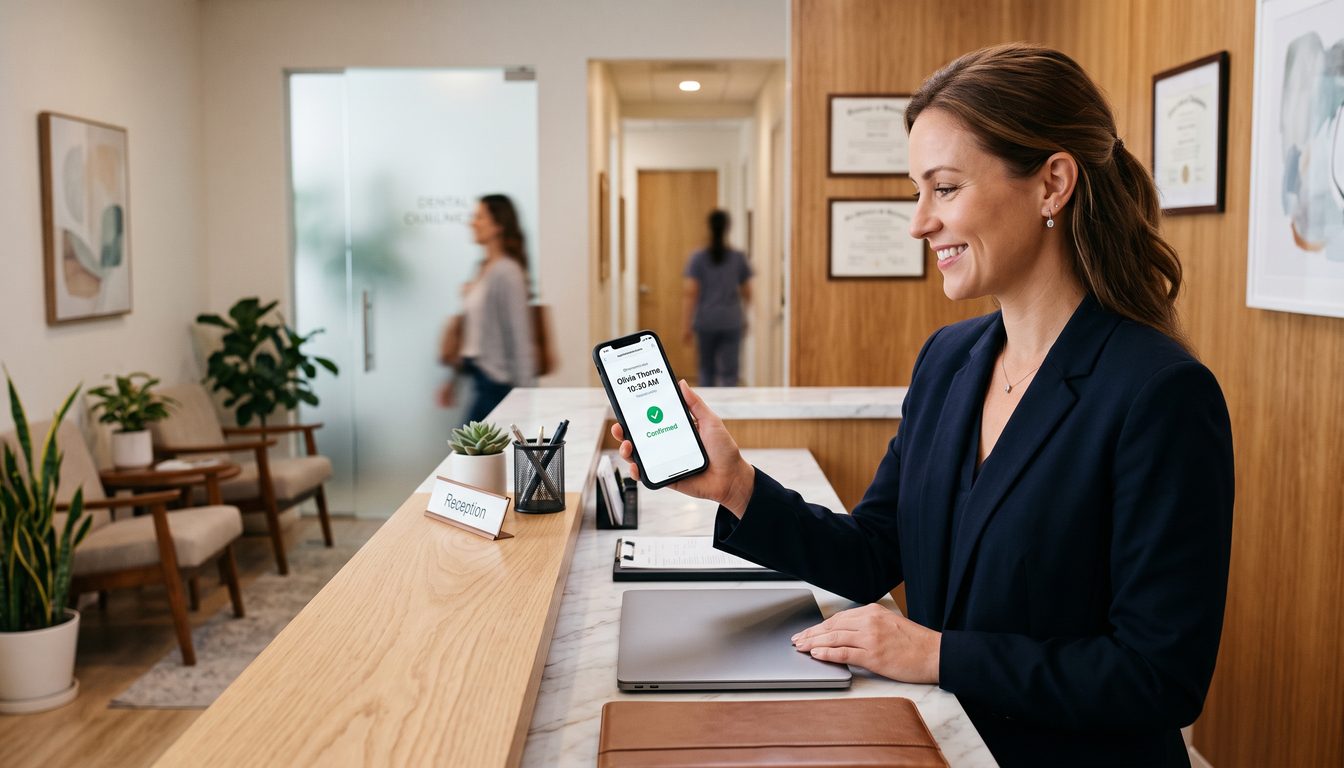
If your service business runs 200 appointments a month at a $150 average ticket and your no-show rate sits at 20%, you are leaving $6,000 on the table every single month. That is $72,000 a year evaporating into empty chairs. According to SchedulingKit's 2026 industry benchmark data, no-show rates across service businesses range from 10% to 30%, with healthcare averaging 23%, home services at 14.7%, salons at 19.8%, and fitness studios at 24.6%. The money is not gone because clients are bad people. It is gone because you do not have a system.
Most owner-operators respond to no-shows with a single text reminder the day before. That is not a system. That is a prayer. Systems beat slogans — and this article is about building the system.
The Scale of the Damage
Let's anchor the numbers first. A systematic literature review of 105 published studies found the average no-show rate sits around 23% across appointment-based businesses. For a medical practice running 80 appointments per week at $150 per visit, that is a $124,800 annual loss at a 20% no-show rate. A solo dentist at a 30% no-show rate on an $800K practice is losing $240,000 in production. A home services contractor — HVAC, plumbing : running 10 to 15 jobs per week at $400 average loses $15,000 to $30,000 per year.
And the damage multiplies. Every no-show means a tech or stylist or trainer standing by on your clock. Staff time already burned. Prep work wasted. The slot that could have gone to a paying client sitting on your waitlist : gone. Industry data shows the true cost of a no-show is 2.1x to 2.5x the direct revenue loss when you factor in idle labor and overhead.
Here is the uncomfortable truth: 38% of clients no-show simply because they forgot. Another 26% had a schedule conflict develop after booking. That is 64% of no-shows that are entirely preventable with a proper reminder system. The rest : anxiety, transportation issues, financial concerns : are partially addressable with a penalty structure. None of these problems require you to be clever. They require you to have a procedure.
Every Submarine Has a Procedure
Every submarine has a procedure for everything. Including what happens when someone does not show up for watch. The replacement is automatic. The accountability is documented. Your appointment book should work the same way.
In the Navy, standing watch is not optional. Failing to show means a documented incident report, a backup already deployed, and a clear consequence that is known in advance by every crew member. The system does not rely on hoping someone remembers. It does not rely on one reminder posted to a bulletin board. It has layers : and each layer has a specific job.
Your appointment system needs the same architecture. Three layers. Each with a specific function. None optional.
Layer 1: The Automated SMS Sequence (48h, 24h, 2h)
SMS has a 98% open rate. Email sits at 20%. SMS messages are read within 3 minutes on average. This is not even a close comparison. If you are relying on email reminders, you are relying on a channel that is ignored 4 out of 5 times.
The sequence is:
48 hours out: Booking confirmation re-send. Keep it short. Include the date, time, address, and a one-tap cancellation or reschedule link. The goal here is to surface the appointment while the client still has time to rearrange plans without ghosting you.
24 hours out: The critical message. Research from SchedulingKit confirms that a reminder 24 hours before reduces no-shows by an average of 34%. This message gets personal. "Hey [First Name], reminder for your appointment tomorrow at 2 PM with [Business Name]. Reply C to confirm or R to reschedule." Two-way confirmation. You want a signal.
2 hours out: The final check. Adding this message on top of the 24-hour reminder yields up to 41% total no-show reduction according to SchedulingKit's data. At this point the client is already in their day. A short ping brings the appointment back to top of mind. "Heads up : you're confirmed for 2 PM today. See you soon."
This sequence runs automatically. Zero manual labor from your team after setup. It works while your staff is focused on the clients who are actually in the chair.
The tech: GoHighLevel (GHL) handles this natively. Build the workflow in GHL's automation builder: trigger on appointment creation, set time delays to -48h, -24h, -2h, map the SMS action. If you are already using Twilio standalone, the same logic applies via Twilio Studio with a simple flow. The total build time for someone who knows the platform is under two hours. The 24-hour message should include a confirmation request that writes back to the appointment record : so your front desk knows who has confirmed and who has not before the day starts.
Layer 2: The AI Voice Confirmation Call (24h)
Here is where most owner-operators stop. They set up the SMS sequence and call it done. That is leaving money on the table.
A Cochrane systematic review found SMS + phone call reminders together produce significantly better attendance than either alone. The combination creates two separate touch points in two different modalities. The SMS lands silently. The voice call demands a response. For clients who missed or ignored the text, the call catches them. For clients with complex situations : they need to reschedule, they have a question, they are unsure : the voice call opens the channel.
Only 18% of service businesses currently use AI voice reminders, per Service Business Analytics Institute 2026 data. That means 82% of your competitors are still just sending a text and hoping. That gap is your advantage.
GoHighLevel's Voice AI handles outbound confirmation calls as part of its automated workflows. Configure the voice agent to call at the 24-hour mark, confirm the appointment by name and time, offer a one-touch reschedule option, and flag unconfirmed appointments back to the workflow for staff follow-up. The AI handles the call, collects the confirmation or reschedule request, and updates the contact record. Your staff sees a dashboard showing confirmed, rescheduled, and still-unconfirmed slots : before 9 AM the day of.
If you are not yet on GHL, this same function runs through tools like Twilio Programmable Voice with a simple call flow, or dedicated platforms like Luma Health for healthcare verticals. The goal is the same regardless of tool: automate the outbound call, capture the confirmation, write the result back to your CRM.
The math on the voice call alone: Luma Health data shows two-way SMS confirmation cuts no-shows by 34%. Stack that with a voice call at the same interval and you compound the effect. A system running both : SMS at 24h plus AI voice call : routinely produces 40% to 50% no-show reduction across service verticals.
Layer 3: The Documented Cancellation and Penalty Policy
This is the most uncomfortable layer for most operators. They are afraid clients will leave if they enforce a policy. The data says the opposite. Square Appointments research shows deposits alone reduce no-shows by 45%. A 25% deposit at booking cuts no-shows by 51% with only a 7% reduction in booking conversion. The clients who leave over a policy were your highest-risk no-shows anyway.
The policy has three components:
1. Capture at booking: Require a credit card on file or a 25% deposit for every appointment. This is the single biggest no-show deterrent in the data. Do it at booking, not after the reminder sequence. The commitment has to happen at the point of friction : not 48 hours later.
2. Written cancellation window: 24 hours is the standard. Clients who cancel inside 24 hours with no prior contact forfeit the deposit or are charged a flat cancellation fee. This has to be displayed at booking confirmation, repeated in the 48-hour SMS, and stated clearly in the 24-hour message. No surprises. Clear expectations are not aggressive : they are professional.
3. Automatic enforcement: Here is where operators fail. They write the policy but apply it selectively. They feel bad for a regular client and waive the fee. Then they waive it again. The policy becomes theater. GHL's payment workflows can be configured to automatically charge the card on file when an appointment is marked as a no-show, or to send a payment link if a charge fails. Automate the enforcement. Remove the emotional decision from your staff's job.
A client who no-shows and calls a competitor: 65% of them do exactly that, according to ServiceTitan data. You are not keeping them by being lenient on fees. You are just subsidizing their future no-show.
The ROI Math: What This System Is Actually Worth
Let's run the scenario the ATLAS Model way: Assess the gap, build the System, measure the Return.
Baseline scenario:
- 200 appointments per month
- $150 average ticket
- 20% no-show rate = 40 missed appointments
- Monthly revenue lost: $6,000
- Annual revenue lost: $72,000
Post-system scenario (conservative 40% no-show reduction):
- No-show rate drops from 20% to 12%
- Missed appointments: 24 per month (down from 40)
- Revenue recovered: $2,400/month, $28,800/year
Post-system scenario (realistic 60% no-show reduction with deposits):
- No-show rate drops from 20% to 8%
- Missed appointments: 16 per month (down from 40)
- Revenue recovered: $3,600/month, $43,200/year
System cost: GHL sub-account runs approximately $97 to $297 per month depending on plan. Twilio SMS costs fraction of a cent per message : for 200 appointments at 3 messages each, SMS costs run under $20/month. AI voice calls via GHL Voice AI are bundled in agency plans. Total all-in system cost: $150 to $350 per month.
Payback period: First month. At $2,400 recovered on a $300 system cost, you are running a 8:1 ROI in the conservative scenario. The realistic scenario is 12:1. These are not projections from a vendor : they are straight arithmetic from published no-show reduction data applied to a median service business.
The system costs less per month than a single no-show at most service rates.
Building the Stack: Step-by-Step
Step 1 : Audit your current no-show rate. Pull 90 days of appointment data. Calculate missed / total scheduled. If you do not have this number, you are operating blind.
Step 2 : Set up the SMS sequence in GHL or Twilio. Three-message workflow. Automated. 48h, 24h, 2h. Include confirmation request in the 24h message. Build it once.
Step 3 : Configure the AI voice confirmation call. GHL Voice AI setup connects to your booking calendar, calls at the 24h mark, captures confirmation or reschedule request, and updates the contact record. This is a single afternoon of setup work.
Step 4 : Add the cancellation policy at the payment layer. Require credit card at booking. Set the automated charge trigger for no-shows. Display the policy in every booking confirmation and reminder.
Step 5 : Stand watch on the data. Track no-show rate week over week. The system should produce measurable improvement inside 30 days. If it does not, the bottleneck is in the policy enforcement or the booking capture : not the reminder sequence.
FAQ
Q: Won't a cancellation fee drive clients away? A: The data says the opposite. Deposits reduce no-shows by 45% to 67% across every service industry studied. The clients who leave over a written policy were already your most likely no-shows. You are not losing a reliable client : you are losing a liability.
Q: How many SMS reminders is too many before clients get annoyed? A: Three touch points across 48 hours is the evidence-based optimal. SchedulingKit's data shows three-message sequences perform within a few percentage points of two-message sequences, with no significant client attrition reported. The goal is confirmation, not harassment. Keep each message under 100 characters and include clear opt-out language per TCPA requirements.
Q: Does the AI voice call sound robotic? Will clients respond to it? A: GHL Voice AI uses natural language voice synthesis. The call is framed as a business confirmation call, not a robocall. Clients interact with AI phone agents daily at every major business. As long as the script is short, the tone is warm, and there is a clear "press 1 to confirm / press 2 to reschedule" option, completion rates run high. Service Business Analytics Institute data shows AI voice confirmation calls reduce no-shows by 34% on their own.
Q: What if a client has already confirmed via SMS : should the voice call still go out? A: Configure your workflow so the voice call is suppressed for confirmed contacts. This is a simple conditional branch in GHL: if appointment status = confirmed, skip the voice call action. This reduces unnecessary touches and keeps the system clean.
Q: We are a small shop with one front desk person : is this realistic to build? A: This system replaces your front desk person's manual reminder calls. That is the point. One afternoon of setup in GHL removes a task that was eating 30 to 60 minutes of staff time per day. The ROI is in both recovered revenue and recovered labor hours. Your front desk person is then free to handle clients who are actually in the building.
:
The ATLAS Model for Growth starts with one question: where is the system missing? For most service businesses, the answer is here : in the appointment pipeline. Revenue is being booked and then evaporating before it converts. The fix is not motivational. It is mechanical. Build the SMS sequence. Run the voice call. Enforce the policy automatically. Measure the result in 30 days.
Systems beat slogans. Build the system.
*Disclosure: Jeff Barnes is the founder of demg.ai and Digital Evolution Marketing Group. He has no personal financial position in any company, tool, or platform named in this article unless explicitly stated. demg.ai provides marketing education and systems for owner-operators, not investment advice. Past performance does not guarantee future results.*