
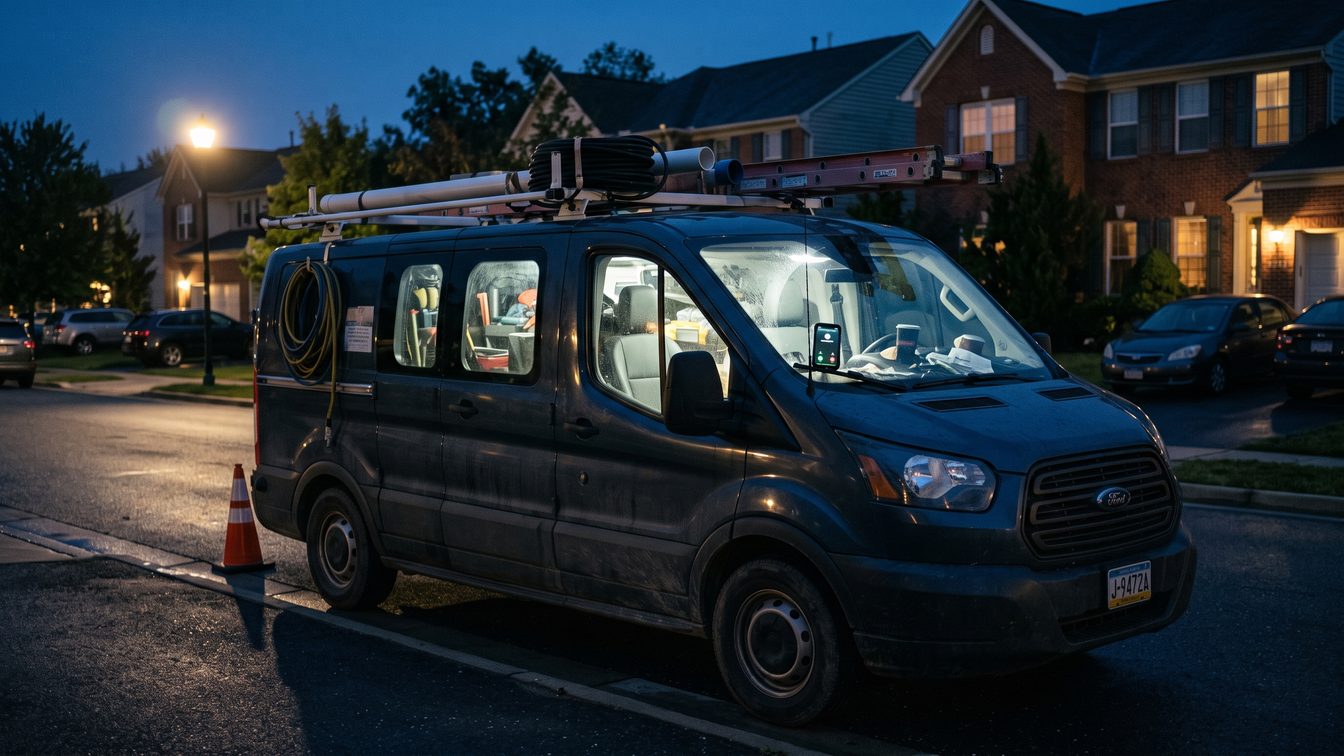
The 40% Revenue Leak No One Talks About
You're sleeping. A pipe bursts at 11:47 PM. Homeowner dials three numbers. First two go to voicemail. Third has an AI voice that answers in 2 seconds, qualifies the emergency, and dispatches a tech. You lose the $2,800 job. This happens 88% of the time in your industry.
After-hours calls represent 34% of all contractor inquiries. Only 12% get answered by a human or system [https://www.callbirdai.com/blog-after-hours-answering-contractors]. The other 88% go to competitors or get cancelled. That's $40K-$75K annually for a three-person shop, left on the table.
AI dispatch doesn't replace you. It captures calls you can't take. It qualifies urgency. It books jobs or escalates to your on-call team. It runs every night without vacation, sick leave, or attitude.
This is how to build it in 90 days.
The Decision Tree: What Gets Answered, What Gets Booked, What Gets Escalated
Every after-hours call needs one of three outcomes. Your AI system must know which one applies before a human ever hears it.
Category 1: True Emergency. Burst pipe. No heat in January. Electrical fire risk. System answers, captures address and phone, confirms urgency, and dispatches an on-call tech immediately. No scheduling. No callback queue. Roll the truck.
Category 2: Urgent but Not Emergency. Water heater leaking tomorrow morning. AC compressor sounds wrong. System answers, books a first-available appointment, and sends confirmation text. Customer gets slot. You get revenue. Morning team sees it in the queue.
Category 3: Non-Urgent. Quote request. Maintenance call. Routine inspection. System takes the info, schedules for business hours, and sets reminder for your office staff.
The AI doesn't guess. You build the decision tree. You own the rules.
The Three-Platform Stack
Podium AI (Larry) is the entry point. It costs less. Integration takes 48 hours. It works across calls, chats, and web leads. Podium reports that businesses using Larry capture 40% more after-hours leads [https://homeservices.podium.com/ai/larry]. Real contractors report $24K in revenue generated in weeks.
ServiceTitan AI is deeper. If you already use ServiceTitan for dispatch and invoicing, the AI sits inside your ecosystem. It knows your tech availability, your job history, your pricing. It doesn't layer on top. It's built in [https://www.servicetitan.com/features/ai]. The AI sees real-time context.
Housecall Pro's CSR AI sits between them. It lives in Housecall Pro. Contractors using it report 2x average revenue on inbound leads [https://www.housecallpro.com/features/ai-team/csr-ai/]. It handles calls, chats, and incoming texts. The system already knows your service menu and availability.
MyServiceOps.ai is specialist-only. It does one thing: after-hours emergency dispatch for trades. No 9-5 bloat. No CRM you don't need. It answers, qualifies urgency against your rules, and dispatches or queues callbacks. Live in 30 minutes. Forward your main line or use their number.
Pick based on what you already own. If you run ServiceTitan, don't add Podium. If you run nothing, Podium is lowest friction.
Emergency Escalation Rules: Building Your Decision Matrix
This is where most implementations fail. Founders configure the AI, assume it works, then discover it's booking routine calls as emergencies or treating real emergencies as routine.
You build three layers:
Layer 1: Keyword Triggers. Customer says fire, no heat, no AC in summer, water, gas smell, electrical, smoke. AI marks urgent and asks confirmation. Customer says yes or no. AI acts on the answer, not the keyword.
Layer 2: Address Rules. You know your market. Certain addresses have aging infrastructure. You maintain a list. Call from that address hits the list, urgency flag rises by default. But customer still confirms. You never dispatch blindly.
Layer 3: Time and Tech Availability. 2 AM burst pipe. You have one on-call tech. System checks availability before promising dispatch. If no one's available, system books first-available appointment and apologizes for delay. No phantom dispatches.
I once sent a team blindly based on bad escalation rules. They drove 45 minutes for a consultation call. The founder never adjusted the rules after that. Don't be that founder.
Test the matrix with 20 live calls before you run it untouched. Have your office staff listen to 10 emergency calls and 10 non-emergency calls the AI handled. Adjust weights. Then deploy.
The 90-Day Bottleneck Audit: Where Does After-Hours Sit in Your Chain?
Most founders can't tell you where founder-dependency lives in their after-hours operation. They feel busy but can't pinpoint the leak.
Day 1-30: Audit. Run your current setup for a month. Record every after-hours call. (Legal in your state? Check first.) Count: how many went to voicemail. How many reached a human. How many became jobs. How many fell through the cracks. Track revenue lost per category.
Day 30-60: Implement. Deploy Podium, ServiceTitan AI, Housecall Pro CSR AI, or MyServiceOps on a parallel line. Keep your current setup running. Let the AI answer a subset of after-hours calls. Compare: AI-answered calls vs. human-answered calls. Which converts at higher rate? Which has lower abandonment?
Day 60-90: Optimize and Transition. You'll see where the AI fails. Tighten the rules. Some businesses find AI converts faster because it never gets frustrated. Others find AI qualifies calls human staff would've ignored. Adjust. Then move all after-hours volume to AI.
Measure: Average response time (goal: under 5 seconds). Calls captured (target: 95%+). Booking rate (target: 70%+ of qualified leads). Revenue per after-hours call (baseline: $0 from voicemail).
This audit shows you whether your founder time is actually the bottleneck or whether it's process, tooling, or tech availability. Usually it's tooling.
ROI Math: What Does This Actually Buy You?
Assumptions: You run HVAC, plumbing, or electrical. You currently lose 88% of after-hours calls. You answer 12 calls per month after hours. Average job value is $1,200.
Current state: 12 calls x 12% answer rate = 1.4 jobs booked = $1,680 monthly revenue.
With AI at 70% qualification and booking rate: 12 calls x 70% = 8.4 jobs booked = $10,080 monthly revenue.
Increment: $8,400 additional monthly revenue. $100,800 annually.
Cost of AI: Podium AI starts at $600/month. ServiceTitan AI is bundled in their platform ($400-$800/month depending on tier). Housecall Pro CSR AI is $199/month. MyServiceOps.ai is $299/month.
Payback: You hit break-even in week one.
But the real play isn't just incremental revenue. It's leverage. You removed after-hours answering from your task list. You didn't hire a night dispatcher. You didn't pay overtime. The AI does it 365 days a year without sick leave.
That's founder time back. That's the actual ROI.
Platform Comparison: The Decision Framework
Podium AI (Larry). Lowest price. Fastest setup. Broad audience (any service business). Best if: You need speed to launch and don't already own a full platform. Weakness: Generic rules. If you want deep integration with your current CRM, you'll need to build connectors.
ServiceTitan AI. Highest integration depth. Knows your whole operation. Best if: You already run ServiceTitan. You value single-vendor simplicity. Weakness: Locked ecosystem. You can't layer tools easily.
Housecall Pro CSR AI. Sweet spot balance. $199/month. Built into platform. 2x revenue uplift confirmed by users. Best if: You run Housecall Pro or plan to migrate. You want cheap, fast deployment. Weakness: Slightly newer product (less battle-testing than Podium).
MyServiceOps.ai. Specialty play. Ultra-focused. Best if: You run multiple trade lines and need separate after-hours dispatch for each. You don't want bloat. Weakness: Doesn't integrate invoicing, scheduling, or CRM. Standalone tool only.
Pick one. Run it for 90 days. Measure. Decide. Most founders never switch after they commit.
FAQ
Q: Will AI kill my after-hours team?
No. If you have an after-hours team, AI supplements them. The AI answers calls your team would ignore or miss. During surge periods (winter emergencies for HVAC, summer heat waves), AI captures overflow. Your team focuses on complex cases, negotiations, and callbacks. You might reduce headcount, but you won't eliminate people. You'll redeploy them.
Q: What if the AI says yes to a call that's actually no?
Your escalation rules determine dispatch. If AI tells an on-call tech "this is an emergency, customer at 123 Main St," and it's not really an emergency, the tech will know after 2 minutes on the phone. They'll mark it in the system. Your team adjusts rules. You don't penalize them both. This is why you test escalation rules with real calls first.
Q: Can I start with one platform and switch later?
Yes. All three platforms (Podium, ServiceTitan, Housecall Pro) allow you to export call data. Migrating is friction but not impossible. Switching from MyServiceOps.ai is simpler because it doesn't hold your CRM data. Cost of switching is usually 2-4 weeks of setup and re-training. Not catastrophic.
Q: Do I need a dedicated on-call team, or can the AI just take messages?
You can do both. True emergencies get dispatched to on-call tech. Urgent calls get booked for next morning. Routine calls get a callback reminder for business hours. You decide the threshold. Most three-person shops find they need 1-2 people on-call for emergencies. AI handles the routing.
Q: How long before the AI pays for itself?
Week one if you're currently losing 88% of after-hours calls. If your current answer rate is 50%, payback takes 2-3 months. Either way, this is not a long-horizon ROI. It's immediate.
Responsibility Beats Excuses
You already know after-hours calls are revenue. You know you're losing them. You know the fix exists. Podium, ServiceTitan, Housecall Pro, and MyServiceOps all report operational data on after-hours volume and conversion. Your job is not to debate whether AI works. Your job is to run the 90-day audit, measure the gap, and plug it.
The excuse is always the same: "I need to think about it more." More thinking costs you $8,400 per month. That's 100 hours of founder time at $800/hour, burned on indecision.
AI dispatch is a decision, not a technology question. You either capture after-hours calls or you don't. The platform doesn't matter. The audit does. The measurement does. The commitment does.
Run the 90-day audit. Measure. Move.
*Jeff Barnes, MBA is the founder of Digital Evolution Marketing Group and has no personal position in any company, fund, or platform named in this article. DEMG has no current commercial relationship with any party mentioned. Past performance does not guarantee future results.*