By Jeff Barnes | Founder, DEMG | Former US Navy Submariner | Trained under Dan Kennedy
60% of Google searches now end without a single click. That number is not a forecast — it is the current operating environment. SaaS teams that still write content for traditional rankings are optimizing for a channel that is losing relevance fast. The teams winning today are writing for AI consumption first and human readers second. That shift is the whole game.
The Channel Changed. The Principle Didn’t.
When I was building content systems at DEMG, the first lesson I kept coming back to came straight from Dan Kennedy. He said it plainly: go where the attention is, in the format the attention demands. I’ve watched distribution channels change across three decades — print to email, email to search, search to social, social to AI. The channel always changes. The principle never does.
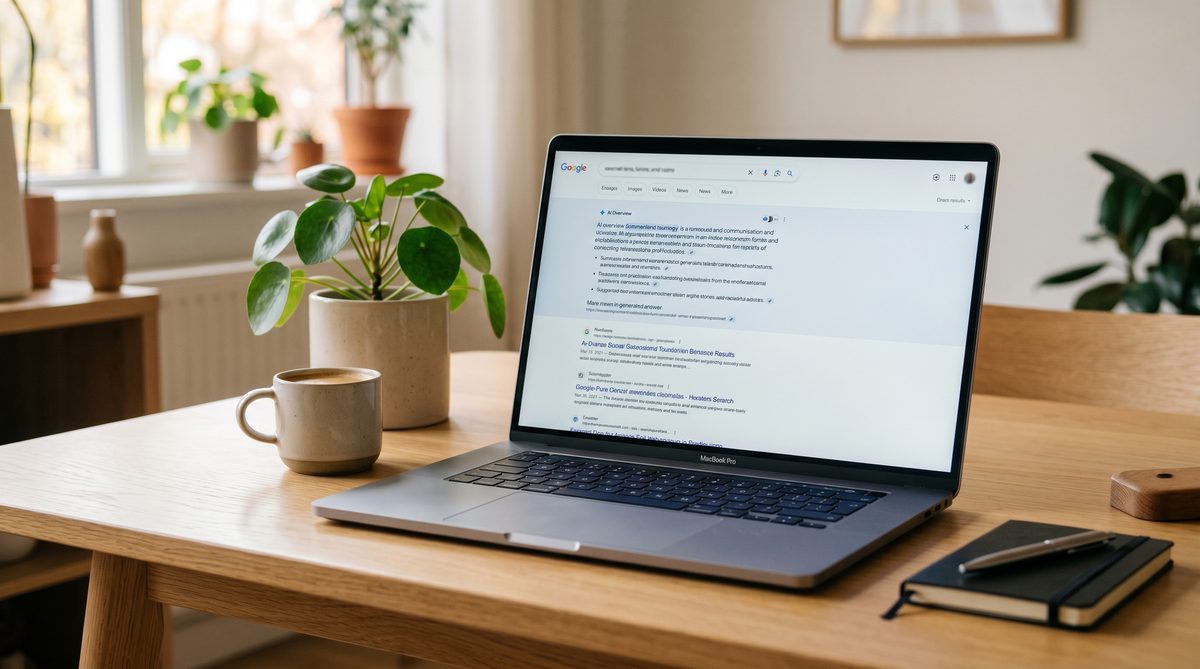
AI Overviews are where the attention is going. Google AI Overviews now appear in approximately 25.8% of all US searches, reaching an estimated 2 billion users monthly. More critically, 83% of searches that trigger an AI Overview end without a click. If your content isn’t getting cited inside those answers, you are invisible to a growing majority of your market — regardless of where you rank.
How AI Overviews Actually Work
Google’s AI Overview system pulls content from the web, synthesizes it into a direct answer, and displays that answer above organic results. It does not rely on ranking position the way traditional search did. The top-10 citation rate from AI Overviews dropped from 76% to 38% — meaning page-one rankings are no longer a reliable path to being cited in AI responses.
The AI does not browse a page the way a human does. It parses structured content by sections. It extracts the first one to two sentences of each section to determine relevance. If your opening paragraph is vague scene-setting, the AI skips it and cites a competitor who leads with a direct answer.
For SaaS teams specifically: informational queries like “what is CRM software” or “how does marketing automation work” now trigger AI Overviews 70% of the time. SaaS companies have reported 70–80% drops in organic traffic by 2026. The bread-and-butter content pillars — how-to guides, feature comparisons, industry definitions — are now the highest-risk content categories. They are being summarized and served without a click.
What Gets Cited — The Data
Not all content gets cited equally. The research here is specific enough to act on.
Content types that get cited most:
- Product pages account for 41.6% of ChatGPT citations
- Listicles account for 46.3% of AI Overview citations
- Articles drive 45.48% of informational query citations
Content structure signals that increase citation rates:
- Comparison pages with 3 structured tables earn 25.7% more citations
- Validation pages with 8 or more list sections earn up to 26.9% more citations
- Shortlist pages averaging 10 words or fewer per sentence earn 18.8% more citations
- 55% of AI Overview citations come from the first 30% of page content
Authority signals that matter:
- Expert quotes with attribution increase citation likelihood by 41%
- Inline citations to research and data increase AI visibility by 30–40%
- Pages not updated in 3+ months see citation rates drop sharply
Traditional SEO metrics — traffic, backlinks, domain authority — have little predictive power for AI citation. Content depth, readability, and structure matter most. That is a significant shift in where to invest.
The ATLAS Model for Growth: Applied to AEO
The ATLAS Model for Growth is a framework I use to pressure-test whether a marketing investment is actually compounding or just burning cash. Applied to Answer Engine Optimization, it breaks down like this:
A — Authority Layer. What entities and topics do you demonstrably own? AI systems favor content from recognized entities. Build topical authority through consistent, structured coverage of a defined problem space — not scattered content.
T — Targeting Precision. What exact queries do your buyers ask AI systems? Map these. Then write content that answers each query in the first two sentences. AI Overviews are not discovery engines; they are answer engines. Your content must match query intent with precision.
L — Layered Structure. Every article needs semantic chunking. Each section covers one concept. Each section leads with a direct answer. No section depends on context from a prior section to be understood. The AI will extract sections in isolation — engineer for that.
A — Authority Signals. Schema markup is the machine-readable layer that communicates what your content represents. The minimum viable stack for AEO includes: Article/BlogPosting schema, FAQPage schema, Organization schema, and BreadcrumbList. Full schema implementation across all layers yields a 4.2x higher AI citation rate versus basic markup.
S — Sustained Freshness. Stale content is a liability in AI search. Refresh core content quarterly. Date signals matter to retrieval systems. Build a maintenance calendar into your content operation — not just a production calendar.
Content Structure for AEO: The Tactical Breakdown
Lead with the answer. Every article, every section, every FAQ response. The AI extracts the first one to two sentences. That is your real headline in AI-mediated search.
Use FAQ blocks. FAQPage schema maps directly to how users query AI systems. A well-structured FAQ at the end of every article is one of the highest-ROI AEO investments available. Each answer should be complete in three sentences or fewer — the AI will pull the whole block.
Avoid hidden content. Information behind tabs, accordions, or JavaScript rendering is invisible to AI crawlers. If the content is important to your AEO strategy, it must render server-side. Client-side rendering creates a structural blind spot.
Cite your claims. LLMs treat inline citations as credibility signals. Content that references research studies, government data, and industry reports scores higher in the retrieval process. Cite real sources — the AI will reward it.
Write short sentences in key sections. The 10-words-per-sentence threshold is not an aesthetic preference — it is a citation-rate signal. Dense, complex sentences reduce extraction accuracy. In sections you want cited, write the way a witness testifies: one fact per sentence.
Schema Markup: The Infrastructure Play
Most SaaS content teams treat schema markup as optional. It is not optional in 2026. It is the difference between being in the AI’s consideration set and being invisible to it.
The minimum viable schema stack for SaaS content:
- Article (BlogPosting) — establishes authorship, publication date, and topical context
- FAQPage — directly maps Q&A pairs to AI extraction patterns
- Organization — builds entity recognition across your content set
- BreadcrumbList — communicates topical hierarchy to retrieval systems
- HowTo — where applicable for procedural content
Implement these on every piece of AEO-targeted content. Then audit quarterly to confirm schema is rendering correctly and not generating errors in Google Search Console.
Measuring AEO Performance
Traditional traffic metrics do not capture AEO performance. You need a different instrument panel.
Track brand mentions in AI platforms. Use tools that monitor whether your brand appears in ChatGPT, Perplexity, and Google AI Overviews responses. Only 11% of B2B firms have most of their content optimized for AI search — your measurement gap here is also your competitive gap.
Monitor citation rate by content type. Which of your pages are getting cited? In which query categories? This tells you where your ATLAS Model is working and where the authority layer is thin.
Track branded AI query traffic. 85% of buyers think more highly of a software vendor when AI includes them in an answer. Measure whether AI-driven awareness is converting into direct or branded search visits. The relationship between AI citation and pipeline is real — but you have to measure it deliberately.
Watch organic CTR by query type. The queries where your CTR is collapsing are likely the ones now served by AI Overviews. That is your content prioritization list for AEO.
Competence beats credentials in AI search. The AI does not care how long you’ve been in business. It cares whether your content structure, schema, and authority signals meet the extraction threshold. That is a level playing field — if you build the right system.
Doctrine Connection
Competence beats credentials. In the engine room, a qualified watchstander is trusted not because of rank but because they demonstrate mastery of the system under their watch. AI Overviews operate the same way. The AI does not rank by brand age or domain authority alone. It cites content that demonstrates structured, verifiable competence on the query at hand. Build that — consistently, at scale — and the citations follow.
Frequently Asked Questions
Q: What is the difference between SEO and AEO? SEO focuses on ranking web pages to drive traffic to your site. AEO — Answer Engine Optimization — focuses on ensuring your content is cited by AI systems when they generate answers. A page can rank well and never appear in an AI Overview. The reverse is also true. Both disciplines matter in 2026, but they require different content structures and measurement approaches.
Q: How do AI Overviews decide what content to cite? AI Overviews prioritize content that answers the query directly in the first one to two sentences, is structured with clear semantic sections, includes schema markup that identifies content type and authorship, cites credible sources, and has been updated recently. Traditional ranking factors like backlink count have significantly less influence than they once did.
Q: Which content types get cited most often in AI Overviews? Listicles (46.3%), product pages (41.6%), and structured articles with comparison tables and FAQ sections see the highest citation rates. Shortlist-format content with short sentences and frequent citations performs consistently well across AI platforms.
Q: Should SaaS teams stop investing in traditional SEO? No. AEO and SEO are complementary. Well-structured, authoritative content that earns AI citations also tends to rank well in traditional search. The mistake is building a content operation optimized only for traditional rankings while ignoring the structural requirements of AI extraction. Run both in parallel, with AEO structure as the foundation.
Q: How do I know if my content is being cited in AI Overviews? Use brand monitoring tools that track AI platform mentions. Check Google Search Console for AI Overview appearances in the performance report. Run manual query tests in Google, ChatGPT, and Perplexity for your core topics. Build a tracking cadence — monthly at minimum — to measure movement over time.
Sources
- ZeroClick Labs — 2026 AI SEO Statistics
- Position Digital — 150+ AI SEO Statistics for 2026
- GoodFirms — AI SEO Statistics 2026: Zero-Click Trends
- AirOps — Answer Engine Optimization (AEO): Your Complete Guide for 2026
- Frase.io — Answer Engine Optimization: The Complete AEO Guide
- Digital Applied — AI Search and SEO Statistics 2026
- HubSpot — Answer Engine Optimization Best Practices