How AI-Powered Review Response Actually Works
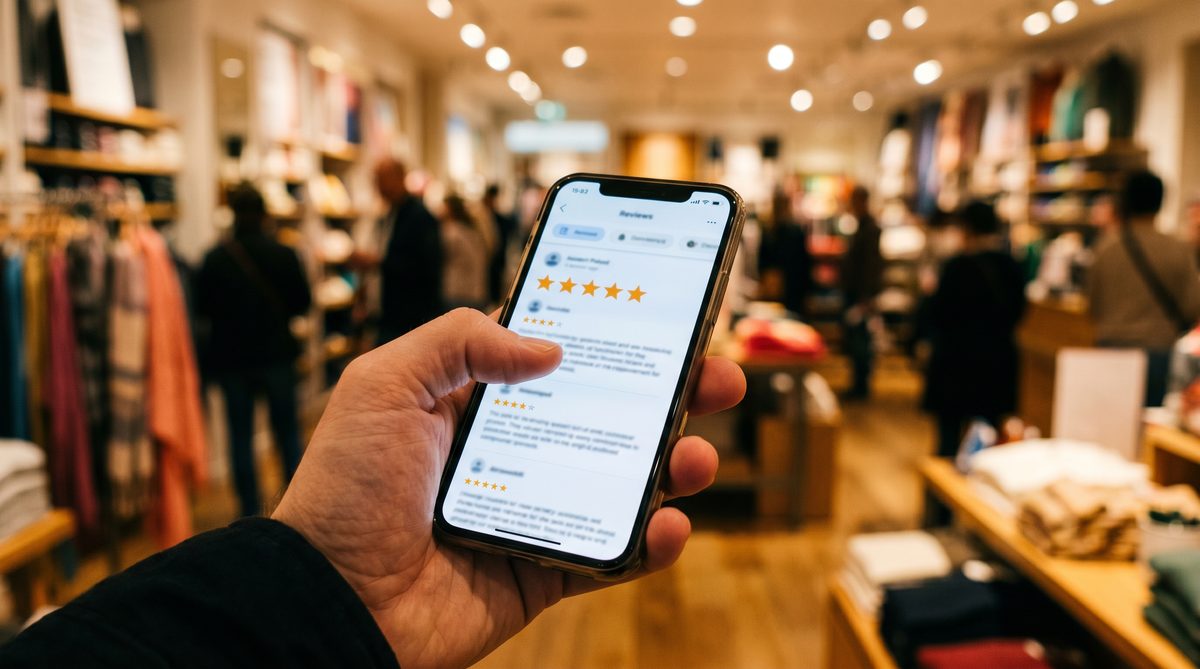
Here's the short version: AI monitors your review platforms around the clock, flags new reviews the moment they post, drafts a response calibrated to the sentiment and content, and hands it to you — or a designated team member — for a 60-second approval. You click send. The review gets answered in under an hour. The customer sees a real, thoughtful reply. Everyone reading that exchange sees a business that gives a damn.
That's the system. Five steps. Fully automated except for the approval gate, which you keep human on purpose — because your voice matters in the response, even if AI wrote the first draft. The goal is speed without sloppiness, scale without losing the owner's accountability.
You can build this in a week with tools that already exist. Let's get into the math first, because that's what actually gets founders to move.
The Revenue Math You're Ignoring
One-star reviews aren't just embarrassing. They're a direct line item on your income statement.
A single negative review drives away, on average, 30 potential customers (ReviewTrackers). Ninety-four percent of consumers say a negative review has convinced them to avoid a business entirely. If your average job ticket is $400, and you lose 30 customers to one unaddressed bad review, that's $12,000 in lost revenue — from one post. One Tuesday night when you were too tired to respond.
Now flip it. A one-star rating increase drives a 5–9% revenue lift (Harvard Business Review). Businesses that respond to at least 25% of their reviews average 35% more revenue than businesses that ignore them. Forty-five percent of consumers say they're more likely to visit a business that responds to negative reviews. The math isn't abstract — it's sitting in your pipeline right now, leaking.
The counterintuitive part: 82% of shoppers actively look for negative reviews. They want to see how you handle it. A well-crafted response to a 1-star review isn't damage control. It's a sales asset. It shows every future customer watching that you stand behind your work and you fix problems when they happen.
Sixty percent of consumers, however, lose trust in businesses that use AI to respond without human oversight. That's why the approval gate isn't optional. It's the difference between a system that builds trust and one that erodes it.
Why Manual Response Fails the Owner-Operator
You're the bottleneck. You know it. The reviews come in and they sit there because the only person with the authority, the context, and the login credentials to respond is you — and you're running a job site, dispatching crews, and handling a parts order all at the same time.
This is what I call the founder dependency tax. Every system in your business that requires your specific attention to function costs you money every hour you're not available. Review response is one of the most expensive versions of this tax because the damage compounds in real time. A 1-star review posted at 7 AM that doesn't get answered until Thursday is being read by hundreds of potential customers during that window. Your silence is its own statement.
Manual response also fails because it's emotional. You built this business. A bad review from a customer who refused to follow your recommendations, or who gave access to the wrong part of the property, or who simply had an unreasonable expectation — that hits differently than a complaint about a late shipment at an Amazon warehouse. You take it personally. So you write a defensive response, or you write nothing, or you draft something at midnight that you'd regret posting.
The system exists to take the emotional variable out. Not to eliminate your voice — but to give you a clean draft and a moment of separation before you respond.
On a submarine, when a casualty alarm sounds, you don't get to decide if you feel like responding. The procedure exists. You follow it. Every time. Your review response system should work the same way — a 1-star review hits, the system fires, the response goes out within the hour. No human bottleneck. No emotional reaction. Just the procedure.
The System: Build This in Five Steps
This is the full pipeline. Each step is discrete. You can implement one at a time or build the whole thing in a weekend.
Step 1: Monitoring — Know the Moment It Posts
You can't respond to reviews you don't see. Set up automated monitoring across every platform where customers leave you reviews: Google Business Profile, Yelp, Facebook, HomeAdvisor, Angi, Thumbtack, and any industry-specific directory relevant to your vertical.
Google Business Profile sends email alerts natively — turn them on if you haven't. For consolidated monitoring across platforms, tools like GatherUp ($99/month for a single location) or Birdeye ($299/month) aggregate all review sources into one dashboard and send real-time alerts via email, SMS, or Slack.
The alert should include: the platform, the star rating, the full review text, and a direct link to respond. One notification. Everything you need.
Step 2: AI Draft — Response in Under Two Minutes
The moment a review alert fires, the AI generates a draft response. For 1-star and 2-star reviews, the draft should follow this structure:
- Acknowledge the specific complaint (not a generic apology)
- Express genuine accountability without defensiveness
- State what you're going to do about it or what you'd like to do
- Move the conversation offline — phone number or direct email
Birdeye's Reviews AI and Podium's AI response feature both generate drafts automatically. If you're running a leaner setup, you can use a ChatGPT or Claude prompt template triggered via Zapier when a new review alert email hits your inbox. The prompt pulls in the review text, the star rating, and your business context, and outputs a draft ready for your approval.
The draft isn't the final word. It's a starting point that removes the blank-page problem and the emotional first-draft problem at the same time.
Step 3: Human Approval Gate — 60 Seconds, Not 60 Hours
This is the step most automation guides skip, and it's the most important one. You post the response. A human reads the draft, makes any edits, and hits send. That's it.
Build this as a 60-second task, not a project. The draft comes to you via Slack, text, or email. You read it on your phone between stops. You make one change if needed. You approve. Done. Set a personal rule: no review goes more than two hours without a response during business hours. For after-hours reviews, you respond first thing the next morning — that's still within the window that matters.
If you genuinely can't be the approver, assign one person on your team this role with clear authority to approve and post without checking back with you. The system needs a single decision-maker at the gate, not a committee.
Step 4: Response — Platform-Specific Execution
Post through the native platform when possible. Google responses post directly through Google Business Profile or through your reputation management dashboard. Respond publicly on every negative review — the audience isn't the unhappy customer, it's the 97% of review readers who are watching how you handle it.
For 1-star reviews, your public response does two things simultaneously: it shows accountability to the reviewer, and it demonstrates professionalism to every future customer reading the thread. Keep public responses short — four to six sentences maximum. Invite the unhappy customer to contact you directly. Don't relitigate the job in the comments.
Step 5: Follow-Up — Close the Loop
Forty-five percent of reviewers say they would visit a business again if the business responds to their negative review. But 33% are more likely to upgrade their review if they receive a personalized response within 24 hours. That means the follow-up isn't just customer service — it's reputation repair with a measurable conversion rate.
After posting your public response, reach out to the reviewer directly if you have their contact information. Your intake system should have their phone number or email from the original booking. A brief, genuine phone call — not a script — goes further than any text-based follow-up. Acknowledge the issue, explain what changed, and ask if there's anything you can do. If the problem is resolved, it's appropriate to ask if they'd be willing to update their review. Don't beg. Just ask once.
Tool Recommendations: What to Actually Use
Pick one tier and implement it. Don't spend three weeks evaluating every platform.
Tier 1: Lean (Under $150/Month)
GatherUp — $99/month for a single location, $60/month per location for multi-site. Strong review monitoring, NPS surveys that catch unhappy customers before they post publicly, and review request automation. Best for solo operators and small teams. No native AI response drafting, but integrates with Zapier for a DIY draft workflow.
Grade.us / ReviewReply AI — Purpose-built for AI-assisted review responses. Drafts are generated automatically and routed for approval. Pricing starts under $100/month for single-location businesses. Narrower feature set than the enterprise tools, which means easier setup.
Tier 2: Mid-Market ($150–$350/Month)
Birdeye — $299/month per location. Full AI review response across 200+ platforms, sentiment analysis, competitive benchmarking, and social media integration. Best for businesses with multiple locations or those ready to invest in a full reputation management stack. The AI drafting is native and fast — no Zapier workaround required.
Podium — Quote-based, typically in the $250–$400/month range. Strong SMS-first approach. Their AI response feature covers Google and Facebook reviews. Particularly effective for businesses that already use Podium for customer messaging and payment collection.
DIY Stack (Under $50/Month)
If you're not ready to invest in a dedicated platform: Google Business Profile alerts (free) + Zapier ($20/month) + ChatGPT API or Claude API for draft generation. Total cost: under $50/month. Setup time: four to six hours. This gets you 80% of the functionality at 15% of the cost. Start here if you're not sure the system is worth the investment — you'll know within 30 days.
The Owner-Operator Frame: Getting You Out of the Bottleneck
The system only works if you commit to one rule: your job is the approval gate, not the authoring. The moment you start writing responses from scratch again, the bottleneck returns and the system dies.
Think of it like your content operation. You're not the writer. You're the editor and the approver. The AI produces the first draft. Your role is quality control and brand voice enforcement, not blank-page creation. The same principle applies to review response.
When this system is running correctly, here's what your week looks like: Two to four review alerts arrive. Each comes with a draft. You spend 90 seconds total on review management for the week. The reviews get answered within the hour they're posted. Your ratings trend upward. Future customers see a business that responds. Your pipeline tightens.
That's the payback period math: if one bad review costs you 30 customers at $400 average ticket value, that's $12,000. A $99/month system that prevents even two of those losses pays for itself in year one at a 25:1 ROI. The math isn't complicated. The only question is whether you'll build the system or keep handling it manually — which usually means not handling it at all.
Responsibility Beats Excuses
Here's the doctrine connection that closes this out: you cannot blame bad reviews if you haven't built a system to handle them.
This is the responsibility-beats-excuses principle in its most operational form. Plenty of founders complain about unfair reviews, about customers who don't understand the work, about platforms that favor complainers. All of that may be partially true. None of it matters if you're not responding.
The business that responds consistently — to 1-star reviews, to 3-star reviews, to the occasional unfair hit job — builds a public record of accountability. Customers trust that record. Prospects read it. The response history becomes a marketing asset that no paid ad can replicate, because it shows real behavior under pressure.
You own the response. Not the platform. Not the reviewer. You. That ownership is the difference between a reputation that compounds positively over time and one that accumulates unaddressed damage until it becomes a real drag on growth.
Build the system. Stand watch on your own reputation. Respond every time.
Frequently Asked Questions
How quickly do I actually need to respond to a 1-star review?
Within 24 hours at most. Research from Harvard Business Review shows a 16% boost in customer advocacy when businesses respond to negative reviews within that window. Twenty percent of consumers expect a response within an hour. The faster you respond, the better — not just for the reviewer, but for every prospective customer watching how you handle the situation. If you're running the AI draft system, there's no reason a response takes longer than two hours during business hours.
Should I respond to every review, or just the negative ones?
Every review, but prioritize the negatives. Companies responding to just 25% of their reviews average 35% more revenue than those who ignore reviews entirely. Responding to positive reviews builds goodwill and signals to Google that your listing is actively managed, which has mild but real SEO implications. Responding to negatives is damage control and retention. Both matter. The system handles both — negative reviews get priority routing and faster response targets, positive reviews get a thank-you template with a light personalization touch.
What if the 1-star review is fake or clearly unfair?
Respond anyway. Your response isn't for the person who left the fake review. It's for the potential customers reading the thread six months from now. Respond professionally, state your position calmly, and invite anyone with a real concern to contact you directly. For reviews that violate platform policies — fake reviews, competitor sabotage, reviews from people who were never customers — flag them for removal through the platform's reporting process. In most cases, that process is slow and uncertain. Respond as if the review will stay permanently, because it might.
Can I ask reviewers to remove or update their negative review?
Yes, but only after you've genuinely resolved the issue. Thirty-three percent of consumers are more likely to upgrade their review when a business responds with a personalized message within 24 hours. The process: respond publicly, resolve privately, then ask once — in a follow-up call or message — whether they'd be willing to update their review given the resolution. Don't offer incentives (against platform terms of service) and don't ask more than once. Some will update. Some won't. Either way, the public response record shows you tried.
Do I need to use one of the paid tools, or can I build this myself?
You can build a functional version with Google Business Profile alerts, Zapier, and the ChatGPT or Claude API for under $50/month. It requires four to six hours of setup and some tolerance for a DIY workflow. If you're managing reviews across multiple platforms and locations, the paid tools earn their cost quickly in time saved and response coverage. Start with the DIY version if you're not sure, run it for 60 days, and then upgrade to a dedicated platform once you've seen the results.
Citations
- Harvard Business Review — Responding to Reviews Drives 12% More Volume and Rating Lift
- ReviewTrackers — Online Reviews Survey: Impact on Consumer Behavior
- Reputation.com — Why Respond to Reviews: The Powerful Impact on Your Business
- Birdeye — Review Management Pricing and AI Features
- WiserReview — 77 Online Review Statistics (2026 Data)