The Compartment That Floods First
WISMO tickets—"Where Is My Order?"—account for 25 to 40% of all ecommerce support volume. Returns processing touches 4 to 6 systems manually: shipping labels, inventory reconciliation, accounting reconciliation, payment reversals, compliance documentation, fraud checks. Each WISMO inquiry costs $8 to $15 to handle. Each return takes 14 days to close. Most operators think they need to hire faster. Wrong approach. They need to seal the compartment.
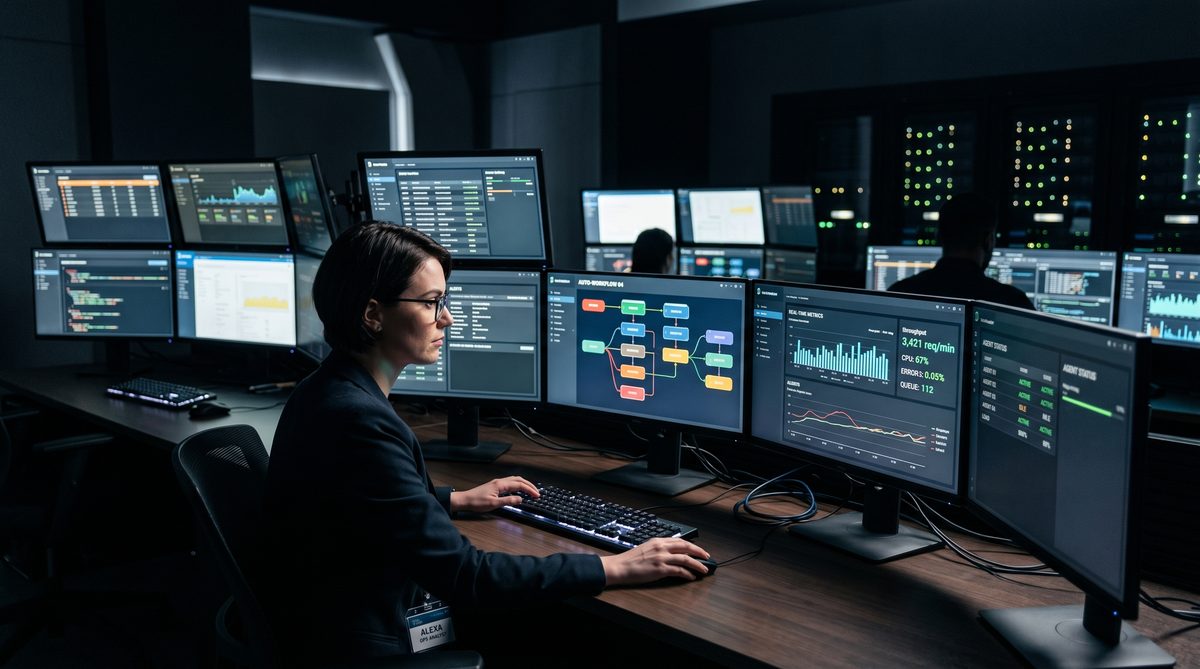
On the submarine, damage control meant isolating the casualty fast. You don't fix the leak while water's flooding the compartment—you seal the compartment first, stabilize the ship, then conduct repairs. Same with ecom support: stop the ticket flood before you optimize the response. AI agents now handle both WISMO and returns autonomously, validating policy, generating labels, triggering refunds, and updating inventory in real-time. The math is brutal in your favor. Payback in 30 days. Ticket reduction of 40%. Cost floor of $1 per resolution instead of $8.
Why WISMO and Returns Matter More Than You Think
The ticket pipeline is not your real problem. Bottleneck. A bottleneck is where flow constricts and cost multiplies. Your real problem is *where* the bottleneck sits. In most ecom operations, it's post-purchase. After the sale closes, customers ask about orders. They file returns. They want refunds. These are not premium support questions—they're repetitive, policy-driven, data-lookups wrapped in human theater.
Here's what the market data says:
- WISMO volume: 25–50% of all support tickets, scaling during peak season. - Return cost per ticket: $8–$14 once you include labor, shipping, and reconciliation. - Return processing time: 14 days average. Compressed to 48 hours with automation. - Automation payload: 60–75% of returns are fully automatable by policy. - ROI payback: 30 days, with 20–30% labor cost reduction immediately.
Systems beat slogans. A half-measure (hire a tier-1 support agent) keeps the system broken. Full measure: isolate the bottleneck and remove it with automation. What follows is the exact stack.
The 90-Day Bottleneck Audit
Before you buy anything, you must see the bottleneck. Most operators operate on conviction and hope. I ask for receipts.
Week 1: Measure the Baseline
Pull your support tickets from the past 90 days. Segment by category: 1. Order status (WISMO): `tracking`, `shipping delay`, `delivery confirmation`, `order status` 2. Returns: `return request`, `return label`, `refund status`, `exchange` 3. Everything else: product questions, billing, technical, account management.
Calculate: - WISMO volume: Count and percentage of total. - Return volume: Count and percentage of total. - Combined payload: Should be 40–55% of tickets. - Manual effort per ticket: Measure time from ticket open to resolution (TTRT). Returns are usually 20–45 minutes each (label generation, inventory check, accounting entry). WISMO is 5–12 minutes (lookup + response). - Cost per category: Multiply TTRT by fully-loaded agent cost ($25–$45/hour depending on experience and location).
Week 2–3: Map the Return Process
Walk the return flow end-to-end: - How many systems touch a return? (Helpdesk → shipping label tool → inventory system → accounting → payment processor → fraud check → email confirmation) - How many handoffs? (How many times does the ticket move between people or platforms?) - Where's the delay? (Waiting for system sync, waiting for approval, waiting for manual data entry)
Most stores find 6–8 touchpoints and 3–4 manual steps that could be automated.
Week 4: Calculate the Target
Target automation for WISMO and returns: 60–75% of volume. If you currently handle 2,000 tickets per month, 40% are WISMO/returns = 800 tickets. Automate 75% = 600 automated. Remaining 200 for exceptions (fraud, damaged goods, custom cases).
Target resolution cost: $1 per automated ticket (includes AI agent subscription cost, spread across volume). Current cost: $8–$12 per ticket. Savings: $1,400–$1,800 per 100 tickets automated.
The Implementation Stack: 90-Day Rollout
Phase 1 (Days 1–30): WISMO Automation
Tool choice: Gorgias AI Agent or Yuma AI WISMO Agent.
Gorgias is ecommerce-native, integrates with Shopify, BigCommerce, and custom stores, and connects to over 100 ecom tools. It learns your brand, product catalog, order history, and can pull real-time shipping data. The AI automatically answers order status questions, delivery updates, delay notifications, and can execute actions (edit subscriptions, update shipping address, trigger refunds on policy).
Setup (Week 1–2): 1. Connect your store to Gorgias AI. Give it read access to orders, shipping, customer data. 2. Upload order statuses and tracking feeds from your shipping provider (FedEx, UPS, DHL API integrations are standard). 3. Create answer templates for common WISMO scenarios: "Order is in transit", "Order delayed", "Delivery confirmation", "Return tracking". 4. Set the AI to field all WISMO queries. Route exceptions (fraud flags, complaints) to human agents. 5. Test on 100 tickets. Measure resolution rate and accuracy.
Cost (Gorgias AI Agent): $500–$2,000/month depending on ticket volume. At 500 WISMO tickets/month, you break even in 15–25 days.
Expected output (Week 3–4): - WISMO ticket volume reduced by 70–80%. - TTRT from 8 minutes to 30 seconds (AI response). - CSAT improves because customers get instant answers instead of waiting for human agent. - Agent bandwidth freed: 40–60 hours per month redirected to higher-value work (product feedback, account issues, churn prevention).
Phase 2 (Days 20–60): Returns Automation
Tool choice: Fini AI, ReturnGO, or Cahoot (returns-specific agents).
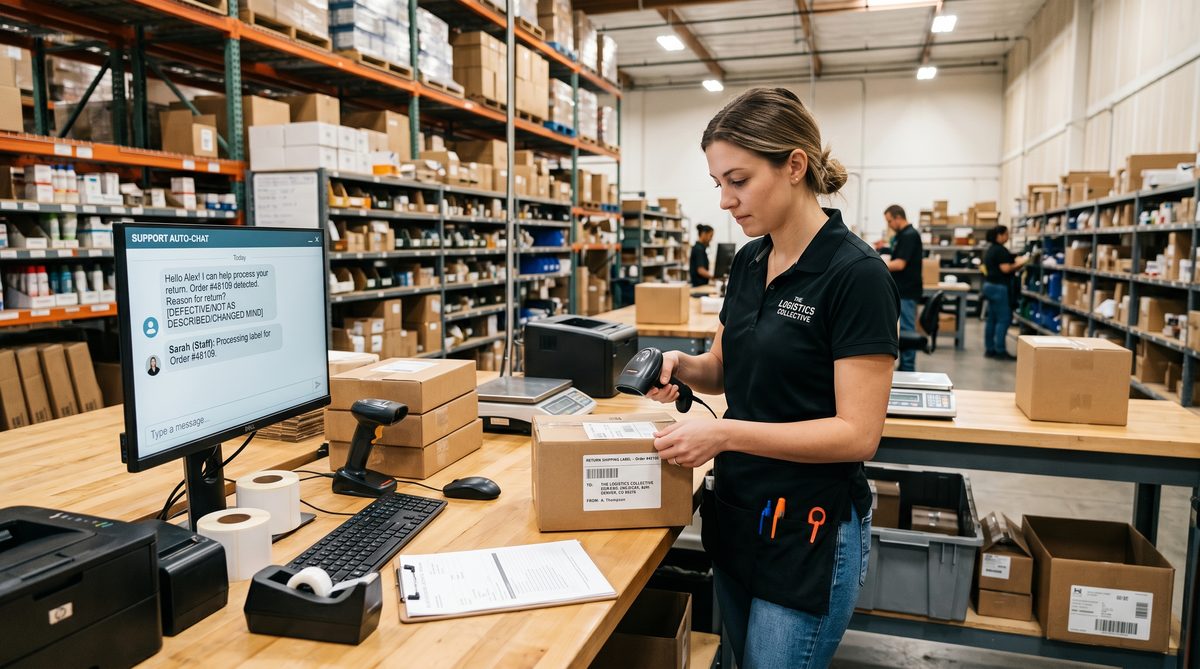
These platforms automate the full return workflow: policy validation, label generation, inventory update, refund triggering, and fraud check.
Setup (Week 3–4): 1. Connect your return management system (or helpdesk) to the AI platform. 2. Upload your return policy (conditions, timeframes, restocking fees, exceptions). 3. Feed order data and inventory data into the agent. 4. Connect to your payment processor (Stripe, PayPal) for instant refund authorization. 5. Create fraud rules (block returns from known refund-abusers, flag high-value items, check for return-to-sender flags). 6. Test on 50 return requests. Measure accuracy and speed.
Cost (Fini or similar): $1,500–$5,000/month depending on return volume and feature scope.
Expected output (Week 5–8): - Returns processed in 48 hours instead of 14 days. - Return processing cost drops from $10–$14 per ticket to $1–$2. - 60–75% of returns are fully automated (no human touch). - Inventory reconciliation happens in real-time instead of batch (reduces stockouts and overstock). - Agent time freed: 60–100 hours per month.
Phase 3 (Days 40–90): Integration and Optimization
Interconnect the stack: 1. WISMO agent feeds return requests directly to returns automation platform. 2. Returns agent feeds refund confirmation back to order management system. 3. Refund alerts trigger inventory recount and re-listing (if applicable). 4. Post-return surveys feed into customer data platform for churn prediction.
Monitor and adjust (Week 7–12): - Track accuracy: What % of automated decisions are correct? (Target: 95%+) - Track customer satisfaction: Did CSAT improve or decline? (Most see +5 to +10 point increase.) - Track cost per transaction: Are you hitting the $1 target? - Identify exceptions: Which return types are still failing automation? (Damaged goods, custom items, cross-border issues.) Tighten policy rules or escalation thresholds. - Reallocate agent time: What are your freed agents now doing? (Should be churn prevention, premium support, product feedback, not cost-cutting.)
The Cost Model: What You'll Actually Spend
Assume a 100-person ecommerce operation with 10,000 support tickets per month (typical for $5–$20M revenue brand).
| Item | Cost | |------|------| | WISMO AI agent (Gorgias) | $1,500/mo | | Returns AI agent (Fini) | $3,000/mo | | Integration platform (Make, Zapier) | $500/mo | | Total AI stack | $5,000/mo | | Current support cost (5 agents @ $40k/year) | $16,667/mo | | AI + humans (optimized team) | $13,500/mo (3 agents for exceptions + triage) | | Monthly savings | $3,167/mo ($38k/year) | | Payback period | 54 days |
Note: This assumes you redeploy the freed agents. If you cut headcount, payback is 30 days or less.
The Doctrine Connection
Systems beat slogans. Most ecom operators say "We need better customer service" and hire. Slogans. A real operator says "We have a WISMO bottleneck consuming 40% of capacity. Remove it with automation. Redeploy the bandwidth to retention and upsell." That's a system. It requires no slogans, no culture talks, no team building. It requires measurement, tooling, and discipline.
The submarine manual didn't say "communicate better" during damage control. It said: seal the compartment, stabilize the ship, then repair. The manual was the system. Your system should be: measure the bottleneck, isolate it, remove it, verify the result. Everything else is folklore.
FAQ
Q: Won't AI make mistakes on returns and lose us money?
AI accuracy on returns is 95–98% when trained on policy and fraud rules. The 2–5% error rate costs less than the current 100% manual handling cost. Fini reports zero hallucinations on 2M+ processed queries. Build in a human escalation rule for high-value returns or repeat customers—it's still cheaper than full automation.
Q: What if our return policy is complex (restocking fees, timeframes, conditions)?
Upload your policy as structured rules into the AI agent. If a return request doesn't fit the rules, it escalates to a human. Most stores find 60–75% of their volume fits clean rules; the rest are exceptions that require judgment anyway.
Q: How long until we see ROI?
Payback is 30–54 days at most ecommerce scales. You'll see ticket volume drop in Week 2 of WISMO automation. Returns processing time drops immediately. Cost per ticket drops by Week 4. By Day 90, you should have freed 100+ hours of agent capacity per month.
Q: Do we need to replace our helpdesk software?
No. Gorgias and Fini integrate with Zendesk, Freshdesk, Kustomer, and most major helpdesks. They sit on top of your existing stack. You don't rip and replace. You add a layer.
Q: What about customer trust? Will they accept AI responses?
Yes. Gorgias reports CSAT improvements of +5 to +10 points because customers get instant answers instead of waiting. The AI learns your tone and brand voice. Customers don't know they're talking to AI—they get their answer in 30 seconds instead of 8 hours. That's better service.