The Return Crisis Is a Margin Killer
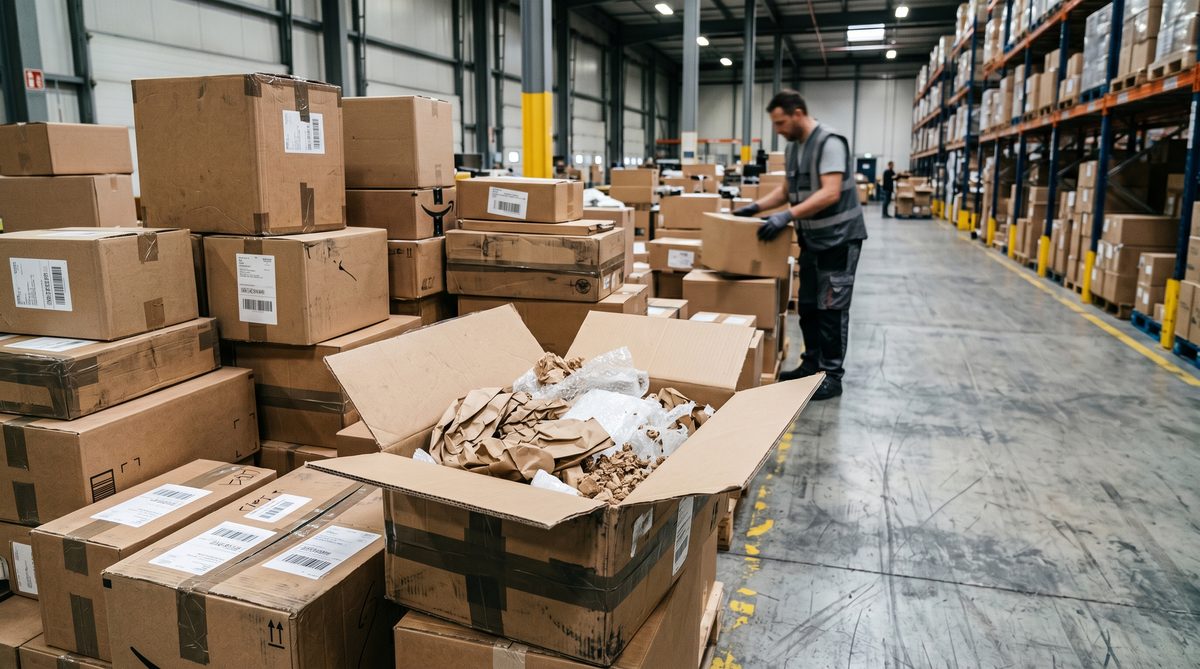
The average ecommerce return rate hit 20% in 2025. For apparel—the volume category for most ecom owner-operators—you're looking at 30-40% of units coming back. Clothing and shoes account for the largest share of returned online purchases, driven by sizing inconsistency and the bracketing behavior where 51% of Gen Z customers intentionally order multiple sizes to return all but one.
Each return costs you 20-65% of the item's original price when you account for return shipping ($8-12), processing ($5-8), inspection, restocking, and the fact that you're probably repricing returned goods at a haircut. On a $50 item, a single return costs $10-$32. Scale that across 100 returns per month and you're bleeding $1,200-$3,200 in margin every 30 days. Extrapolate that to annual: $14,400-$38,400 lost to returns alone.
The ecommerce industry processed $890 billion in returns in 2024. That number isn't random. It's a system problem—not a customer problem. Your product pages aren't eliminating uncertainty. Your sizing guidance lives in a static chart. Your recommendations don't account for body type, material stretch, or past fit feedback. You've left the margin killer unguarded.
AI-powered returns prevention isn't a nice-to-have. It's the difference between sellable and unsellable when you go to exit.
Why Due Diligence Targets Return Rates
When I was running due diligence on ecommerce acquisitions for capital-formation purposes, the first thing I looked at wasn't revenue. It wasn't traffic. It was the returns rate and the cost per return. Here's why: a business with 35% returns is unsellable because the unit economics are broken. The acquirer has to rebuild the entire customer acquisition and fulfillment engine. That's not a business you exit on—that's a bankruptcy scenario under new ownership.
A business with 12% returns? That's acquirable. That's a multiple play. That's a $2M-$5M revenue ecom brand suddenly worth 3-4x revenue instead of 1.5x because the margin math is defensible.
Returns aren't a customer service issue. They're a data visibility issue. You don't have enough signal to match the right product to the right customer the first time. AI fixes that by engineering certainty into the discovery process.
The AI Stack That Works
1. Sizing AI — The Highest ROI Play
True Fit has built a system on nearly 20 years of purchase and return data from over 600 billion transactions across 91,000 apparel and footwear brands. Retailers using their platform report up to 50% reduction in fit-related returns. Moosejaw, a $45M-plus retailer, reduced fit-related returns by 24% by targeting size bracketing specifically.
How it works: Sizing AI asks the customer 3-4 simple questions (height, weight, build, past fit experience, material preferences) and cross-references that data against the brand's historical returns data. If customers who look like them returned 35% of your size-medium products, the algorithm doesn't recommend medium. It flags the risk. It recommends large or small based on actual fit patterns, not guesswork.
For owner-operators, start here: integrate a sizing recommender into your product pages. Platforms like True Fit, Fit Finder, and similar tools plug directly into Shopify in 2-3 hours. Cost runs $500-$2,000 per month depending on transaction volume. ROI: prevent 20-30 returns per month and you've covered the subscription.
2. Product Matching and Visual Confirmation
One third of returns happen because the customer ordered the wrong product entirely. They saw the thumbnail, couldn't visualize how it actually fit on a body, and guessed wrong. AI product recommendation engines trained on your browsing and purchase history can surface the product that actually matches what the customer needs—not what they impulse-clicked on.
Google's Recommendations AI and Algolia both show proven case studies: retailers implementing AI-driven recommendations see 35% reduction in return rates alongside 15-30% conversion bumps. The mechanism: when customers see products that match their body type, past purchases, and style preferences, they buy higher-confidence and return lower-frequency.
Additionally, visual try-on tools (Meta's LookML, virtual fitting rooms) let customers see how a garment lands on a body shape similar to theirs. That eliminates the size/fit guess. Real capital risk is eliminated when customers have visual proof.
3. Expectation-Setting Copy
Your product description is a returns vector. "This shirt runs small. Fits true to size if you're between 180-200 lbs." That's not weasel language. That's data. That's certainty.
Analyze your past returns using Data's DNA—the framework for extracting every signal your customers leave behind. Pull your returns database. Filter by size, color, style. Ask: which size returned most? Which body-type segment? Which material complaints showed up in return notes? Turn that pattern recognition into product page copy that pre-filters wrong customers out.
Example: "92% of customers under 5'8" returned this fit—we recommend the petite cut instead." That's not negative. It's protective. It kills the wrong sale before it ships and prevents the return.
The Financial Math: $100K Annual Savings
Let's run the numbers for a $1.5M-$3M annual ecom brand selling primarily apparel:
Current State: - 500 units/month shipped - 20% return rate = 100 returns/month - Cost per return: $25 (average) - Annual return cost: $30,000 - Margin erosion: additional $15,000-$20,000 from repricing and operational drag - Total annual impact: $45,000-$50,000
After AI Implementation: - Sizing AI + product matching reduces returns by 35% - 100 returns → 65 returns/month - Cost per return: $20 (fewer wrong-size bracketing attempts) - Annual return cost: $15,600 - Margin recovery: $10,000 from better clearance pricing - Total annual impact: $25,600 - Net savings: $19,400-$24,400
Layer in the secondary benefit: customers who get the right product the first time show 40-50% higher lifetime value. If your average customer generates $400 in lifetime revenue and you're landing 20% higher-confidence purchases, that's an additional $2,000-$4,000 per month in repeat-purchase revenue.
Conservative estimate: $100K annual value recovery is achievable for a $2M+ ecom brand with 30%+ apparel concentration.
The Implementation Roadmap: 90 Days to Prevention
Month 1: Audit and Baseline - Export your returns data (last 12 months) - Segment by size, color, material, price point - Identify the 3-4 SKUs with highest return rates - Calculate your current cost per return with precision
Month 2: AI Stack Deployment - Select and integrate a sizing AI platform (True Fit, Fit Finder, or Fit Recommender) - Implement product recommendation engine (Algolia, Google Recommendations, or Shopify's Smart Recommendations) - Add visual sizing guides or virtual try-on to top 10 SKUs - Rewrite product descriptions using your returns data patterns
Month 3: Optimization and Measurement - Track return rates weekly across implemented categories - A/B test expectation-setting copy (product descriptions) - Measure repeat purchase rates for customers who used sizing AI - Document your ROI (payback period should be 90-120 days)
Doctrine Connection
Doctrine Connection: Due diligence is non-negotiable. You cannot run a sellable ecommerce business without knowing your returns data cold. Acquirers will find those numbers in your accounting. Returns rates, cost per return, bracketing behavior—these aren't nice metrics to track. They're the foundation of valuation. Operator-operators who obsess over returns data build businesses worth 3-4x the revenue multiple. Those who ignore returns margin are running a hobby with inventory risk.
FAQ
Q: What's the typical cost to implement an AI returns prevention system?
A: Sizing AI platforms run $500-$2,500/month depending on transaction volume. Product recommendation engines (Google, Algolia) start at $200-$500/month. Visual try-on tools add another $300-$1,000/month. Total: $1,000-$4,000/month for a full stack. Most owner-operators see ROI in 45-90 days.
Q: Can I start with just sizing AI, or do I need the full stack?
A: Start with sizing AI—it has the highest direct impact on returns. Product recommendations and visual confirmation are multipliers that compound the effect. But sizing AI alone cuts returns 20-30% and pays for itself immediately.
Q: How do I know if my return rate is actually a problem?
A: If it's above 20% for general merchandise or 25% for apparel, you're bleeding margin. Get your cost-per-return number (total returns cost ÷ total returns) and multiply by your monthly return volume. If that number is over $10,000/month, AI returns prevention is not optional—it's a capital-formation requirement.
Q: What happens to return rate after implementation?
A: Realistic expectation: 25-35% reduction in the first 90 days as customers use the new sizing guidance. By month 6, you see secondary effects (higher repeat purchase rates, larger baskets) that compound the margin recovery. Total value realized by month 12 typically reaches 35-40% return reduction.
Build the Margin Fortress
Ecommerce brands with high returns are unsellable. Ecommerce brands with low returns and defensible unit economics command acquisition multiples that change the game. AI sizing, product matching, and expectation-setting copy aren't optimization plays—they're valuation plays. They're how you move from "this business runs on me" to "this business runs on systems."
Your next 90 days: install the AI stack, measure the baseline, optimize. That work pays the acquirer's due diligence question before you even get to the term sheet.