Subtitle
Compress your proposal cycle by 80%. Research, strategy, scope, pricing, and a branded PDF—all in two days. Let AI draft. Let humans verify.Excerpt
Agencies lose deals because they move too slow. A prospect emails at 9 AM. Your competitor responds with a credible proposal by Wednesday. You're still in discovery calls. AI proposal engines flip that equation: research, customize, build, format, and present—all before your prospect changes their mind.Direct Answer: The Speed Multiplication
You're leaving money on the table right now.
Here's the math: 78% of prospects buy from the first company that responds. Not the best agency. The fastest one. A proposal sent within 24 hours after discovery closes is 35% faster to execution than a proposal that takes two weeks. For agencies, that's a tangible, measurable competitive advantage that compounds with every deal.
The problem isn't your talent. Your teams are sharp. The problem is your *process*. Traditional proposal development—research, strategy workshop, scope definition, pricing alignment, revision cycles, client review—takes 10 business days minimum. During those 10 days, your prospect talks to your faster competitor, gets skeptical about your responsiveness, or worse, finds someone cheaper.
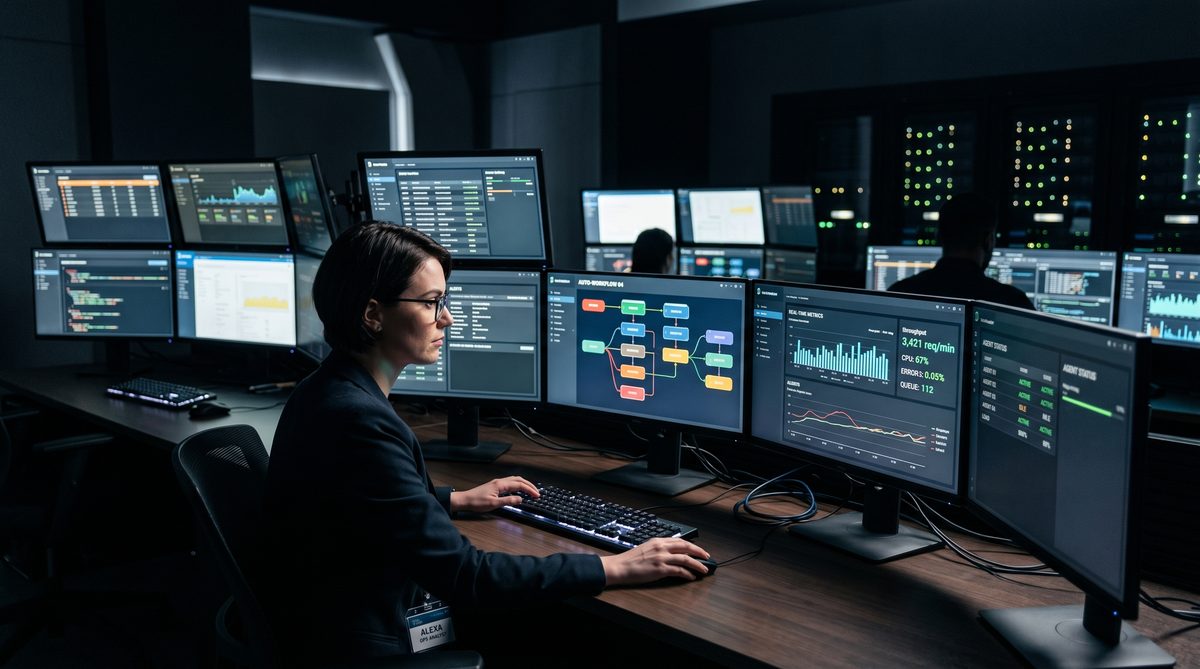
AI proposal engines solve this by automating the *drafting* bottleneck, not the *thinking* bottleneck. The system operates like this: humans make decisions; AI executes them fast. You hand the AI a brief, a discovery call transcript, and a client situation. The AI generates a first-draft strategy brief, scope of work, and pricing estimate within hours. You review, edit, and approve. Forty-eight hours later, a branded, signed PDF lands in your client's inbox.
The result: win faster, quote faster, close faster.
The Speed Problem: Why Agencies Lose Deals to Timeline Pressure
The 2-Week Proposal Tax
The standard agency proposal cycle costs you. Here's what it looks like:
- Day 1-2: Internal discovery call (who's in the room, what's the brief, what's the scope). - Day 3-5: Research, competitive analysis, benchmarking. - Day 6-7: Internal strategy workshop or call. - Day 8-9: Scope definition, statement of work, pricing model alignment. - Day 10-14: Revisions, internal approvals, formatting, final review, send.
That's two weeks of calendar time for a $50K–$250K contract. During week one, your prospect is interviewing two other agencies. By day nine, they've already made an emotional decision to go with whoever seemed most responsive and confident.
The data backs this: according to SalesWings research, responding within five minutes sees 100x higher conversion rates compared to responding after 30 minutes. A proposal isn't the same as a response, but the principle holds: speed signals confidence. Slow signals uncertainty.
The Velocity Metric That Matters
Here's what nobody talks about: *proposal velocity* is a sales accelerant. Research shows that deals where proposals are sent within 24 hours of discovery see 15–25% shorter sales cycles than proposals sent a week later. That compressed timeline compounds. A 15% shorter cycle means you close 4–5 more deals per year in the same headcount.
For a $5M-revenue agency, that's $200K–$500K in additional annual revenue from pure timing. No new hires. No new sales team. Just a system that operates faster than your competitors.
The problem: most agencies treat proposal writing like a report. Thorough, exhaustive, risk-averse. But clients don't want perfect on day 14. They want *credible* on day two.
The 5-Step AI Proposal System: Building Your Engine
The system has five sequential gates. Each gate has human decision-making at the top. AI executes below.
Step 1: The Raw Brief (2–4 Hours)
You conduct a discovery call or, better yet, an alignment meeting with your prospect. The goal: extract what they want, what they're afraid of, what success looks like, and what their constraints are (timeline, budget, team structure, competitive pressure).
During that call, record audio and transcribe it. Capture the brief in a one-page memo: client situation, problem statement, success metrics, scope boundaries, timeline, and approximate budget range.
The AI move: Feed the transcript and memo to Claude (or another large language model) with a prompt like this:
> "Read this discovery transcript and brief. Generate a strategic analysis of this client's situation covering: (1) their core business problem, (2) the competitive pressure they're facing, (3) the likely decision drivers, (4) our differentiation angle, (5) the specific outcomes they need to see by month three."
Result: In 10 minutes, you have a structured strategic analysis. Not gospel. But a starting point. Your strategist reviews it in 15 minutes. They add two or three critical insights the AI missed. Send it back to the client (optional) as a "strategic brief" to show you've listened and that you understand their situation deeper than the competitor.
Time cost: 30 minutes of human time. AI handles the 2–4 hour analytical legwork.
Step 2: The Scope Architecture (4–6 Hours)
Now you know what they need. Define *how* you'll deliver it.
Your scope needs three layers: the Strategic Layer (what are we trying to change?), the Tactical Layer (what work packages get us there?), and the Delivery Layer (who does what, when, with what frequency?).
The AI move: Feed Claude your strategic analysis, your agency's service offerings, and your scope template. Prompt:
> "Based on this strategic analysis, outline a scope of work for a 12-week engagement that addresses the client's core problems. Structure it as: Phase 1 (Weeks 1–4, Foundation), Phase 2 (Weeks 5–8, Execution), Phase 3 (Weeks 9–12, Optimization). For each phase, list the deliverables, the team members involved, and the client time investment required."
Result: A first-draft scope. Your operations person or account leader spends 45 minutes reviewing it, making sure it's realistic, matching your team's actual capacity and your service delivery model.
Time cost: 1 hour of human time. AI generates the scaffolding.
Step 3: The Pricing Model (1–2 Hours)
This is where many agencies choke. Pricing is psychology, not arithmetic.
You have three levers: project fee, retainer, or outcome-based. Pick the one that aligns with your risk tolerance and the client's budget constraints. Your AI engine shouldn't pick this. You should. But AI can generate the math.
The AI move: Feed Claude your scope, your billable rates (or target margins), and your pricing philosophy. Prompt:
> "Generate three pricing options for this 12-week engagement: (1) fixed-fee project with a 15% contingency buffer, (2) monthly retainer structure, (3) outcome-based model where 30% is held at risk pending agreed KPIs. Show the math for each."
Result: Three pricing models with transparent math underneath. Your finance person or founder spends 20 minutes sanity-checking them against your profitability targets and past deals. Adjust as needed. Pick one.
Time cost: 30 minutes of human time. AI generates the financial scenarios.
Step 4: The Proposal Narrative (2–3 Hours)
Now you write the story. The proposal is not a document. It's a sales artifact. It needs to:
1. Validate their problem ("You're facing X because of Y"). 2. Explain your approach ("We solve Y differently because of Z"). 3. Showcase outcomes ("Clients in your situation see A, B, and C"). 4. Establish trust ("Here's who we are, what we've built, who we've worked with"). 5. Remove friction ("Here's the process, here's the timeline, here's what we need from you").
The AI move: Use Claude to draft the proposal narrative. Prompt:
> "Write a professional proposal narrative for a creative services agency. The client is [industry]. Their problem is [problem]. Our approach is [approach]. Use this structure: (1) Executive Summary (150 words), (2) The Situation (200 words), (3) Our Approach & Differentiation (300 words), (4) Expected Outcomes & Timeline (250 words), (5) Investment & Next Steps (150 words). Use active voice, specific examples, and credible claims backed by evidence."
Result: A full draft proposal. Your strategist or account director spends 1 hour editing, adding your voice, replacing generic examples with specific client wins, and tightening the language to match your tone.
Time cost: 1.5 hours of human time. AI generates 80% of the copy.
Step 5: The Branded Packaging & Final Review (2–3 Hours)
Now format it. Your brand template, your logo, your case studies, your team bios. This is where design meets sales.
The AI move: Generate the layout structure with Claude or use a design tool like Figma or Canva to build the template. If your proposal is a PDF, use a tool like Beautiful.ai or Gamma that lets you input structured content and automatically generates a branded output. If it's interactive, use Webflow or Framer.
The final 1-hour gate: Your owner or founder reads the entire proposal end-to-end. This is a *human* gate. They're asking: Does this feel like us? Would *I* sign this if I were the client? Does it answer all the questions we raised in discovery? Is the pricing defensible? Is there anything that contradicts our brand or past work?
Edits get made. Final PDFs get generated. Proposal is ready to send.
Time cost: 2 hours of human time. AI and automation handle the rest.
The Total Time Calculation
Let's do the math on your 48-hour proposal:
| Step | Human Time | AI Time | Total | |------|-----------|---------|-------| | Strategic Brief | 30 min | 10 min | 40 min | | Scope Architecture | 1 hour | 30 min | 1.5 hours | | Pricing | 30 min | 20 min | 50 min | | Narrative Draft | 1.5 hours | 20 min | 1.7 hours | | Design & Final Review | 2 hours | 1.5 hours | 3.5 hours | | TOTAL | 5.5 hours | 2 hours | 7.5 hours |
That's 7.5 hours of elapsed time. Compressed into a 48-hour window, it's entirely realistic. One strategist, one ops person, one designer. Day one: brief, scope, pricing, first draft of narrative. Day two: narrative edit, design, final review, send.
By comparison, the traditional model is 14 days of calendar time with multiple revision cycles and internal approvals. You've compressed it by 80%.
The Tool Stack: What You Actually Use
You don't need seventeen tools. You need five.
1. Claude (Anthropic) for Strategic Drafting and Narrative
This is the workhorse. Claude's large context window means you can dump discovery transcripts, past proposals, your service menu, pricing philosophy—all into one prompt—and it generates clean, structured first drafts. It runs at about $0.04 per 1000 output tokens, so a full proposal draft costs $0.50–$2.00 in compute.Use: Strategic briefs, scope outlines, proposal narratives, pricing scenarios, FAQ sections, objection handling scripts.
Where to access: Claude API or Claude.ai with a paid subscription.
2. GHL (Go High Level) or Zapier for Automation & Integration
These tools stitch your systems together. When a prospect submits a discovery form on your website, GHL or Zapier automatically:1. Triggers a calendar invite to the discovery call. 2. Records the call (with Otter.ai or similar). 3. Transcribes it. 4. Feeds the transcript to Claude via API. 5. Collects the output in a shared folder. 6. Notifies your strategist.
This removes manual handoff friction. The information flows without touching email.
Use: GHL is particularly strong for service-based agencies because it has built-in CRM, calendar, and email sequences. Zapier is the middleware if you're already using other tools (HubSpot, Asana, Slack).
3. Otter.ai (or Microsoft Teams transcription) for Call Recording & Transcription
You need a reliable, accurate transcript of your discovery call. Otter.ai integrates with Zoom, Google Meet, and Teams. It transcribes in real-time and makes the transcript searchable within 10 minutes.Cost: $10–$30/month depending on the plan.
Use: Record every discovery call. Transcribe it. Feed to Claude.
4. Beautiful.ai or Gamma for Branded PDF Generation
Claude generates prose. You need a visual container. Beautiful.ai and Gamma both have "content-to-presentation" features where you feed structured content and the tool automatically designs it with your brand template.Alternatively, use Canva's API to programmatically generate PDFs if you already have a Canva brand kit set up.
Cost: Beautiful.ai ($15–$30/month for teams), Gamma ($10–$30/month).
Use: Turn the narrative draft into a branded PDF in under an hour.
5. Your CRM (HubSpot, Pipedrive, or similar) for Tracking & Accountability
Once the proposal is sent, track it. Did they open it? How long did they spend on it? Did they share it internally? A proposal tracking feature (built into HubSpot, Proposify, or PandaDoc) tells you whether the client is seriously considering you or whether you're one of three agencies they're kicking tires on.Use: Proposal sent → Tracked → Open rate → Time spent → Forwarded internally → Follow-up conversation.
The Stack Cost Math
Per proposal (one-time cost):
- Claude API: $1–$2 - GHL/Zapier automation: $0 (amortized in monthly subscription) - Otter.ai transcription: $0.10–$0.30 (per-usage cost) - Beautiful.ai/Gamma: $0 (amortized in monthly subscription) - Your human time: Billable (this is the real cost)
Monthly recurring: $30–$80 for software (GHL, Beautiful.ai, Otter). You amortize it across 10 proposals per month = $3–$8 per proposal in software cost.
Compare that to the traditional cost: 14 days of billable time (5 people x 40% allocation = 2 FTE-weeks) at $75/hour = $6,000 per proposal in labor.
You're saving roughly $5,900 in labor cost per proposal. Or, you're redirecting that labor from proposal writing to closing, onboarding, or actual delivery.
The ROI Math: What This Actually Buys You
Let's run the numbers for a mid-market agency doing $3M revenue, $150K average deal size, 20 closes per year.
Current State (2-Week Proposal Cycle)
- Proposals sent: 40/year (2:1 send-to-close ratio) - Average time per proposal: 14 days calendar time, 5 FTE-days of labor - Win rate: 50% (industry standard) - Close rate: 20 deals/year - Average ARR per client: $150K - Total ARR: $3M
AI-Accelerated State (48-Hour Proposal Cycle)
Because you're faster, two things happen:
1. Win rate improves: You're responding first more often. Research shows teams with rapid response win 35% of the time versus 25% for slower teams. Not a 10-point improvement; a 40% *relative* improvement in win rate. Let's be conservative and assume a 5-point absolute improvement: 55% win rate (up from 50%).
2. Volume increases: You're not spending 40 hours per proposal. You're spending 5.5 hours. That means your team can write 7–8x more proposals in the same labor footprint. Proposals sent: 80/year (instead of 40).
New math: - Proposals sent: 80/year - Win rate: 55% (up from 50%) - Closes: 44 deals/year (up from 20) - ARR: $6.6M (up from $3M) - Incremental ARR: $3.6M
The Labor Shift
The same team that used to spend 14 days per proposal now spends 1 day per proposal. Instead of writing 40 proposals/year and closing 20, they're writing 80 proposals/year and closing 44. They're doing more work, but the work is higher-value (more focused on discovery, strategy, and negotiation, less on admin).
You can:
1. Use the labor savings to hire a second salesperson (cost: $120K all-in). They bring in $3.6M incremental ARR. Payback: 1 month. 2. Keep the same team and grow the agency 2.2x without adding headcount (revenue scales; labor stays flat). 3. Some hybrid: Use labor savings to hire a strategist (better proposals) and an account manager (better delivery, higher retention).
The FOCUS Strategy: Finding Your Proposal Advantage
The FOCUS Strategy—Find your unique market position—applies directly here.
Most agencies compete on portfolio and team credentials. "Look at our case studies. Look at our team." But in a 48-hour proposal environment, *credentials don't move the needle*. What moves the needle is specificity and speed.
When your prospect sees your proposal in 48 hours instead of two weeks, they infer three things:
1. You've got your process dialed. You're not scrambling. You're operating a system. 2. You're hungry to work with them. Speed signals priority. Slow signals commodity. 3. You understand their problem. The fact that you could turn around a credible proposal in two days means you probably didn't need a week of research. You understood the problem already.
That's your FOCUS advantage: Competence beats credentials. A proposal that says "We understand your situation, we've solved it before, here's how we do it" lands harder than a 40-page case study book.
This changes your positioning. You're not "The Agency With the Best Case Studies." You're "The Agency That Ships." Speed becomes your brand advantage, not an operational detail.
Doctrine Connection: Competence Beats Credentials
Systems beat slogans. You know what your competitor's deck says? "We're agile. We're fast. We're results-driven." Every agency says that. But you're not *saying* you're fast. You're demonstrating it. Your proposal in 48 hours is proof. That's the difference between words and receipts.**
Your ICP—owner-operators running agencies, service businesses, consulting firms—they get this. They've built their own businesses by *operating*, not by polishing credentials. They respect speed and systems over pedigree. So when you show them that your proposal process is a system (AI-driven research, human-reviewed strategy, branded packaging, same 48-hour turnaround every time), they see a business that's going to deliver the way they operate.
That's competence. That's what closes deals.
FAQ: The Questions That Matter
Q: Won't our proposal lose the human touch if AI is writing it?
A: No, because humans are making all the decisions. AI is the drafting tool, not the strategist. You're setting the strategy, the positioning, the scope, and the pricing. AI is writing the words and doing the research legwork. Your strategist spends the same time thinking; they spend less time typing. The client gets a better proposal because your best strategist isn't burned out on writing 40 proposals a year; they're focused on the strategy itself.
Q: How much training does our team need to use these tools?
A: Less than you'd think. Claude is a text box. GHL is a point-and-click workflow builder. Beautiful.ai is drag-and-drop. Your team needs a one-hour walkthrough on the process flow, and they're productive. The bottleneck isn't the tools; it's the agreement on the process itself: *Who writes the brief? Who approves the strategy? Who makes the pricing decision? Who does final review?* Once you've documented that, the tools are just the enablers.
Q: What if the client wants to see different scenarios or revisions?
A: Here's the upgrade: once you've sent the initial proposal, revisions are even faster. Client says, "Can you show us a higher-service-tier option?" You feed that feedback to Claude along with the original brief. Five minutes later, you've got a revised proposal. Client approval: 30 minutes. New PDF: 15 minutes. Sent. This is where the compounding speed advantage kicks in. You can do three revision cycles in the time your competitor does one.
The Operator's Edge
I learned this in the Navy. Under pressure, the team that can execute a procedure fastest while maintaining quality wins. Nuclear power plants operate on checklists and systems because the stakes are that high. You can't afford to get it wrong. But you also can't afford to be slow.
Agencies operate the same way. You can't afford to send a bad proposal. You also can't afford to send it next month.
The AI proposal engine is a system. It's not sexy. It's not magic. It's just faster. But in sales, faster beats better. Faster beats cheaper. Faster beats polished.
Send the proposal in 48 hours. The prospect still makes their decision after two weeks of consideration. But now you're sitting at the table on day two, not day fourteen. You're the first voice they hear. You're the default option. By the time your competitor's proposal arrives, you've already moved the conversation forward.
That's the unfair advantage.
What's Next
1. Audit your current proposal cycle: Start a spreadsheet. For your last 10 proposals, how many calendar days from discovery call to send? Where are the bottlenecks? Almost always, they're approval gates, not quality checks.
2. Pick one tool, not all five: Start with Claude for narrative drafting. Implement that in two weeks. Once your team is comfortable, add GHL for automation or Otter for transcription. Layered implementation > Big Bang.
3. Define your approval gate: Decide right now: who has final authority to send a proposal? Make it one person (usually the owner or lead strategist). Everything else is draft status. This single decision cuts proposal cycles by 40%.
4. Measure the uplift: Track these metrics for 90 days: calendar days from discovery to send, number of proposals sent per month, win rate, time from send to close. You'll see the compound effect within a quarter.
The agencies that win in the next two years aren't the ones with the best portfolios. They're the ones that operate like businesses, not like creative studios. They have systems. They ship fast. They close deals.
Be that agency.
*Sources:* - SalesWings: The Impact of Speed-of-Response on your Deal Closing Rate - Prospeo: Sales Cycle Length Benchmarks & How to Shorten It - Claude AI Agents | Anthropic