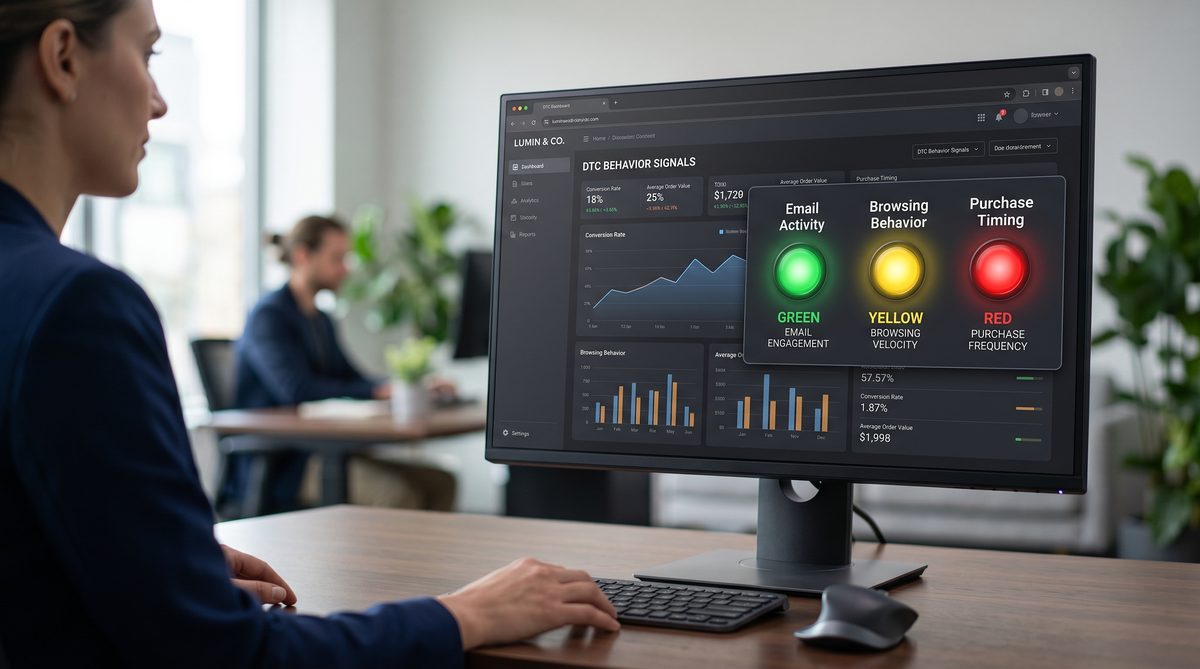
Three workflows. Ninety days to thirty. That’s the math. Consulting sales cycles drag because of three bottlenecks — discovery prep, proposal drafting, and stakeholder alignment — and almost every independent consultant handles all three manually. Workflow #1 uses Clay plus Claude to build a prospect intelligence brief in 25 minutes instead of three hours. Workflow #2 uses PandaDoc AI to produce a scoped, priced proposal in 45 minutes instead of two days. Workflow #3 uses Loom plus a structured AI follow-up sequence to move a five-person buying committee from “interested” to “signed” without a single wasted calendar slot. Run all three and your cycle compresses. That’s not a theory. It’s the math of removing three known bottlenecks.
Where Consulting Cycles Actually Slow Down
The average B2B professional services deal closes in approximately 70 to 105 days. That’s not the cycle you think you’re running — it’s the cycle the data shows after accounting for discovery delays, proposal rewrites, and stalled internal approvals. B2B Sales Training benchmarks put the median at 84 days across all B2B, with professional services landing at the longer end of that range.
Three bottlenecks cause most of the bleeding.
Bottleneck #1: Under-prepared discovery. RAIN Group research on 528 buyers found that 71% say “leading a thorough discovery of my concerns, wants, and needs” is the top factor influencing their purchase decision — yet only about 25% of sellers lead effective discovery. The RAIN Group Center for Sales Research documented a 45-point gap between what buyers want from discovery and what they actually get. When discovery is thin, proposals miss the mark, and the cycle stretches to accommodate another round of questions.
Bottleneck #2: Proposal lag. Most consultants draft proposals manually — pulling from old decks, rewriting scope sections, reformatting pricing. A proposal that should take four hours takes two to three days. Salesforce’s State of Sales research found that sales professionals spend only 28% of their week actually selling. The rest is administrative overhead, and proposal drafting is one of the heaviest offenders. The Salesforce State of Sales report confirms this pattern across thousands of B2B sellers.
Bottleneck #3: Stakeholder alignment friction. B2B consulting deals rarely have one decision-maker. The typical mid-market engagement involves three to six stakeholders who need to align before a contract gets signed. Without a structured alignment process, each stakeholder gets a slightly different version of the pitch. That discrepancy generates new objections, which generates more calls, which adds weeks to the close.
Those three bottlenecks are predictable. Predictable means solvable. And solvable in a systematic way — which is exactly what the FOCUS Strategy is built for.
The FOCUS Strategy and Cycle Compression
The FOCUS Strategy isn’t about working faster. It’s about focused positioning plus compounding value through systems that operate independently of your effort. In consulting sales, that means building three AI-driven workflows that run the same way every time, regardless of whether the prospect is a $50K engagement or a $500K retainer.
The Owner-Operator Frame applies here directly: if you’re still doing these three tasks manually, you are the bottleneck. The cycle isn’t slow because the prospect is slow. The cycle is slow because the system hasn’t been built yet. Build it once. Run it every time.
I saw the same dynamic at the Mastermind Investment Club. Sophisticated investors won’t tolerate slow due diligence. They’ve seen too many deals. When a deal sponsor shows up to a meeting unprepared — without a tightly scoped brief, without a clear ROI case, without a structured follow-up — they don’t get a second chance. The investment goes to someone who did the work. Consulting is identical. The prospect with a $200K budget and three competing proposals on the table isn’t waiting for your handcrafted deck. They’re choosing whoever moves fastest and clearest. That’s a systems problem, not a talent problem.
Internal link: The Owner-Operator Trap: Why You Are the Bottleneck
Workflow #1: AI-Assisted Discovery Prep
Discovery prep is where most consultants show up generic and wonder why the prospect doesn’t feel seen. The fix is a 25-minute pre-call intelligence brief built by a two-tool stack before you ever get on a call.
The stack:
- Clay (clay.com) — pulls company data, job changes, LinkedIn activity, funding signals, and intent data from 150+ sources into a single enriched record. Used by 15,000+ companies including OpenAI and Anthropic for GTM intelligence.
- Claude or ChatGPT-4o — takes the enriched Clay export and generates a structured discovery brief.
- Crystal Knows (crystalknows.com) — adds DISC personality profile on each stakeholder so your discovery questions match how they process information.
The prompt sequence (run this in Claude or GPT-4o):
Prompt 1 — Company context: “Here is the enriched company record for [Company Name]: [paste Clay export]. You are a management consultant preparing for a 45-minute discovery call. Write a 300-word company context brief covering: current strategic priorities, recent organizational changes, likely pain points based on industry and company size, and three questions I should NOT ask because the answers are already in this data.”
Prompt 2 — Discovery question set: “Based on the context brief above, write 12 targeted discovery questions. Organize them: 4 questions about business problems, 4 questions about the cost of the problem, 4 questions about desired outcomes. Do not ask questions that can be answered with ‘yes’ or ‘no’. Gong Labs data shows that 11 to 14 targeted questions correlates with the highest discovery call win rates — stay in that range.”
Prompt 3 — Stakeholder communication style (after Crystal Knows pull): “[Name] at [Company] has a [DISC type] personality profile. Adjust my discovery question delivery for this profile: tell me which questions to lead with, which to save, and what language patterns will land best.”
Time saved: Manual discovery prep averages 2.5 to 3 hours for an experienced consultant. This stack does it in 20 to 25 minutes. Over 20 deals a year, that’s 40 to 50 hours returned to the operator. More important than the time: the quality of discovery goes up. Better discovery means a tighter proposal scope. Tighter scope means fewer revision cycles. Fewer revisions means a faster close.
Cost: Clay starts at approximately $149/month for individual plans. Crystal Knows has a free tier for individual profiles. Claude Pro runs $20/month. Total investment: under $180/month to eliminate one of the three biggest cycle killers.
Internal link: The Cold Email System That Books 30 Calls/Month — the same Clay stack applies to inbound qualification prep, not just outbound.
Workflow #2: AI-Assisted Proposal Drafting
Proposals fail for two reasons. Either they take too long to produce — so the proposal arrives three days after the discovery call when the prospect’s attention has moved on — or they’re generic, because the consultant pulled from an old template and swapped the company name. Both problems are fixable with one workflow.
The stack:
- PandaDoc (pandadoc.com) — proposal software with a native AI drafting layer. Pulls from your library of previous proposals, generates a first draft scoped to the discovery inputs, and handles e-signature natively.
- Proposify (proposify.com) — alternative to PandaDoc with a similar AI feature set. Use Proposify if your deals involve more complex pricing tables or multi-service line scoping.
- Claude or GPT-4o — used before PandaDoc to produce the scope narrative and ROI case, then pasted into the proposal template.
The workflow:
- Immediately after the discovery call, while notes are fresh, run this prompt in Claude: “Here are my discovery call notes: [paste notes]. Write a consulting proposal scope section that: (1) names the three business problems the prospect confirmed, (2) defines the engagement deliverables in specific terms, (3) quantifies the ROI case using the numbers the prospect gave me during the call, (4) states a 90-day success metric. Write this for a sophisticated buyer who has seen dozens of proposals. No filler. No generalities. Every sentence earns its place.” - Take the scope narrative and drop it into your PandaDoc template. The AI layer in PandaDoc will format it, add your pricing structure, and generate the document in under 10 minutes. - Set the proposal to expire in 72 hours. This is not a pressure tactic — it’s a signal that your work product has a value cycle. Proposals that sit open indefinitely create the decision paralysis that extends cycles.
Time saved: Manual proposal drafting for a $75K-$150K consulting engagement typically runs 6 to 12 hours across multiple sessions. This workflow delivers a first-draft proposal in 45 to 60 minutes. Same day as discovery. That alone collapses days from the cycle.
RAIN Group’s research found that only 16% of sellers are effective at making a clear ROI case. The Claude prompt above forces the ROI case because it requires the numbers the prospect gave you. If you can’t fill in that section, you didn’t ask the right questions in discovery. The two workflows check each other.
Workflow #3: Async Stakeholder Alignment
This is the workflow most consultants skip entirely. They send the proposal, get “we’re reviewing internally,” and then wait. Waiting is the cycle killer. The alternative is an async-first alignment sequence that moves the buying committee without requiring everyone on a call at once.
The stack:
- Loom (loom.com) — async video for proposal walk-throughs. A 7-minute Loom explaining the proposal is more effective than a PDF alone, because it puts your voice and intent behind the document. Each stakeholder watches it on their own schedule.
- Claude or GPT-4o — generates a personalized stakeholder summary for each member of the buying committee, derived from the proposal and the Crystal Knows profile.
- Your email sequence tool (Apollo, HubSpot, or direct Gmail) — automated three-touch follow-up sequence over 10 days.
The workflow:
- Record a 6 to 8 minute Loom walking through the proposal. Specifically address each stakeholder by name and title in the recording: “For [CFO Name], the ROI section on page 4 answers the budget question directly.” This personalizes a single recording for multiple viewers. - Run this prompt for each stakeholder: “[Name] is the [Title] at [Company]. Their DISC profile is [type]. Their primary concern in any purchasing decision is [concern from discovery]. Write a 90-word email that sends them the Loom link, addresses their specific concern in one sentence, and makes it easy for them to say yes or raise an objection. No pleasantries. No ‘I hope this finds you well.’” - Send personalized stakeholder emails within 4 hours of delivering the proposal. Day 5: one-line check-in. Day 10: a “closing or withdrawing” note that surfaces the decision without pressure.
Why this works: Gong Labs analysis of over 519,000 B2B discovery and sales calls found that discussions involving 3 to 4 customer problems correlate with the highest closing rates. Gong’s discovery call research also shows that top performers maintain a 46% talk / 54% listen ratio — meaning they let the buyer do more talking. The async workflow recreates that dynamic: the Loom talks, then the sequence listens by watching who engages and who doesn’t. Stakeholders who don’t open emails or watch the Loom are not moving the deal forward. That’s information. Act on it.
Internal link: The 7 AI Workflows Every Service Business Should Be Running — this stakeholder alignment stack is one component of the broader service-business automation framework.
The New Operator Role After the Three Workflows
Run these three workflows and your role shifts. You stop being a manual document producer and become a judgment provider. The system handles intelligence gathering, document production, and multi-stakeholder communication. You handle the decisions that require a person: reading the room on a discovery call, deciding whether to hold firm on scope or flex on pricing, choosing when to call instead of Loom.
That’s the FOCUS Strategy in action. Focused positioning means you’re not competing on hustle — you’re competing on preparation and speed. Value compounding happens because every deal closes faster, which means more capacity for the next deal, which means higher revenue per hour of your actual attention. The compounding effect of a 60-day cycle reduction isn’t just time saved. It’s deals added.
Consider the math. If you run 10 consulting engagements per year at an average of $100K each, and you compress the average sales cycle from 90 days to 30, you’re not just getting to revenue faster on each deal. You’re potentially running more deals in parallel because the pipeline clears faster. Even a modest 15% increase in annual deal count from cycle compression — 11.5 deals instead of 10 — adds $150K in annual revenue without adding a single hour of selling time.
The operators who figure this out first don’t just win more. They price higher, because speed and certainty are what sophisticated buyers pay a premium for. Slow proposals signal slow delivery. Fast, specific, scoped proposals signal operational competence — which is exactly what a consulting client is buying.
Doctrine Connection: This article reinforces Core Belief #5: Systems beat slogans. The three-workflow stack doesn’t require more effort, better networking, or a bigger LinkedIn following. It requires building the system once and running it with discipline. Compress the cycle, compress the time-to-revenue. That’s not a slogan. That’s the math.
FAQ
How long does it take to set up these three workflows?
Realistically, one focused day for all three. Clay takes about 2 hours to configure with your ideal client profile. PandaDoc or Proposify takes 3 to 4 hours to build your template library. The Loom and email sequence take 1 hour to set up the first time. Total: 6 to 7 hours of build work that you never repeat. After that, each deal runs through the system in under 2 hours of prep time.
Does this work for solo consultants or only for consulting firms?
It works better for solos. A solo consultant running these three workflows operates with the intelligence and responsiveness of a much larger firm. The disadvantage of being a solo — no support staff, no dedicated proposal team — disappears when the system replaces those functions. Firms benefit too, but the ROI is highest for independents.
What if my clients are in a regulated industry that restricts what data I can run through AI tools?
Use Claude’s API with your own private instance, or configure ChatGPT Enterprise with data controls. For Clay, strip personally identifiable information before pasting into AI prompts — you don’t need individual contact data to generate a company context brief. Work with publicly available signals: funding, org changes, press releases, job postings. That’s enough for a strong discovery brief without touching regulated data.
My clients say they need 60 to 90 days to make decisions. Can AI really change that?
AI doesn’t change your client’s internal procurement process. What it changes is how much of that 60 to 90 days is wasted on your side. If you’re three days late delivering a proposal, that’s three days added to the cycle with zero benefit to the client. If your proposal requires two rounds of revision because discovery was thin, that’s 10 to 20 days added. The three workflows eliminate your side of the drag. The client’s internal timeline is theirs. Your job is to make sure you’re never the bottleneck.
What’s the best entry point — which workflow should I build first?
Build Workflow #2 first. Proposal drafting has the highest time cost per deal and the most visible impact on the prospect’s first impression. Get that running. Then Workflow #1, because better discovery feeds better proposals. Workflow #3 last, because alignment issues are only worth solving for well-qualified prospects that your improved discovery has already vetted. Build in that order.