
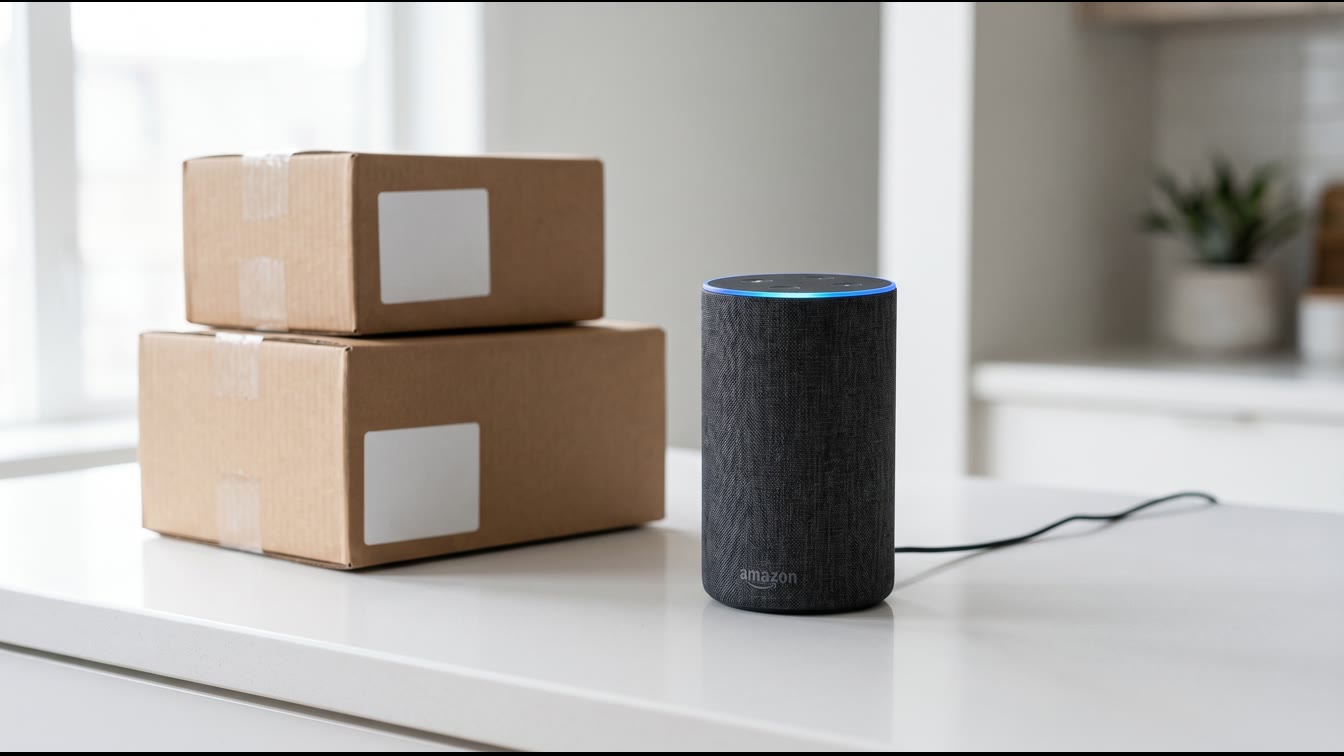
The Amazon Alexa Shopping Launch Is the Biggest Threat to Ecom Brands That Don't Own Their Customer
Amazon just weaponized its recommendation engine. Alexa for Shopping—live as of May 2026—puts an AI agent between your listing and your customer's purchase decision. Auto-Buy. Buy for Me. Cross-retailer purchasing. Three features that reframe who really owns the sale.
Here's the tactical reality: Brands without first-party data and direct customer relationships are invisible to this agent. The math is brutal. Alexa's algorithm decides. Your product either surfaces or doesn't. Your customer either exists in your CRM or they're a stranger to you.
This isn't hyperbole. This is the new artillery position in ecommerce warfare.
The Firing Line: How Alexa Moves Past Passive Recommendation
Alexa for Shopping combines three operational capabilities:
Auto-Buy: Customers set target prices. Alexa monitors inventory and price drops continuously. When the threshold hits, the system purchases without human intervention. No friction. No re-engagement loop. The sale happens in your sleep.
Buy for Me: Alexa searches beyond Amazon's gates—third-party retailers included. You tell the agent what you want. Format doesn't matter. It handles comparison, sourcing, and checkout across multiple marketplaces simultaneously. This isn't product discovery anymore. This is autonomous commerce.
Cross-Retailer Integration: Agentic commerce is no longer theoretical. McKinsey projects it will drive $3-5 trillion globally by 2030, with AI agents capturing 10-20% of e-commerce revenue. When Alexa can buy from your competitor with the same ease as your storefront, your competitive moat evaporates.
The pattern is familiar to anyone who's studied platform consolidation. Amazon controls three things: the interface, the algorithm, and the customer relationship. Your brand controls none of them.
The Compartmentalization Problem: Who Owns the Relationship?
I spent two decades watching capital formation decisions at the Angel Investors Network. The clearest pattern: whoever controls the relationship controls the deal. We'd evaluate two founders with identical products and identical traction. One owned their customer database. One rented access through a platform. The equity multiple was never close.
The owner-operator captured premium valuation. The renter struggled to exit.
This principle compounds.
When a customer buys through an AI agent—even if they end up purchasing your product—the relationship data flows to Amazon, not to you. Alexa learns their preferences. Alexa predicts their next purchase. Alexa decides whether your product beats a competitor's on their next shopping cycle.
Your CRM stays empty. Your email list doesn't grow. Your repeat purchase velocity stays invisible to you. You're a manufacturing asset in someone else's machinery.
The balance sheet consequence is severe: lower lifetime customer value, weaker retention metrics, zero product-level intelligence about what actually drives repeat purchases. You become a commodity supplier with a commodity margin.
The Data's DNA Framework: Three Engines That Determine Visibility
Research shows that AI shopping agents decide product recommendations through three core mechanisms. Apply them as your watchstation:
1. Product Feed Quality
Alexa doesn't care about your brand story. It cares about data completeness. Missing attributes. Stale inventory. Poor metadata. The algorithm deprioritizes these immediately.
Your product feed is your first line of defense. If Alexa can't understand what you're selling—dimensions, materials, compatibility, pricing—the agent will skip you. Compete on feed discipline: full attribute coverage, real-time inventory sync, verified product descriptions.
Most brands run casualty drills here. Most fail.
2. Review Velocity and Authority
AI agents weight recent reviews heavily. Not just volume—recency and reviewer credibility matter structurally. Fewer than 1 in 10 ecommerce brands have the infrastructure to generate consistent, high-velocity review signals that AI systems can reliably operate against.
The bottleneck: you need review generation doctrine. Campaigns that run like clockwork. Post-purchase touchpoints that convert. Third-party review aggregation that feeds directly back into Alexa's input layer.
Brands that build this system win. Brands that don't become footnotes.
3. CRM-Owned Customer History
This is the one nobody controls but everyone needs. Your email engagement history. Your repeat purchase cadence. Your product affinity. Your lifetime value tier.
But here's the knife's edge: if that data lives entirely within Amazon's ecosystem—never exported, never owned—it doesn't belong to you. You can't predict churn. You can't identify high-value cohorts for special treatment. You can't execute loyalty doctrine.
The strategic move: build a customer relationship system that isn't platform-dependent. Email infrastructure that's yours. SMS channels you control. A first-party data lake that compounds with every transaction. When Alexa encounters your customer, you need to already know them better than the algorithm does.
The Doctrine: Ownership Beats Renting
This is the reframe that matters: owning your customer relationship beats renting platform access.
Platform analysis shows the pattern. Brands diversifying into 4-6 retail media networks (doubling from 10% to 24% in a single year) aren't hedging risk—they're acknowledging they've lost sovereignty. They're paying rent to multiple landlords.
The owner-operator plays differently.
Build Direct-to-Consumer capability. Not as a secondary channel—as your primary asset. Email, SMS, your own shopping experience, subscription programs. This isn't about volume. It's about independence. Every transaction that happens outside Amazon's platform is a data point you own outright.
Verify your supply chain's competitive moat. If you're a private label seller or manufacturer, Alexa will reduce your product to a comparison matrix. Low cost of switching. High price visibility. The only defensible position is either: (a) a unique product the algorithm can't easily compare, or (b) a direct relationship so strong that customers choose you before asking the agent.
Compartmentalize your playbooks. What works on Amazon (feed optimization, review velocity) ≠ what works in direct channels (email segmentation, VIP tiers). Run separate battle stations. Don't sacrifice margin on Amazon to subsidize customer acquisition that benefits Alexa.
The Math: How Brands Become Invisible
Start with a typical brand's Amazon revenue: $500K-$5M annually.
Alexa enters. The algorithm runs. Three outcomes:
Scenario A: Optimized for Alexa — You've built best-in-class product feeds, 4.8-star review velocity, and you're feeding CRM data back to Amazon through their reporting infrastructure. Alexa recommends you. You capture 20-30% of eligible purchases. Revenue stays flat or grows. You're optimized for visibility.
Scenario B: Default (Most Brands) — Your feed is 80% complete. Reviews lag by 30-45 days. You have no CRM connection. Alexa sees average product signals and okay social proof. You capture 3-5% of eligible purchases. Revenue declines 10-15% as Auto-Buy consolidates the market around top-ranked products. The margin pressure is visible immediately.
Scenario C: Invisible — Your feed is sparse. Reviews are quarterly, if that. You have no idea who your customers are (no CRM at all). Alexa deprioritizes you consistently. You're not in the recommendation set. Revenue craters 30-40% in 18 months. You're a remainder-bin product.
The payback period on fixing this is brutal if you're already in Scenario B or C. It requires founder-operator attention. It requires doctrine. It requires a clear exit strategy if you can't build defensibility.
The Operational Fix: Stand Watch on the Engine Room
Three immediate actions:
1. Audit Your Data Supply Line
Pull your product feed. Check completion rate on all Amazon mandatory attributes. Compare against your top five competitors. If you're below 95%, fix it this week. This is damage control.
Connect your inventory system to Amazon's sync infrastructure. Real-time. Non-negotiable. Stale inventory is an automatic exclusion from Alexa recommendations.
2. Weaponize Review Generation
Build a post-purchase email sequence designed specifically to capture reviews within 7-14 days of delivery. Not asking for them generally—targeting the moment peak satisfaction hits.
Use third-party review platforms (Trustpilot, Judge.me, Verified Reviews) that feed directly back into your Amazon product catalog. This creates a flywheel: more reviews → Alexa sees authority → algorithm prioritizes → more visibility → more reviews.
3. Build Your Own Customer Engine
This is the non-negotiable one. Every customer who buys through Amazon is a customer you don't own. You have the address. You have the email if they give it to you. You have the purchase history if Amazon allows you to see it. But you don't own the relationship.
Create incentives for direct purchase channels: email newsletters with exclusive deals, VIP customer tiers with subscription benefits, loyalty programs that Amazon can't see or replicate. This is your insurance policy against algorithm deprioritization.
Track repeat purchase velocity to your own domain, not through Amazon's dashboard. When you see that repeat rate climbing—moving from 8% to 15% to 22%—you know you're building something defensible.
The Bigger Picture: Who Owns the Battle Space?
Amazon's decision to release Alexa for Shopping with Auto-Buy and cross-retailer capability isn't a feature release. It's a doctrinal shift. The company is saying: we control the shopping experience, the recommendation engine, and the purchase moment. Your brand is infrastructure.
For owner-operators, this creates three acquisition vectors:
- Acquirable without sovereignty: Your brand is sellable only to platforms or larger aggregators. Valuation multiple is weak. Exit is forced.
- Acquirable with data: Your brand has first-party customer data, repeat purchase history, CRM-owned email list. Valuation multiple is 2-3x higher. Exit is strategic.
- Build-to-sell as operator-independent: You've built systems that don't depend on Amazon, Alexa, or any single platform. You're defensible across channels. Your multiple commands premium. Your exit has leverage.
The choice is yours. But choose now. Alexa isn't coming. It's here.
FAQ
Q: Does this mean I should leave Amazon FBA entirely?
No. Amazon represents 40%+ of ecommerce volume for most brands. But treat Amazon as a revenue stream you optimize—not as your business. Build the DTC capability in parallel. Your exit value depends on it. Brands with 40% Amazon + 60% diversified are 4-6x more valuable than brands with 90% Amazon.
Q: How long do I have before Alexa Shopping kills my Amazon sales?
The algorithm will begin shifting visibility within 60-90 days for well-capitalized competitors. If you haven't optimized your feed and review velocity by then, you're already losing market share to brands that have. Alexa doesn't care about legacy positioning. It runs on current data.
Q: If I optimize my feed and reviews, is that enough?
It's necessary. It's not sufficient. You still need the CRM layer. The email velocity. The repeat purchase system. Think of feed optimization as just your forward firepower. You need the entire combat system operational to hold position. Most brands optimize the feed and stop there. They stay vulnerable.
Q: Isn't this just marketing hype? Has Alexa Shopping actually changed purchase behavior?
Retail leaders are already seeing measurable shifts in conversion patterns. Auto-Buy is specifically designed to reduce friction—the psychology works. When Alexa can buy without asking, some percentage of transactions shift from "I'll think about it" to "done." The volumes are still ramping. By Q3 2026, this will be a material factor on Amazon's p&l and every mid-market brand's revenue line.
Q: What about brands that sell on Shopify, not Amazon?
Your vulnerability is different but equal. You're betting on your own traffic generation (paid, organic, email). If your customer list is private-label and you own that list, you have an advantage. If you're dependent on paid acquisition and that cost keeps rising (because Amazon is capturing wallet share), your unit economics decay. You need the same first-party data discipline. Direct-to-consumer isn't optional. It's your competitive moat.